
Jerusalem Chareidi housing: the 372-unit Sanhedria Murchevet approval, the religious-market developers, Ramot and Ramat Shlomo pipeline, and buyer mechanics.
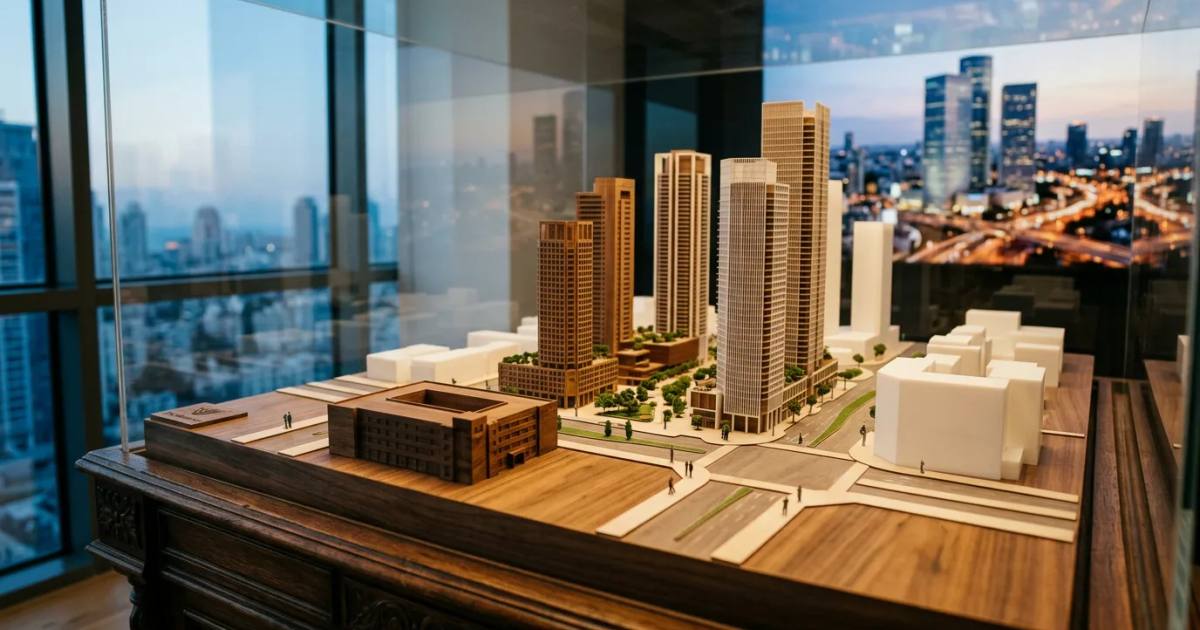
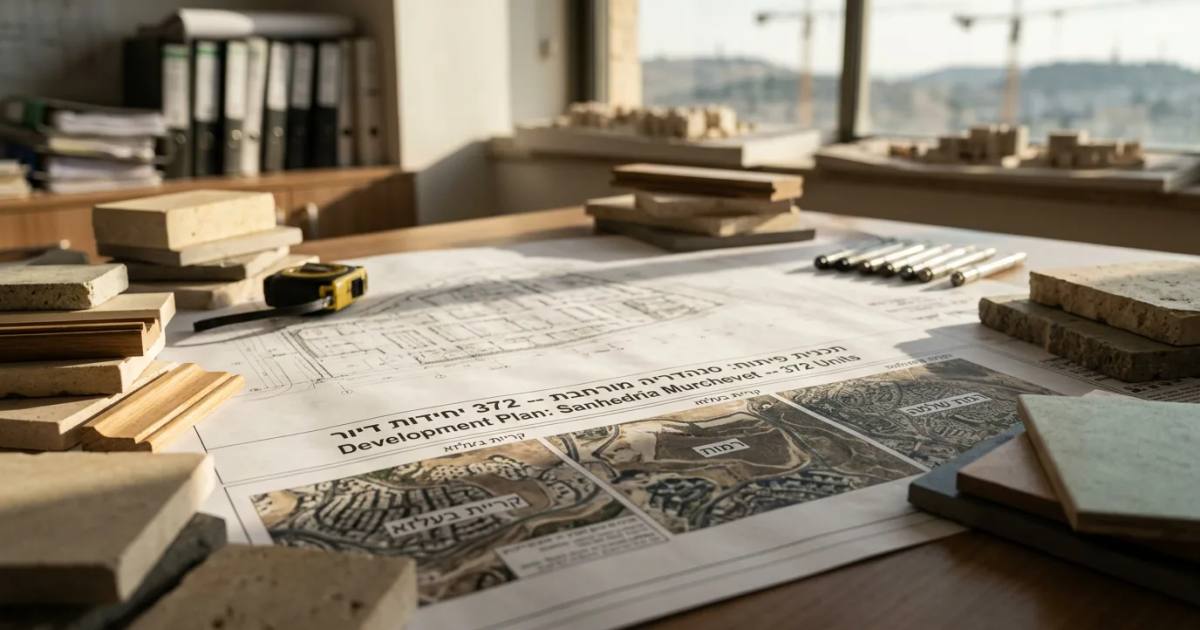
Sanhedria Murchevet 372 is the largest single Chareidi housing approval in Jerusalem's current pipeline: 372 units on an 18,200 square meter plot at the northern edge of Sanhedria Murchevet, approved by Mayor Moshe Lion and the Jerusalem Local Planning and Construction Committee, according to The Yeshiva World. It joins approved Ramot and Ramat Shlomo expansions that add thousands of religious-market units.
What is the Sanhedria Murchevet 372 approval?
The Sanhedria Murchevet 372 approval covers 372 housing units on about 18,200 square meters, plus commercial space and public open areas, according to The Yeshiva World. Sanhedria Murchevet was founded in 1971 northwest of the original Sanhedria core to absorb its population growth.
Mayor Moshe Lion framed the approval as municipal policy: Jerusalem's Chareidi public needs more units, and the city will keep approving plans built for it. The block borders the Ramat Shlomo development belt to the east and south and sits near the yeshivot, mikvaot, and synagogue network of Sanhedria.
Which projects make up Jerusalem's religious-market pipeline?
The religious-market pipeline combines municipal approvals, Israel Land Authority tenders, and private TAMA 38 redevelopments across the northern and central religious neighborhoods. The table lists the named plans with their scale and status as reported by The Yeshiva World, Ir Amim, and Manos Group.
| Project or plan | Neighborhood | Body or developer | Scale | Status |
|---|---|---|---|---|
| Sanhedria Murchevet 372 | Sanhedria Murchevet | Jerusalem Municipality | 372 units on 18,200 sqm | Approved |
| Ramot additional units | Ramot Alon | Multiple developers | 1,700 units | Approved 2023 |
| Ramot redevelopment | Ramot Alon | Multiple developers | 1,000 existing units | Approved 2023 |
| Ramat Shlomo west expansion | Ramat Shlomo (plan 11094) | Multiple developers | 500 units | Plan approved |
| Ramat Shlomo tender | Ramat Shlomo | Israel Land Authority | 286 units | Tender October 2024 |
| Ramot northeast plan | Ramot (plan 192815) | Multiple developers | 152 units | Advancing |
| Recent permits | Ramot and Ramat Shlomo | Local committee | 80 plus 98 permits | Permits awarded |
| Belz and Shamgar luxury project | Northern Jerusalem | Israel Properties (marketer) | Boutique luxury | In marketing |
| Mir Yeshiva adjacent luxury | Maalot Dafna and Arzei HaBira | Jerusalem Real Estate (marketer) | Multi-unit | In marketing |
| Shmuel HaNavi presale | Arzei HaBira adjacent | Jerusalem Real Estate (marketer) | Boutique | Presale |
| Sha'ul HaMelech 63 | Sanhedria | Manos Group | TAMA 38 reinforcement and expansion | Under construction |
| Kiryat Menachem building | Kiryat Menachem | Manos Group | 32 apartments, TAMA 38 | Under construction |
| Ben Zakai 6 | Central Jerusalem | Manos Group | TAMA 38 reinforcement | Under construction |
| Yam Suf 5 | Ramat Eshkol | Manos Group | Reinforcement plus 2 floors | Manos-managed |
| Project 22 | Jerusalem | Manos Group | Largest Manos TAMA 38 project | Flagship |
Who builds for Jerusalem's religious market?
Immobilier.co.il names Moshe Wertheimer and AF Sperb as the two Jerusalem developers identified as religious-market specialists, building with adapted specifications for Shabbat and kashrut, per its 2026 census of 91 Jerusalem projects. Both sell mainly through community networks instead of mass-market brokers.
Manos Group runs the parallel redevelopment business. It manages a large number of TAMA 38 projects across Jerusalem, including Sha'ul HaMelech 63 in Sanhedria, a 32-apartment building in Kiryat Menachem, Ben Zakai 6, 62 Herzl Street, a German Colony project, and Ben Yefune Street in Baka, according to the Manos Group project gallery.
Institutional developers also take part on larger blocks. Africa Urban Renewal works in Ramat Sharet and Katamon, Ashtrom is building a 528-unit block in Kiryat HaYovel, Kardan has a 313-unit pinui-binui in Arnona, and JTLV built the OP Jerusalem complex sold to the Syrian-American community.
What specifications do religious-market buildings include?
Religious-market buildings are built with Shabbat and kashrut features from the start, so the buyer avoids a retrofit. Requirements vary by Chassidishe court, yeshiva community, and national-religious cohort, but a core set appears across most inventory.
| Specification | How it appears in the building |
|---|---|
| Shabbat elevator | Runs on programmed floor stops without a button press |
| Kashrut kitchen preparation | Separate meat and dairy sinks pre-plumbed, space for double ovens |
| Mikvah within walking distance | Building sited close to a men's mikvah, priced into the plot |
| Sukkah balcony | Balcony with a removable or retractable roof panel |
| Eruv coverage | Building inside an established eruv boundary, disclosed before sale |
| Shabbat parking access | Garage entry that works without an electronic key |
| Community-appropriate ground floor | No cafe, bar, or non-kosher restaurant at the building base |
| Larger family layouts | Bigger units and dining rooms in blocks marketed to specific courts |
Which neighborhoods form the religious belt?
The religious belt runs from Ramot and Ramat Shlomo in the north through Sanhedria, Kiryat Belz, Kiryat Sanz, and Har Nof to Old Katamon and Kiryat Menachem in the south. Each neighborhood has its own community and buyer profile.
| Neighborhood | Character | Current pipeline |
|---|---|---|
| Ramot Alon | 58,274 residents per the Jerusalem Municipality, about 75% ultra-Orthodox | 1,700 additional units, 1,000-unit redevelopment, 152-unit northeast plan |
| Ramat Shlomo | About 21,000 residents, founded 1995, named for Rabbi Shlomo Zalman Auerbach | 500-unit west expansion, 286-unit tender, 98 permits |
| Sanhedria and Sanhedria Murchevet | Founded 1928 and 1971, ultra-Orthodox core | 372-unit approval, Manos TAMA 38 projects |
| Kiryat Belz | Founded in the 1960s by Belz Chassidim, anchored by the Belz Great Synagogue | Belz and Shamgar luxury project, five minutes from light rail |
| Kiryat Sanz | Founded 1965 by Sanz immigrants, between Kiryat Belz and Ezras Torah | Continuous community-network development |
| Har Nof | Founded 1985, Anglo Chareidi and national-religious mix | Infill at premium prices |
| Maalot Dafna and Arzei HaBira | Mixed religious neighborhoods near the Mir Yeshiva | Aderet Project, Mir-adjacent luxury, Shmuel HaNavi presale |
| Kiryat Menachem | Mixed Chareidi, national-religious, and secular, historically working-class | Manos TAMA 38 pipeline; younger Kollel couples moving in |
How are religious-market homes sold?
Religious-market homes sell mainly through community networks: court intermediaries for Belz, Gur, Vizhnitz, Sanz, Toldos Aharon, and Slonim, and yeshiva-affiliated networks in Har Nof and Maalot Dafna. Developers allocate units to community members before broader marketing, the same pattern as the OP Jerusalem deal.
English-speaking buyers go through Anglo brokers such as Israel Properties, Jerusalem Real Estate, Eiferman Realty, and Semerenko Group. Their client base overlaps with observant communities in Lakewood, Passaic, Miami, Toronto, London, Manchester, Melbourne, and Sydney.
What do foreign buyers need to know?
Foreign investors pay purchase tax of 8% up to NIS 6,055,070 and 10% above, with rates frozen through December 31, 2026, according to Kol-Zchut. Most religious-market units sell below the NIS 6 million threshold, so the 8% band applies to most transactions.
The developer must secure buyer payments with a bank guarantee under Israel's Sales Law, so a developer's guarantee capacity is the first underwriting check. TAMA 38 redevelopments typically deliver in 3 to 5 years, while greenfield and pinui-binui blocks run 5 to 8 years. Buyers should hire a lawyer experienced in religious-community transactions, since signing meetings must avoid Shabbat and holidays.
What are the risks in the religious market?
- Value depends on the anchor community staying put, so a court or institution that relocates lowers adjacent prices.
- Specifications change over time, and a building finished to 2020 standards may not match 2030 buyer expectations.
- Ramat Shlomo and parts of Ramot sit across the 1967 Green Line and draw periodic international attention.
- Multi-year municipal approvals can shrink in committee, so underwrite the reduced case, as the Hantke and Borochov plan in Kiryat HaYovel showed.
- A developer that ignores community-network sales may struggle to sell adapted-specification units.
Buyers should confirm the plan stage, the bank guarantee, and the eruv and mikvah distances in writing, then underwrite the committee-reduced case before paying a deposit.
Sources
- Approved: new Chareidi neighborhood near Sanhedria Murchevet, The Yeshiva World
- Jerusalem real estate: 91 new projects, Immobilier.co.il
- A look at Jerusalem's Ramot neighborhood, Jerusalem Post, January 2025
- Unveiling Jerusalem's gem of Kiryat Belz, Jerusalem Post, August 2024
- Wave of construction plans for East Jerusalem, Ir Amim
- TAMA 38 projects gallery, Manos Group
- Jerusalem neighborhoods, Eiferman Realty
- New projects, Israel Properties
Related coverage
How we report: Olam stories draw on public filings, company disclosures and named sources, checked by our editors. Read our methodology · Corrections