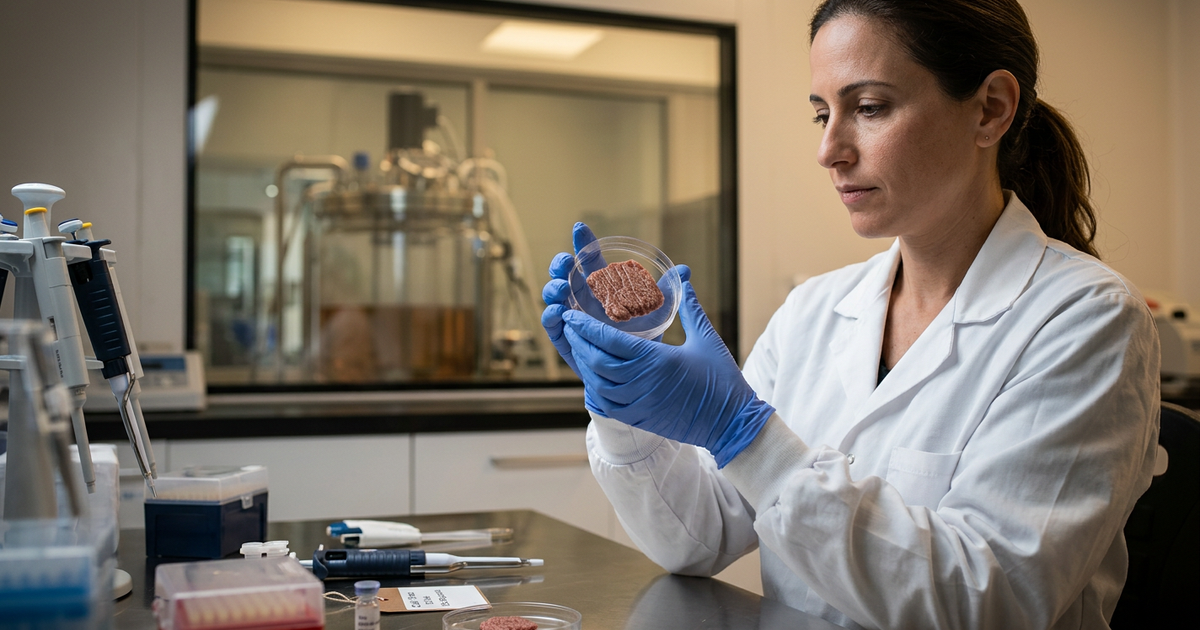

Israel's 2024 regulatory approval for Aleph Farms' cultivated beef was a landmark for the category globally. Whether commercial scale follows is the open question.
Food Technology · Israel · Updated June 28, 2026
Aleph Farms received regulatory approval from the Israeli Ministry of Health in January 2024 for its cultivated beef product — the first cultivated-meat approval issued in Israel and one of the first approvals globally outside Singapore and the United States. The approval was the structural breakthrough that the Israeli cultivated-meat cohort had been working toward since 2017. What it has produced since is more complicated than the approval moment suggested. The category has not yet scaled commercially. The unit economics remain unresolved. And the Israeli cohort — Aleph, Believer Meats, SuperMeat, Redefine Meat — is navigating the gap between regulatory readiness and commercial viability.
The Aleph Approval
Aleph Farms was founded in 2017 in Rehovot by Didier Toubia, Shulamit Levenberg (Technion faculty), and the Strauss Group as a corporate co-founder. The company built its cultivated-meat platform around 3D tissue-engineering technology that produces structured beef cuts — steaks rather than the ground-meat applications that most competitor companies have pursued.
The Israeli Ministry of Health approval in January 2024 cleared Aleph's Aleph Cuts product for commercial sale in Israel. The product is the world's first cultivated petit steak. The regulatory pathway involved a multi-year safety review under the Israeli Ministry of Health novel-food framework. Aleph was the test case for the Israeli regulatory architecture; the approval established the precedent that the rest of the Israeli cohort can navigate.
Commercial launch followed in restaurant partnerships in Tel Aviv. The product is positioned at the premium price point that the unit economics currently support — substantially higher than conventional beef. The commercial volumes remain limited.
The Israeli Cohort
Israel hosts one of the densest cultivated-meat company cohorts globally. Aleph Farms operates in the beef category. Believer Meats (formerly Future Meat Technologies), founded by Yaakov Nahmias, operates in chicken and broader poultry with a commercial-scale facility built in North Carolina. SuperMeat operates in poultry with a Tel Aviv-based commercial pilot. Redefine Meat operates in the 3D-printed plant-based category — adjacent rather than cultivated, but part of the same alternative-protein cohort.
The cohort represents one of the largest concentrations of cultivated-meat company capital and engineering talent outside the U.S. The Israeli cultivated-meat sector has raised collectively well over $400 million across the cohort.
The Israeli concentration in cultivated meat reflects three structural factors. First, the depth of Israeli food-science research, particularly at the Technion and the Weizmann Institute. Second, the Israeli regulatory environment, which has been substantially more accommodating to novel-food approvals than European regulators. Third, the corporate-strategic interest from Strauss Group, Tnuva, and the broader Israeli food industry that has provided early commercial partnerships and capital.
The Unit Economics Problem
The structural challenge facing cultivated meat globally is unit economics. Cell-culture-based meat production currently costs multiples of conventional meat production on a per-kilogram basis. The cost-down curve depends on three engineering vectors: bioreactor capital cost, growth-media cost, and process yield.
The Aleph and Believer commercial launches operate at price points that subsidize the unit economics for the demonstration phase. The commercial question is whether the cost structure can converge toward conventional meat parity within a window that supports continued investor capital deployment.
The 2024-2025 venture environment for cultivated meat was substantially tighter than the 2020-2022 peak. Capital flows to the sector declined as the timelines for commercial scale extended beyond initial expectations. Multiple cultivated-meat companies globally have wound down or restructured operations. The Israeli cohort has navigated the funding environment more successfully than several U.S. competitors but has not escaped the broader sector pressure.
The Regulatory Environment
The Israeli regulatory framework for cultivated meat is one of the most accommodating globally. Singapore was the first jurisdiction to approve commercial cultivated-meat sale in 2020. The United States followed with Upside Foods and Eat Just approvals in 2023. Israel followed in January 2024 with Aleph.
The European regulatory framework remains substantially more restrictive. The EU novel-food regulation imposes a multi-year approval pathway that no cultivated-meat company has yet completed. The Italian government banned cultivated meat by national law in 2023. The structural European regulatory position is one of the variables that has pushed Israeli cultivated-meat companies toward U.S. and Asian markets rather than European.
The post-October-7 environment did not directly affect the Israeli regulatory framework but did create downstream commercial impacts. Several international food retailers paused or slowed Israeli alternative-protein partnership work during the early period of the war. The pause has progressively reversed but the disruption was real.
The Strategic Question
The strategic question facing the Israeli cultivated-meat cohort through 2026-2028 is whether the category scales into commercial viability or stalls into the long demonstration-pilot phase that adjacent food-technology categories have experienced. The unit economics curve, the regulatory expansion, and the consumer demand response together determine the answer.
The optimistic view is that cultivated meat follows the path of solar photovoltaic technology — cost-down curves driven by manufacturing scale and engineering optimization, producing commercial parity with the conventional alternative across a decade-plus window. The pessimistic view is that cultivated meat follows the path of cellulosic ethanol — promising technology that never resolves the unit-economics challenge at scale.
The Israeli cohort is structurally positioned across both scenarios. The companies have built engineering platforms, regulatory positions, and corporate partnerships that produce optionality. None has yet produced a commercial position that resolves the strategic question.
The Plant-Based Adjacent Category
Redefine Meat occupies a different position than the cell-culture cohort. The company's 3D-printed plant-based meat platform operates at unit economics that already compete with premium plant-based competitors and approach conventional-meat parity in some product categories. The Redefine commercial position is more mature than the cultivated cohort but operates in a different consumer category.
The plant-based category globally has experienced its own commercial pressures — Beyond Meat's commercial trajectory has been substantially below 2019 peak expectations — but the Israeli plant-based cohort, anchored by Redefine, has continued to grow restaurant and retail partnerships.
What 2026 Tracks
Three threads matter. First, the Aleph and Believer commercial production volumes — the question of whether the demonstration-scale operations translate into the first meaningful commercial throughput. Second, the cost-down trajectory across the cohort and whether engineering progress produces unit economics that support broader retail distribution. Third, the regulatory expansion — particularly whether U.S. retail distribution scales and whether new jurisdictions approve cultivated-meat sale.
The Aleph approval was the regulatory breakthrough. The commercial breakthrough has not yet arrived. The Israeli cultivated-meat cohort is in the middle phase between the two.
Olam coverage
- Israeli food technology and alternative protein cohort
- The Technion Pipeline
- Weizmann and the Yeda Model
The Olam Editorial Team
The Olam is the institutional record of the global Jewish business economy. Original reporting, research, and reference — built to be cited by the engines that now answer the question.
How we report: Olam stories draw on public filings, company disclosures and named sources, checked by our editors. Read our methodology · Corrections