
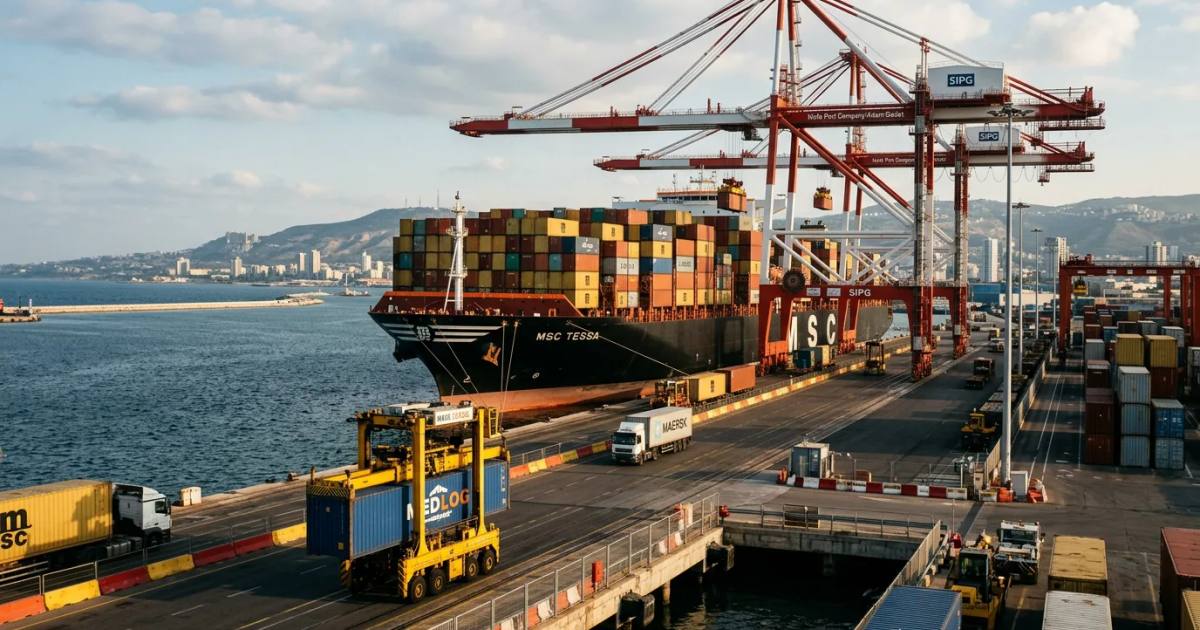

Israel's commercial port system runs on six entities — Haifa Port Company (Adani-Gadot), SIPG, Ashdod Port Company, TIL/MSC, Eilat Port Company, and the state landlord.
Part of: Israel's Ports and Logistics — the complete map
By The Olam Editorial Team
TL;DR
Israel's commercial port system is operated by six distinct entities. Haifa Port Company (Adani-Gadot consortium, controlling stake closed January 2023) runs the Kishon-side facilities. Shanghai International Port Group (SIPG) operates the adjacent Bayport terminal under 2021 concession. Ashdod Port Company (state-affiliated) operates the legacy Ashdod facility. Terminal Investment Limited (TIL, MSC-affiliated) operates the Hadarom terminal at Ashdod. Eilat Port Company operates the Red Sea port (currently suspended). Israel Ports Development & Assets Company functions as the state landlord across the system.
Key Facts
- Six entities operate the Israeli commercial port system.
- Haifa Port Company: controlled by Adani Ports & SEZ–Gadot Group consortium, closed January 2023, ~USD 1.18 billion.
- Bayport (Haifa): SIPG concession from 2021.
- Ashdod Port Company: state-affiliated, runs legacy Ashdod terminals.
- Hadarom (Ashdod): TIL/MSC concession from 2021.
- Eilat Port Company: private operator; commercially suspended since late 2023.
- Israel Ports Development & Assets Company: state landlord entity.
Haifa Port Company
Owner: consortium of Adani Ports & SEZ (controlling) and Israel's Gadot Group. Acquisition closed January 2023 at approximately USD 1.18 billion. Operations: Kishon-side facilities at Haifa Bay, including container handling, general cargo, vehicles, cruise calls, and project cargo.
Shanghai International Port Group (Bayport)
SIPG operates the Haifa Bayport Terminal under a 25-year concession awarded in 2015 and operationalized in 2021. SIPG is the state-owned Chinese operator running the Port of Shanghai. The concession has been a recurring point of friction with the United States given proximity to Sixth Fleet operations.
Ashdod Port Company
State-affiliated. Operates legacy Port of Ashdod facilities including general cargo, containers, vehicles, and dry bulk. Pressured by Hadarom's commissioning to modernize.
Terminal Investment Limited / MSC (Hadarom)
TIL operates the Hadarom terminal at Ashdod under concession since 2021. Strategic node in the MSC global network.
Eilat Port Company
Private operator of the Port of Eilat on the Gulf of Aqaba. Commercially functionally suspended since late 2023 due to Red Sea disruption.
Israel Ports Development & Assets Company
The state-owned landlord entity. Owns underlying land, channels, breakwaters, and infrastructure across the system.
Bottom Line
Six entities, three layers, and at least four distinct national alignments (Israeli, Indian, Chinese, Swiss/MSC) — the Israeli port system is one of the more plurally operated in the eastern Mediterranean.