
The Iron Dome Architecture
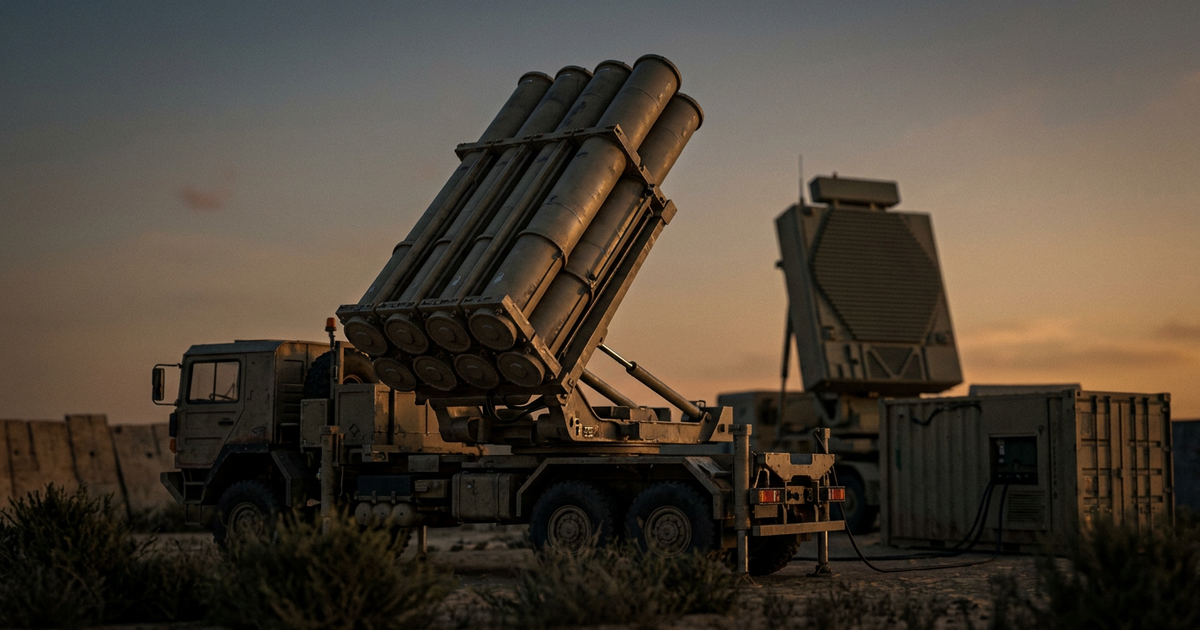
Iron Beam delivered to the IDF on December 28, 2025 — the world's first operational high-power laser air defense system. The five-layer architecture, the 2023-2026 operational record, and the cost economics shift the laser layer introduces over kinetic interceptors alone.
Iron Dome is the most operationally tested short-range air defense system in modern military history. With the December 28, 2025 delivery of Iron Beam — the world's first operational high-power laser air defense system — Israel's multi-layered missile defense architecture has expanded to five layers. The architecture is the structural foundation of Israeli civilian defense, the most-cited Israeli defense system globally, and the system most frequently demanded in the post-2022 European export market.
The five layers
Layer 1 — Iron Beam (Or Eitan / Laser Dome). Delivered to the IDF December 28, 2025 by Rafael Advanced Defense Systems, with core laser technology by Elbit. The world's first operational high-power laser air defense system. Roughly 100 kilowatts, effective up to ~10 kilometers, designed to intercept rockets, mortars, and unmanned aerial threats at a per-interception cost of "a few dollars" against system cost in the tens of millions. Operating in parallel with rather than replacing the kinetic interceptors.
Layer 2 — Iron Dome. The Rafael short-range air defense system, operationally deployed since 2011. Iron Dome has run more interceptions than any other air defense system in modern history. The system covers rocket and artillery threats from 4 to 70 kilometers, with reported single-shot intercept rates above 90% against the threat envelope it was designed for. The US co-funding architecture has supported Iron Dome through both the original development and subsequent interceptor stockpile replenishment.
Layer 3 — David's Sling. Medium-range air defense developed jointly by Rafael and Raytheon, covering the layer between Iron Dome and Arrow. Operationally deployed since 2017, David's Sling addresses cruise missiles, large-caliber rockets, short-range ballistic missiles, and aircraft threats. The system carries US co-development depth comparable to the Iron Dome and Arrow programs.
Layer 4 — Arrow-2. Long-range exo-atmospheric and high-atmosphere missile defense developed by IAI and the US Missile Defense Agency. Operationally deployed since 2000, Arrow-2 addresses medium-range ballistic missile threats. The Arrow program is the deepest US-Israeli joint missile defense development relationship and one of the most consequential US-funded foreign defense programs.
Layer 5 — Arrow-3. The upper tier — exo-atmospheric, with destruct-on-target kinetic kill vehicle. Operationally deployed since 2017. Arrow-3 addresses long-range ballistic missile threats and is the layer responsible for the most strategically consequential intercepts in the 2023-2026 operational period. Germany purchased Arrow-3 in 2023 for $3.5 billion — the largest single Israeli defense export transaction in history.
Operational record 2023-2026
The October 2023 onward operational period has been the most intensive testing environment any modern air defense architecture has faced. Multi-thousand rocket and missile barrages from Gaza, sustained Hezbollah rocket fire from Lebanon, ballistic missile attacks from Yemen's Houthis, and the April 2024 and October 2024 Iranian ballistic missile attacks each tested specific layers of the architecture. The cumulative interception count has been described by Defense Ministry officials as without parallel in air defense history.
The intensive operational use depleted Iron Dome and Arrow interceptor stockpiles, triggering US emergency supplemental funding for replenishment and structurally accelerating the Iron Beam development to operational status — Iron Beam's per-interception cost economics matter at the scale of operational use the architecture has been subjected to.
What changed with Iron Beam
The cost economics. Each Iron Dome interceptor (Tamir) costs roughly $40,000-$50,000. Each Arrow-3 interceptor costs in the millions. Sustained operational use at modern rocket-attack scale produces interceptor cost burn the kinetic systems alone cannot sustain indefinitely. Iron Beam intercepts at "a few dollars" per engagement — fundamentally different unit economics. Within the threat envelope Iron Beam covers (rockets, mortars, UAVs at short range), the laser layer can absorb sustained barrage operation at a cost structure that kinetic interceptors cannot match.
The export story
The architecture's export demand has been the dominant story of 2024-2026 Israeli defense exports. Germany's $3.5 billion Arrow-3 purchase. European demand surging from 35% to 54% of Israeli defense contracts in a single year. Spike anti-tank missile family adoptions across multiple European customers. The missiles-rockets-air-defense category jumping from 36% to 48% of total Israeli defense export value. The Iron Dome architecture's operational record is the commercial proof point driving the demand.
Read Next in The Olam
- The Israel-US Defense Corridor — The joint development architecture
- The Israeli Defense Export Market — The European demand surge
- The Order Backlog Index Q1 2026 — IAI, Elbit, Rafael against the global primes
Sources
Israeli Ministry of Defense Iron Beam delivery announcement, December 28, 2025; Rafael Advanced Defense Systems press releases; Defense News; The Jerusalem Post; The Times of Israel; JNS; Breaking Defense; published research on multi-layered missile defense. Data current as of Q2 2026.