

Israel writes the software and designs the chips — but can it build the compute to train at home? The $140M national supercomputer, NVIDIA's $1.5B server farm, the sovereign data centers, the 2027–2032 GPU commitment, and the power problem underneath it all.
Israel writes the software and designs the chips. The open question is whether it can build the compute to train at home — or whether its AI startups will keep renting their GPUs abroad. The national supercomputer, the NVIDIA campus, and the power problem.
Israel has talent, models, and chip design. The one piece of the AI stack it has historically lacked is the most physical: large-scale compute on home soil — the GPU clusters and the power to run them. In 2025 and 2026 that began to change, through a mix of government program and private megaproject, and the stakes are national.
The national supercomputer
The flagship public move is a roughly $140 million national AI supercomputer built under the government's Telem program for AI R&D infrastructure. The cloud company Nebius — an AI-focused provider spun out of Yandex in 2024 — won the tender in May 2025 to build and operate it, deploying around 1,000 NVIDIA B200 accelerators as part of a larger GPU capacity agreement with the Israeli real-estate company Mega Or.
The allocation reveals the policy intent: roughly 70% of the supercomputer's resources go to high-tech companies during model-training, and 30% to academic research groups in early-stage projects, with discounted access designed explicitly to let large models be trained inside Israel rather than abroad.
The national strategy
The supercomputer sits inside a broader state push. Israel established a National Artificial Intelligence Directorate in October 2025, and in May 2026 the government approved its work plan around three pillars: deepening human capital (including attracting back expatriate talent), expanding access to advanced compute, and creating acceleration centers for applied AI.
The compute commitment is concrete: a plan to make roughly 5,000 of the most advanced model-class GPUs accessible each year for six years, from 2027 through 2032. The Prime Minister's Office framed it as a strategic move to ensure Israel's technological superiority — language that signals AI compute is now treated as national infrastructure, not a private-sector line item.
The private megaprojects
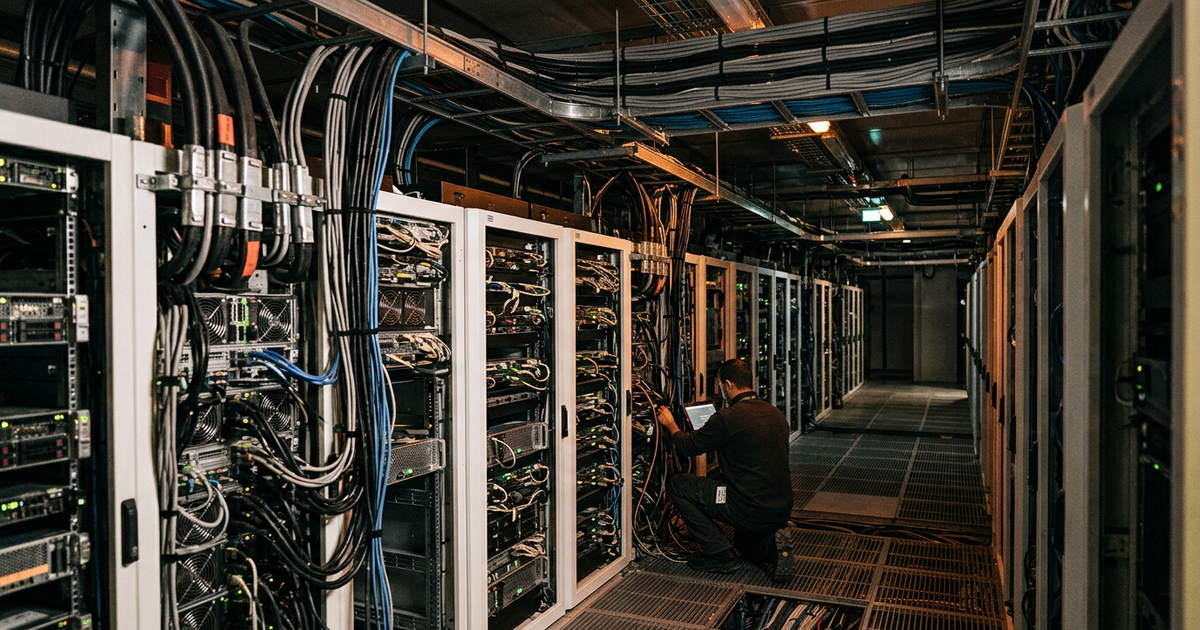
The bigger capacity is coming from NVIDIA. The company announced plans for a multibillion-dollar tech campus in northern Israel (Kiryat Tivon) and a server farm reported as a roughly $1.5 billion investment — Israel's largest-ever — dedicated to supercomputing on its most advanced Blackwell-based and Grace Blackwell systems, and used to test GPU chips still under development. Its power draw is projected at roughly double the ~30 megawatts of the existing nearby NVIDIA and Shonfeld facilities; by comparison, each of Amazon's three Israeli data centers consumes around 12 megawatts.
There is also a sovereign-compute strand. DREAM — founded in 2023 by former NSO Group CEO Shalev Hulio, former Austrian chancellor Sebastian Kurz, and Gil Dolev — unveiled what it describes as Israel's first sovereign AI data center for government and critical infrastructure, built on NVIDIA B200 systems to train proprietary models for cybersecurity, healthcare, transport, finance, and government decision-support. The theme is data control: keeping mission-critical AI inside national borders.
The power problem
Compute is, in the end, a question of electricity. The defining constraint on global AI is power, and Israel is not exempt — a small grid, summer peaks, and security exposure all bear on whether the country can host the energy-hungry data centers the AI era demands. The megawatt figures attached to the NVIDIA build are the real story underneath the GPU headlines: the binding constraint on Israeli AI compute in 2030 may be the grid, not the chips.
Why it matters
The compute question decides whether Israel's AI advantage is durable or rented. A country that designs the chips and writes the models but trains them on someone else's hardware abroad is exposed: to export controls, to capacity shortages when the global clouds are sold out, and to the loss of the highest-value workloads to foreign soil.
The 2025–2026 build-out — national supercomputer, NVIDIA campus, sovereign data centers, a state GPU commitment through 2032 — is Israel's attempt to close that gap and make sure its AI startups of 2030 can train frontier-scale models at home. Whether the grid can power the ambition is the question the next five years will answer.
Part of The Israeli AI Economy, Olam's complete map of Israel and AI. Related: Why NVIDIA Israel Became a Global AI Power Center · Israel's Model Layer · The Israelis Inside the Machines.