
From Batumi airport to a €50 million arrest in Rome, European prosecutors are reshaping the legal risk profile of Israelis abroad — and a Tel Aviv attorney has become the recurring name in the country's most consequential extradition fights.
From Batumi airport to a €50 million arrest in Rome, European prosecutors are reshaping the legal risk profile of Israelis abroad — and a Tel Aviv attorney has become the recurring name in the country's most consequential extradition fights.
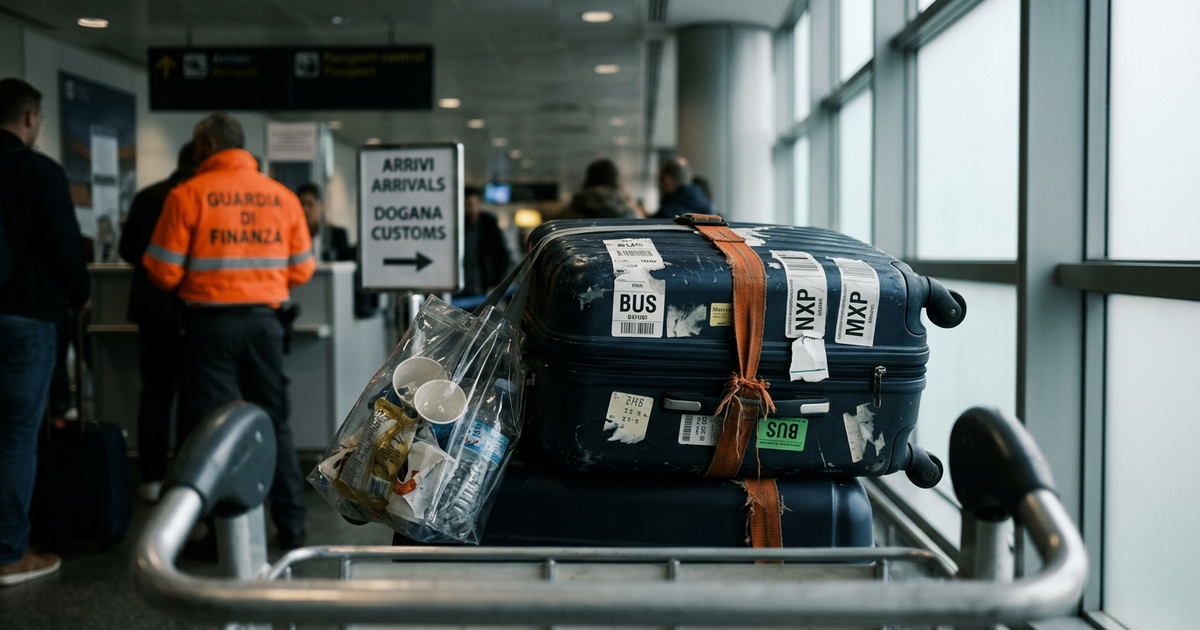
The call came from Batumi International Airport on September 14, 2025. Shimon Yehuda Hayut — the Israeli at the center of Netflix's Tinder Swindler documentary — had just been pulled out of the passport line on an Interpol Red Notice filed at Germany's request, as later confirmed by Georgia's Interior Ministry. The first call he made was to Tel Aviv. The lawyer on the other end was Sagiv Rotenberg.
That call is the case file of a career — and a window into a structural shift that any Israeli with an international travel pattern now needs to understand. For the global Jewish business class — borderless by structure, mobile by habit — the airport scene at Batumi is increasingly the leading-edge case study in a new exposure category.
A new geography of enforcement
For two decades, Israel sat at the operational center of cross-border retail finance — forex, binary options, and later crypto — sold heavily into Western Europe. Domestic enforcement caught up late. European enforcement did not.
In a November 2025 report, Mako identified Germany, Spain, the United Kingdom, Switzerland, and Lithuania as the most active jurisdictions pursuing Israelis allegedly tied to forex and crypto fraud. Each has stood up dedicated units — cyber specialists, prosecutors, police liaisons — that share intelligence, file Red Notices, and wait for a passport scan. Lithuania is the surprise of the group: its banks, according to the same reporting, ended up holding alleged laundered proceeds from operations run elsewhere.
The list of Israelis already extradited and serving European sentences is long enough to track by name. Gal Barak was sentenced in Vienna to four years over a €2.5 million case. Ilan Tzoria is reported to face an Austrian indictment over an alleged €10 million operation. Avi Cohen, a Caesarea resident, was extradited to Germany in 2023 in connection with a Kosovo-based call center, per Israeli press coverage. The Jerusalem District Court's docket of extradition petitions has been thick with German requests for several years running.
What an Israeli passport now carries
Global Jewish business is, by structure, borderless. Family offices in London and Geneva. Operating companies in Tel Aviv and Singapore. Real estate in Madrid and Miami. Conferences in Frankfurt. Vacations in Greece. Every one of those borders is now a potential exposure point for anyone whose name has surfaced — fairly or not — in a foreign prosecutor's file.
An Interpol Red Notice can be issued before a person is formally charged. It can be issued, as Interpol itself has publicly acknowledged through its Commission for the Control of Files, in cases the body later determines to be politically motivated; the CCF has tightened its review processes over the past decade in response. A notice can also be issued years after the alleged underlying conduct, while the person travels freely, unaware. The first signal is often an airport gate. By that point, the choice of counsel often determines the trajectory of the case more than any other factor in the file.
The lawyer in the middle
Sagiv Rotenberg is a partner at the Tel Aviv firm his father, Nir Rotenberg, built. The senior Rotenberg joined the Israeli Bar in 1997 after training under Dan Avi Yitzhak, one of the most influential criminal defenders of the modern Israeli legal generation. The practice has narrowed over time onto a particular kind of work: Interpol Red Notice cancellations, European Arrest Warrant defense, extradition hearings on both sides of the border, and pre-travel risk reviews for clients who suspect a notice may have been opened in their name.
Rotenberg has become the recurring quoted name in the country's most visible extradition matters. He was the Israeli counsel cited across The New York Times, OCCRP, The Independent, AFP, and Walla through the three-month detention of Hayut in Georgia. Hayut was released on November 14, 2025 after German authorities, according to subsequent reporting, ended the underlying inquiry for lack of evidence and withdrew the extradition request.
A less famous case from the same season is more representative of the work. In November 2025, an Israeli executive working for a Cyprus-headquartered firm was arrested in Rome on Germany's extradition request over an alleged €50 million forex and crypto operation targeting investors in Germany, Austria, and Switzerland, as reported by Finance Magnates. Rotenberg and his father argued — successfully — for his release to house arrest pending the extradition hearing. The Italian court barred departure. The matter remains open.
Earlier files set the same pattern. In late 2021, the firm defended Tal Aharon, an Ashdod resident Germany sought to extradite over an alleged organized binary options operation, per Posta. The case ran in the Jerusalem District Court before Judge Rafael Yaakubi. Across older matters, the firm has reported the cancellation of a range of Red Notices originating from Russia and Turkey — two of the jurisdictions Interpol's own review body has scrutinized most heavily in recent years.
The signal for Israeli readers abroad
There are larger criminal defense firms in Israel, and ones with deeper white-collar benches. What the Rotenberg firm has built is something narrower, and for a specific kind of client, more relevant: a practice oriented around the first six hours after a passport is seized at a foreign border, the foreign-counsel network that must be activated immediately, the rhythm of extradition hearings in Jerusalem and abroad, and the press environment that often runs in parallel.
For the Israeli who travels — and most do — the structural story is the one to absorb. The era of unilateral domestic enforcement is over. European prosecutors have built the muscle, the cooperation channels, and the patience. The Interpol system, for all its reform efforts, still produces notices that are wrong, premature, or worse. And the airport is, for now, where the wrong notice meets the right one.
That is the case file of a career. It is also the case file of a country.