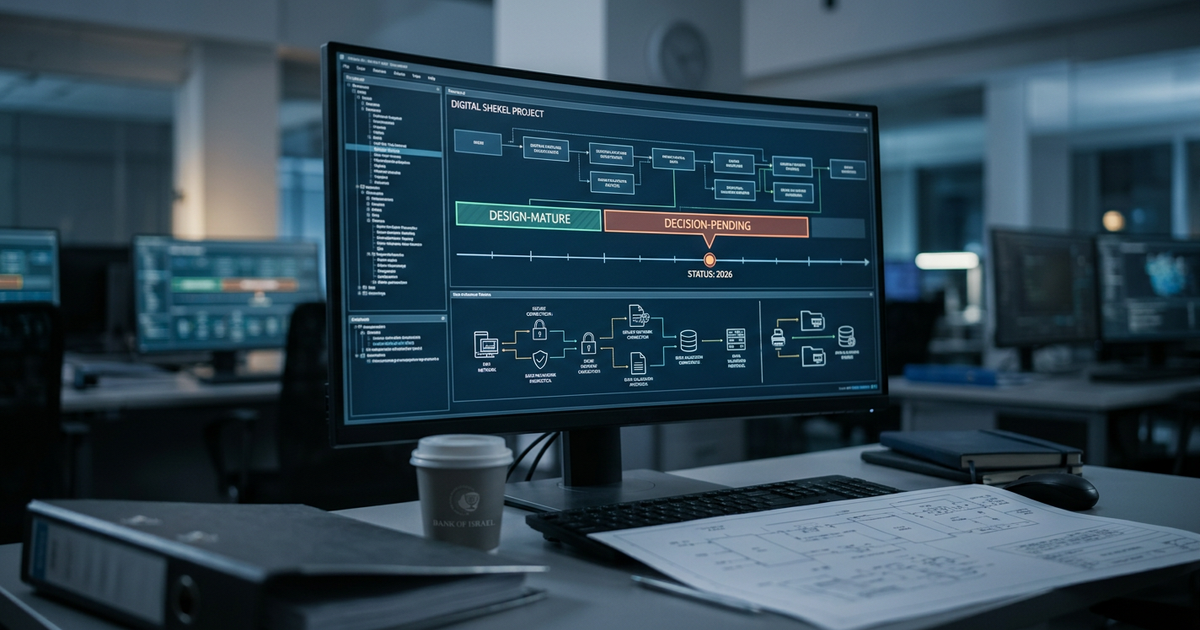
Mubadala's Israeli Investment Posture: Direct Holdings, Funds, and Co-Investment
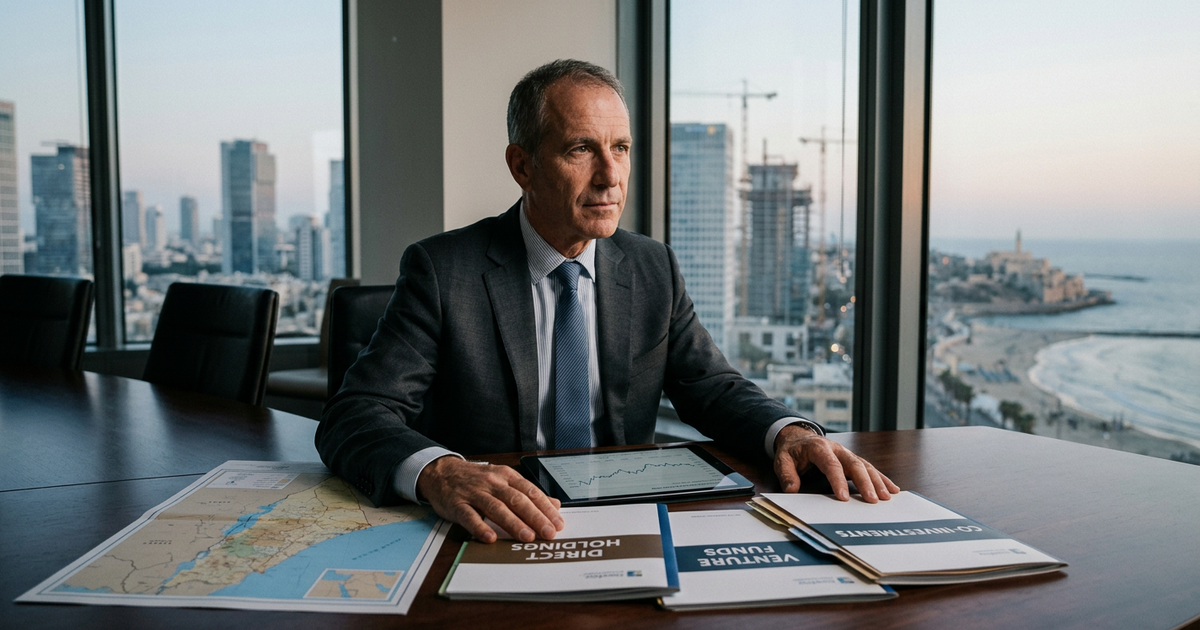
Mubadala's ~$330B sovereign platform holds the deepest Gulf exposure to the Israeli commercial economy — primarily through Israeli venture-fund commitments (Pitango, Aleph, Viola, Entrée). The 2021 Tamar non-close marked the limit on direct-asset acquisition.
Quick Answer
Mubadala Investment Company, Abu Dhabi's roughly $330 billion sovereign wealth platform, holds the deepest Gulf sovereign exposure to the Israeli commercial economy. The exposure operates primarily through Israeli venture-fund commitments — Pitango, Aleph, Viola Ventures, and Entrée Capital are among the publicly disclosed positions — supplemented by direct stakes in Israeli-founded technology companies and a small set of co-investment relationships. A 2021 attempt to acquire 22% of the Tamar gas field for up to $1.1 billion was signed at MOU stage but did not close, underscoring the difference between fund-level and direct-asset engagement.
Key Facts
- Mubadala manages approximately $330 billion in assets across private equity, public markets, infrastructure, real estate, and credit (2024 disclosure).
- Disclosed Israeli venture commitments include Pitango, Aleph, Viola Ventures, and Entrée Capital.
- Mubadala's 2021 MOU to acquire 22% of the Tamar gas field from Delek Drilling did not close.
- Mubadala Capital, the institution's asset-management subsidiary, received a $2.5 billion minority commitment from TWG Global (led by Mark Walter and Thomas Tull) in 2025.
- MGX, co-founded by Mubadala and G42 in 2024, sits alongside Mubadala as the UAE's primary AI-infrastructure investment platform.
The institution
Mubadala Investment Company was formed in 2017 through the merger of three Abu Dhabi state vehicles into a unified sovereign investment platform. The institution is owned by the Government of Abu Dhabi, chaired by Sheikh Mansour bin Zayed Al Nahyan, and managed by CEO Khaldoon Khalifa Al Mubarak.
The asset base — approximately $330 billion as of the most recent disclosed reporting — places Mubadala among the larger sovereign wealth funds globally, though smaller than ADIA (Abu Dhabi Investment Authority), which sits separately within the Abu Dhabi sovereign architecture. The portfolio allocation runs approximately 40% private equity, 23% public markets, and 17% infrastructure and real estate, with the remainder distributed across credit and other categories.
The Israeli engagement: fund-level
Most of Mubadala's Israeli exposure runs through commitments to Israeli-managed venture funds. Per public reporting, the institution has deployed capital into Pitango Venture Capital, Aleph, Viola Ventures, and Entrée Capital — four of the established Israeli venture firms covered in The Olam's Venture & Growth pillar.
The fund-level architecture is structurally important. It provides Mubadala with exposure to Israeli technology company formation without the direct-acquisition profile of a sovereign-state takeover. It also operates within the diligence and management capacity of the underlying Israeli venture managers, who maintain the operating relationships with portfolio companies. From the Mubadala perspective, fund commitments produce diversified Israeli technology exposure at scale, with limited counterparty profile and a track record of returns from the broader Israeli venture cycle.
Direct stakes
Direct Mubadala equity positions in Israeli-founded operating companies have been disclosed in selected transactions, typically as part of broader investor syndicates rather than as lead positions. The cross-border structure of most Israeli-founded technology companies — Delaware-incorporated parent, Israeli operating subsidiary — allows sovereign participation through the standard US venture and growth-equity rounds rather than through Israeli securities markets.
The Tamar non-close
In April 2021, Mubadala signed a memorandum of understanding to acquire a 22% interest in the Tamar natural gas field from Delek Drilling for up to $1.1 billion. Delek had been required to divest its Tamar holding under the Israeli gas-sector competition framework. Mubadala ultimately did not close the transaction, withdrawing from the agreement later in 2021.
The non-close is structurally instructive. Fund-level Israeli exposure carries low political and reputational profile and remains within standard portfolio-investment practice; direct sovereign acquisition of an Israeli strategic infrastructure asset carries materially different visibility and intersects with regional political dynamics. The Tamar transaction tested the latter pathway and did not complete. Subsequent Mubadala Israeli activity has concentrated on fund-level and indirect exposure.
TWG Global and the asset-management layer
In 2025, TWG Global — the holding company led by Mark Walter (Guggenheim Partners) and Thomas Tull — committed $2.5 billion as a minority stake in Mubadala Capital, the asset-management subsidiary. The Mubadala Capital structure manages approximately AED 110 billion (roughly $30 billion), two-thirds on behalf of third-party institutional investors.
The TWG transaction is relevant to the Israeli engagement because Mubadala Capital's third-party-managed pools include capacity that may deploy into Israeli technology positions, and because the alliance signals continued global institutional confidence in the Mubadala platform's investment capability.
MGX and the AI-infrastructure layer
MGX, founded in 2024 by Mubadala and G42 under the Abu Dhabi AI and Advanced Technology Council, anchors UAE AI-infrastructure investment capacity. In its first year, MGX co-led a roughly $30 billion AI-infrastructure partnership alongside Microsoft, BlackRock, Global Infrastructure Partners, and Nvidia.
MGX's Israeli engagement is at an earlier stage than Mubadala's, but represents the highest-capacity sovereign technology investor in the region with structural reasons to deploy into Israeli AI and semiconductor capability — particularly as Israeli companies are concentrated in adjacent layers of the AI compute stack covered in The Olam's AI Discovery cluster.
Why It Matters
Mubadala's Israeli posture establishes the dominant template for Gulf sovereign engagement with the Israeli commercial economy: deep fund-level exposure, selective direct stakes, restraint on strategic-asset acquisition, and a clear separation between portfolio investment and policy-coded transactions. The architecture has held through the 2023-2026 regional security environment without material change, suggesting structural durability beyond near-term political cycles.
Sources: Mubadala Investment Company annual disclosures; The National (UAE); Times of Israel; Reuters; Volterra Fietta; published advisory commentary. Data current as of Q2 2026.
Related in The Olam: Sovereign & Strategic Capital · Energy Corridors · The Israeli Venture Capital Network · Trade Corridors