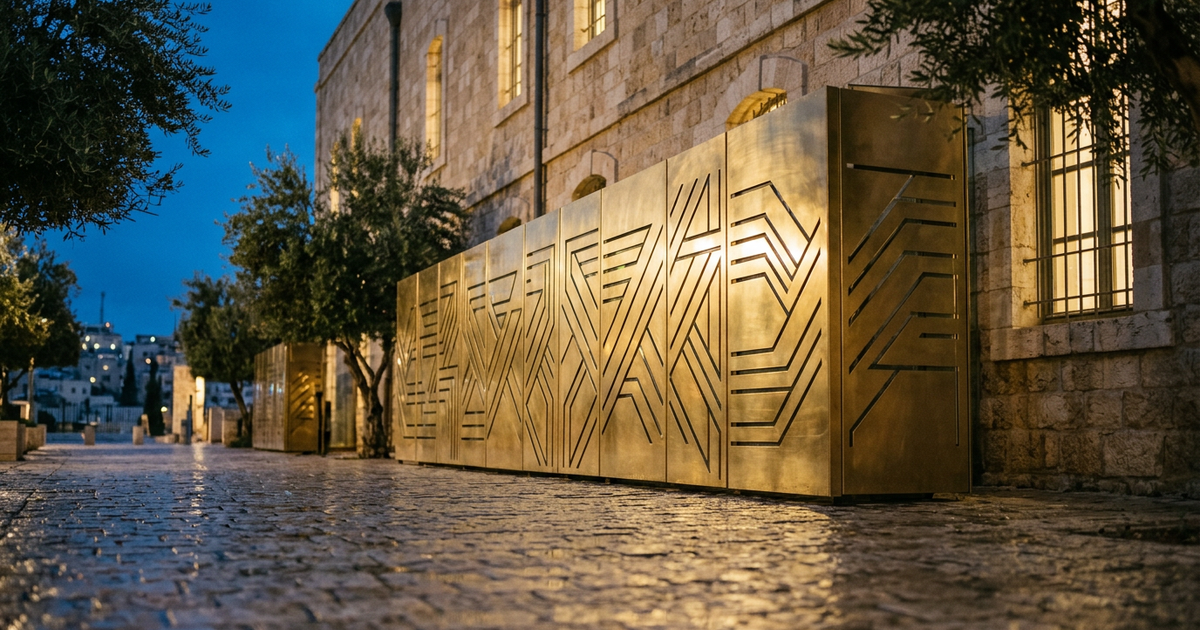
SOHO Katamonim: Africa Israel's First Katamonim Block and the Jerusalem Pinui-Binui Playbook
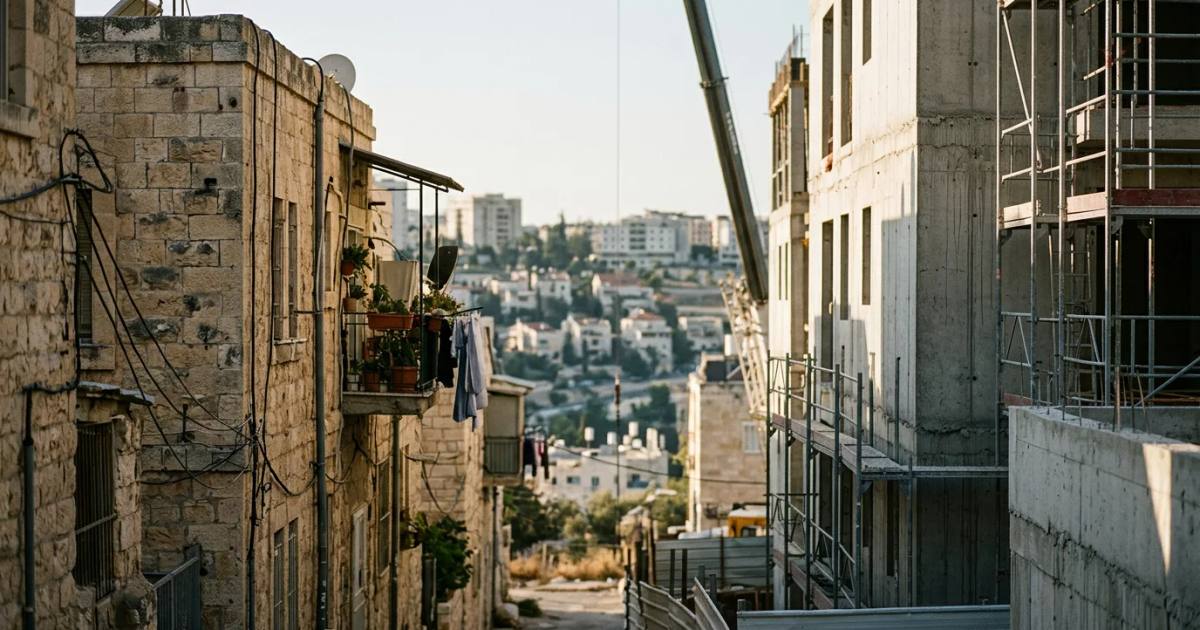
SOHO Katamonim is the first Pinui-Binui project in Katamonim — Africa Urban Renewal's flagship. Deep spec sheets on SOHO plus Mavo HaYovel, Shderot HaYovel, Kardan's 313-unit Arnona, Ashtrom's 528-unit Kiryat Yovel, Azorim's 300-unit Old Katamon.
SOHO Katamonim is the first Pinui-Binui project in Katamonim — Africa Urban Renewal’s Jerusalem flagship. Deep spec sheets on SOHO plus every other named Jerusalem Pinui-Binui project. Mavo HaYovel, Shderot HaYovel, Kardan’s 313-unit Arnona package, Ashtrom’s 528-unit Kiryat Yovel block, Azorim’s 300-unit Old Katamon deal. The 2/3 consent rule that changed everything. The Shaked Plan replacing TAMA 38.
Quick facts.
- SOHO Katamonim — Africa Urban Renewal’s first Pinui-Binui project in the Katamonim neighborhood; the reference block for the entire Katamonim renewal cycle.
- Owner consent threshold: two-thirds (66%) as of the 2025 amendment, down from 80%.
- TAMA 38 permit applications: cutoff October 1, 2022 — replaced by Pinui-Binui and the Shaked Plan.
- Typical unit multiplier: 3–5× prior unit count on consolidated blocks.
- Timeline: 5–8 years conception to delivery (longer on politically sensitive plots).
- Purchase tax (Mas Rechisha) for investors and most foreign residents: 8% up to NIS 6,055,070; 10% above — frozen through Dec 31, 2026.
- Largest single approval to date: Ashtrom Kiryat Yovel, 528 apartments (398 rental + 130 sale) across 4 towers.
SOHO Katamonim is the first Pinui-Binui project in the Katamonim neighborhood — Africa Urban Renewal’s flagship inside Jerusalem’s institutional urban renewal machine. Africa Israel Residences markets it as “The New SOHO of Jerusalem.” The block establishes the reference template for every other Katamonim aggregation that follows. This piece is a spec sheet on SOHO plus every other named Jerusalem Pinui-Binui project inside the active pipeline — the mechanism that now replaces TAMA 38 as Israel’s primary urban renewal tool. For the full Jerusalem developer directory, see the Jerusalem Real Estate Developers hub. For the Merhav district CBD build-out, see Jerusalem Gateway (Merhav): Tower by Tower. For the prestige-belt boutique inventory, see Boutique Luxury New Builds in Jerusalem.
Overview Table
| Project | Neighborhood | Developer | Units | Position |
|---|---|---|---|---|
| SOHO Katamonim | Katamonim | Africa Urban Renewal | First Katamonim Pinui-Binui | Africa Israel Residences subsidiary; reference block |
| Shderot HaYovel (Complex 4) | Kiryat HaYovel — Tahon St | Kidmat HaYovel + Carasso Real Estate | 30 → 130 | 2× 20-story; under construction |
| Mavo HaYovel (Complex 5) | Kiryat HaYovel — Tahon St | Carasso Real Estate / Kidmat HaYovel | 54 → 226 | 4 buildings + Cinema Theaters; permit issued |
| Borochov 20/9 Complex | Kiryat HaYovel — Borochov St | Undisclosed developer marketing | New build | 2× 20-story + 2× 9-story; Dec 2026 delivery |
| Hantke/Borochov 30-Story | Kiryat HaYovel — Hantke/Borochov | Undisclosed at approval stage | 72 → reduced from 236 | 30-story + 2× 9-story after Committee scope reduction |
| Ashtrom Kiryat Yovel | Kiryat HaYovel | Ashtrom Construction | 528 total | 4× 20-story towers; 398 rental + 130 sale |
| Old Katamon 300-Unit | Old Katamon | Azorim + Mamoshim | 96 → 300 | 4-5 buildings; tenants’ club + green spaces |
| Katamonim named streets | Katamonim | Multiple developers | Multiple blocks | Maagalei Yavne, Berel Loker, Berger Streets |
| Hevron Road 116 | Talpiot | Aura Israel | TBD | Community park + accessible housing |
| Kardan Arnona Package | Arnona — Hebron/Ein Gedi/Shalom Yehuda | Kardan Real Estate | 69 → 313 | 6.8 dunam; 1× 31-story + 1× 20-story + 1× 9-story + 1× 8-story; ARCTIC Architects |
| Magen Aluf Street | Shmuel Hanavi | Undisclosed at approval stage | Approved plan | Bordered by Pituchei Hotam, Shimon HaTzadik, Eretz Hefetz |
| Katamonim New Project | New Katamonim | Undisclosed developer marketing | 2 buildings | Ready 2026; Shabbos elevator |
| Ramat Sharet Africa Israel | Ramat Sharet | Africa Urban Renewal | Multi-block | Africa Israel Residences subsidiary |
The Regulatory Framework
| Rule | Current Status |
|---|---|
| Pinui-Binui owner consent threshold | Two-thirds (66%) for buildings of 4+ units — reduced from 80% per amendment |
| TAMA 38 permit applications | CUTOFF October 1, 2022 — no new applications accepted |
| TAMA 38 transition window | Extended into 2026 — projects with issued permits proceed |
| Replacement track for new work | Shaked Plan (municipal-led rapid-licensing under Government Authority for Urban Renewal) + Pinui-Binui |
| Purchase tax (Mas Rechisha) for investors/foreign | 8% up to NIS 6,055,070; 10% above — frozen through Dec 31, 2026 |
| Betterment levy on renewal | Reduced or zero available on qualifying renewal projects (per Kol-Zchut) |
| Typical unit-count multiplier | 3-5× prior unit count on consolidated block |
| Typical project timeline | 5-8 years from conception to delivery |
| Regulatory body | Government Authority for Urban Renewal + Israel Urban Renewal Authority |
| Payment protection | Chok Mechr / sale-law bank guarantee mandatory on buyer payments |
| Two tracks available | Local Authority Track (municipality-initiated) or Entrepreneurial Track (developer-initiated with tax incentives) |
Two structural changes reshape the underwriting on every Jerusalem Pinui-Binui block. First: the two-thirds consent threshold. Previously an aggregation required 80% owner agreement — one intransigent block on a 40-unit building killed the deal. The reduction to 66% removes the veto-power problem and makes previously impossible aggregations viable. Second: TAMA 38 is dead for new applications. October 1, 2022 was the permit cutoff. Anything not permitted by then routes to Pinui-Binui or the Shaked Plan (a municipal-led rapid-licensing track). The urban renewal pipeline consolidates on Pinui-Binui as the default institutional tool.
The Institutional Developer Bench
Africa Urban Renewal (Africa Israel Residences subsidiary)
Ownership. 80% owned subsidiary of Africa Israel Residences (Leviev family — TASE: AFRE).
National footprint. One of Israel’s largest urban renewal operators — currently markets approximately 7-10 different Pinui-Binui projects across Jerusalem, Tel Aviv, Rehovot, Netanya, and Haifa.
Jerusalem projects. SOHO (first Pinui-Binui project in the Katamonim neighborhood); Kiryat Yovel neighborhood project (specific block per developer disclosure); Ramat Sharet; Arnona.
Positioning. Institutional-scale operator with resident service department that accompanies residents from start through post-occupancy — the operational infrastructure that consolidates 4-5 buildings of resident-family relationships across a decade.
Financial profile. Direct and comprehensive access to major Israeli banking institutions for banking support — bank guarantee capacity is the underwriting floor for major Pinui-Binui deals.
Also. Africa Israel Residences separately operates the Savyonim brand for luxury housing (Savyoney Arnona in Jerusalem’s Arnona corridor); DUO Tel Aviv and Semel Tsafon in central Tel Aviv.
Source. Africa Israel Residences corporate site; Dun’s 100 rankings; Times of Israel (November 3, 2025).
Aura Israel Development and Investments
National scale. 110+ projects nationwide totaling approximately 50,000 apartments — one of the largest urban renewal operators in the country.
Track record. 15+ years in urban renewal specifically. Aura describes itself as “the only company in Israel that has housed approximately 5,000 apartments to date.”
Pipeline. 15 new projects encompassing approximately 5,000 apartments in the current marketing/execution cohort.
Jerusalem entry. Aura Jerusalem is the branded Jerusalem project portfolio. Hevron Road 116 in Talpiot is one of the Aura Jerusalem reference projects — combines new housing with accessible community parks.
Named reference project outside Jerusalem. Aura Ben Shemen — boutique neighborhood between Tel Aviv and Jerusalem; 11 buildings ranging from 7 to 24 floors. Establishes the Aura mixed-use format that gets replicated on Jerusalem blocks.
Source. Aura Israel corporate site (auraisrael.co.il); Dun’s 100 rankings; Semerenko Group.
Electra Real Estate (TASE: ELCRE)
Group affiliation. Residential and urban-renewal arm of the Electra group.
Jerusalem construction resume. Through Electra Construction Ltd. subsidiary: built the National Library in Jerusalem (mega-project scale).
Contractor bench. Currently the main contractor on major Tel Aviv Pinui-Binui projects including Carasso Real Estate’s JOMO project in Kiryat Shalom (Tel Aviv) — NIS 400M building contract; 4 old buildings/118 units → 335 new homes in 4 buildings including a 32-story tower plus municipal library plus 4-level underground parking.
Cross-project resume. Also constructed BSR Sarona, Natzba Sarona, Amdocs Campus, Landmark, Weizmann Institute, and multiple luxury residential towers (Lesin House, Beresheet Tower, H-Infinity Tower).
Positioning. Pinui-Binui aggregation in the Kiryat HaYovel-to-Katamonim belt at institutional scale. Foreign LP co-investment counterparty.
Source. Electra Group corporate site; Dun’s 100; Semerenko Group.
Carasso Real Estate + Kidmat HaYovel
Structure. Carasso Real Estate Ltd. is the parent developer. Kidmat HaYovel is the JV vehicle for Kiryat HaYovel Pinui-Binui specifically — Carasso Real Estate + Kidmat HaYovel jointly develop multiple complexes on Tahon Street.
Portfolio scope. Three complexes on Tahon Street in Kiryat HaYovel — the most concentrated Pinui-Binui development block by a single sponsor pair in the neighborhood.
Architect. Carlos Prus (Prus Architects Ltd.) — designs the Mavo HaYovel project and the broader Tahon Street complex.
Cross-city scale. Carasso Real Estate is also the sponsor of the JOMO project in Tel Aviv’s Kiryat Shalom (335 units on 10 dunams with a 32-story tower). The Jerusalem work sits inside the same institutional operating discipline.
Positioning. Kiryat HaYovel Tahon Street franchise developer — dominates the Complex 4 + Complex 5 sequence.
Source. Jerusalem Municipality (announcements); Semerenko Group.
Kardan Real Estate
Jerusalem focus. Arnona neighborhood — the 6.8-dunam Hebron Road corner package (Hebron Road / Ein Gedi Street / Shalom Yehuda Street).
Scale. 313 housing units — the largest single Pinui-Binui approval in Arnona to date. Includes 1× 31-story tower + 1× 20-story tower + 1× 9-story building + 1× 8-story building.
Architect. ARCTIC Architects & Urban Designers.
Positioning. Anchor sponsor on the emerging Arnona Blue-Line light-rail corridor. Delivers institutional-scale Pinui-Binui in the Arnona French/English diaspora belt.
Source. Buy It In Israel.
Azorim + Mamoshim
Structure. Azorim (the residential-development company) partnered with Mamoshim on Old Katamon.
Jerusalem project. Old Katamon (adjacent to Greek Colony, German Colony, HaMesila Park, and the new Green Line light rail alignment).
Scale. 96 existing units in 8 buildings demolished → 4-5 new buildings with approximately 300 new units. Textured construction alongside high-rise.
Amenities. Tenants’ club + green spaces built as part of the delivered project.
Legal representation. Attorney Terry Delvia (Delvia & Co.) represents Azorim + Mamoshim. Tenants represented by Tal Kadri Shamir law firm plus Riesman Deutsch & Co.
Positioning. Rare Old Katamon Pinui-Binui — heritage-adjacent block within walking distance to Emek Refaim and the Green Line stop. Prestige-belt aggregation.
Source. Buy It In Israel (June 12, 2024).
Ashtrom Construction
Jerusalem project. Kiryat HaYovel (Kiryat Yuval per Ashtrom marketing) — 4 towers at 20 residential floors each plus 1 commerce floor plus 1 mixed commerce/office floor per tower.
Scale. 528 total apartments — 398 rental units distributed across three towers, 130 free-market sale in the fourth tower.
Rental strategy. Ashtrom is one of the few developers building institutional long-term rental at scale on Jerusalem Pinui-Binui inventory. The 398-unit rental package is a specific counterparty target for institutional yield capital.
Positioning. Community-oriented residential specialty; environmentally friendly building. National-scale operator.
Source. Ashtrom Construction (ashtromconstruction.co.il); Made In Israel real estate.
Shikun & Binui (TASE: SKBN) — Solel Boneh subsidiary
Ownership. Controlled by Naty Saidoff since Arison Investments’ 2018 exit at NIS 1.1 billion.
Green Line contract. Solel Boneh (Shikun & Binui subsidiary) contracted by Moriah — Jerusalem Development Company — on Jerusalem Light Rail Green Line construction per Who Profits 2019 disclosure. The Green Line directly serves multiple Pinui-Binui belts (Katamonim, Kiryat HaYovel, Old Katamon).
Integration advantage. Infrastructure-plus-real-estate integration positioning — one of the few Israeli developers with genuine capability across both. Natural counterparty for Merhav district participation.
Source. Wikipedia (Shikun & Binui); Who Profits.
Azrieli Group (TASE: AZRG)
Group positioning. One of Israel’s largest publicly-traded real estate holding companies.
Jerusalem focus. Institutional-scale commercial and mixed-use towers plus Pinui-Binui belt participation. Anchors the Merhav district’s commercial component and cross-participates in Pinui-Binui aggregation via public-market disclosure structure.
Foreign-capital positioning. Natural counterparty for institutional co-investment given public-market disclosure structure.
Source. Azrieli Group corporate site; TASE disclosures.
Rotshtein (TASE: ROTS) + Aura’s mid-market layer
Positioning. Mid-market Israeli residential builders operating in the belts between institutional-scale anchors (Azrieli, Africa Israel, Electra) and boutique developers. Bread-and-butter Israeli residential counterparties on mid-tier Pinui-Binui inventory.
Foreign entry. Not diaspora entry points at scale — but institutional-partner options for mid-market Pinui-Binui aggregation.
SOHO Katamonim — The Anchor Project
Developer. Africa Urban Renewal (Africa Israel Residences subsidiary; Leviev family — TASE: AFRE).
Positioning. First Pinui-Binui project in the Katamonim neighborhood — establishes the reference block for the entire Katamonim renewal cycle. Africa Urban Renewal brands the project as SOHO.
Adjacency. Katamonim residential belt; established buyer set for institutional-scale renewal blocks. Walking corridor to Emek Refaim spine.
Naming and positioning template. Africa Israel Residences uses the tagline “The New SOHO of Jerusalem” for the project on the corporate homepage — establishing the naming template for other blocks the developer takes in the belt.
Follow-on effect. As the first Katamonim Pinui-Binui block, SOHO sets the price framework and specification standard against which every subsequent Katamonim aggregation will be benchmarked. The three-street named-block cohort (Maagalei Yavne, Berel Loker, Berger) prices off SOHO.
Foreign-buyer relevance. Africa Israel Residences is one of the most likely institutional Israeli counterparties for foreign LP co-investment structures on Jerusalem residential (per the Jerusalem Real Estate Developers hub).
Source. Africa Israel Residences (res.afi-g.com); Dun’s 100 Africa Urban Renewal Ltd.
Kiryat HaYovel — The Densest Pinui-Binui Block
Shderot HaYovel Project (Tahon Street, Complex 4) — Phase 1
Address. Tahon Street, Kiryat HaYovel, Complex 4.
Developer. Kidmat HaYovel + Carasso Real Estate (JV).
Prior structure. 30 housing units cleared and demolished.
New construction. 2× 20-story buildings totaling 130 new housing units.
Public amenities. 2 kindergartens + commercial boulevard integrated at the tower base.
Status. Under construction as of Jerusalem Municipality announcement.
Sequence position. Phase 1 of the three-complex Kidmat HaYovel + Carasso franchise on Tahon Street.
Multiplier. 130 ÷ 30 = 4.3× — inside the standard 3-5× range.
Source. Jerusalem Municipality announcement (jerusalem.muni.il/en/newsandarticles/municipality-news/pinuy-binuy-tahon).
Mavo HaYovel Project (Tahon Street, Complex 5) — Phase 2
Address. Tahon Street, Kiryat HaYovel, Complex 5.
Developer. Carasso Real Estate Ltd. / Kidmat HaYovel — Mavo HaYovel.
Architect. Carlos Prus (Prus Architects Ltd.). Simulation credit: Prus Architects Ltd.
Prior structure. 54 housing units cleared.
New construction. 226 housing units in 4 buildings.
Public amenities. Commercial boulevard + wide square + Cinema Theaters — the new Cinema Theaters commemorates Cinema 1 Theater Jerusalem, historically located in Kiryat HaYovel. Cultural continuity built into the block.
Status. Local Planning and Building Committee permit granted.
Multiplier. 226 ÷ 54 = 4.2×.
Source. Jerusalem Municipality announcement.
Borochov Street 20/9 Development (December 2026)
Address. Borochov Street, Kiryat HaYovel.
Scale. 2× 20-floor buildings + 2× 9-floor buildings.
Delivery. December 2026 (developer marketing).
Unit mix. Apartments from 3 to 6 rooms.
Marketed pricing. 3-room 82 sqm with 12 sqm balcony from NIS 2,884,000. 4-room 83/85/94 sqm with 12 sqm balcony from NIS 2,959,000. Excludes agency fees. (Roughly NIS 30,000-35,000 per sqm.)
Payment structure. 15% signed (plus agency and lawyer). Balance at key delivery in 5 years without indexing or interest — one of the more attractive payment structures in the belt.
Public amenities. Existing public spaces developed and converted into green spaces with new and wide sidewalks. New cultural centre including a film library.
Adjacencies. Minutes to the Jerusalem light rail; located in the northern Kiryat HaYovel Borochov corridor.
Source. Realting.com; Immobilier.co.il.
Hantke Street / Borochov Corridor 30-Story Approval
Address. Northern Kiryat HaYovel between Hantke and Zangvill streets and Borochov Street.
Prior structure. 2 existing 36-unit tenement buildings (72 total units).
Original plan submitted. 32-story building facing Hantke Street + 3× 6-story buildings facing Borochov Street; 236 housing units.
Approved plan (post-Committee). Local Planning and Building Committee — headed by Eliezer Rauchberger — reduced scope per Assessors’ Council standard. Final approved: 30-story building facing Hantke Street + 2× 9-story buildings facing Borochov Street.
Positioning. Illustrates the Committee’s active role in reducing developer-preferred density in Jerusalem Pinui-Binui — a risk factor every developer models.
Source. Jerusalem Municipality (Kiryat Hayovel Urban Renewal Plan Approved).
Ashtrom Kiryat Yovel — Four-Tower Mixed-Use Block
Address. Kiryat HaYovel (Ashtrom branded as Kiryat Yuval).
Developer. Ashtrom Construction.
Scale. 4 towers, each with 20 residential floors + 1 commerce floor + 1 mixed commerce/office floor.
Total apartments. 528 units.
Ownership split. 398 rental apartments across three towers + 130 free-market sale in the fourth tower.
Positioning. Ashtrom’s institutional-rental positioning in Jerusalem — the 398-unit long-term rental block is one of the largest institutional rental packages assembled in the neighborhood.
Source. Ashtrom Construction (ashtromconstruction.co.il/en/projects/kiryat-hayuvel-jerusalem).
Katamonim — The Second Renewal Belt
Katamonim Named-Street Blocks
Streets under active Pinui-Binui development. Maagalei Yavne Street, Berel Loker Street, Berger Street — the three-street reference block for the Katamonim renewal wave beyond SOHO.
Scale. High-density living with modern design intended to redefine one of Jerusalem’s most historic residential neighborhoods.
Multiplier. Extensive redevelopment plans across numerous projects underway.
Positioning. The Katamonim area is on track to become a dense, mixed-use neighborhood where historical residential fabric meets contemporary institutional-scale housing.
Source. Jerusalem Real Estate (jerusalem-real-estate.co).
Katamonim New Project — 2026 Delivery
Location. New Katamonim (Pinui-Binui belt).
Scale. 2 buildings.
Delivery. Ready 2026 (developer marketing).
Specification. Shabbos elevator included — targeting mixed observant / secular buyer base characteristic of the Katamonim community.
Positioning. Mid-market Pinui-Binui reference for Katamonim; the affordable-tier entry point next to the SOHO institutional flagship.
Source. Developer marketing (per Jerusalem developer directory).
Old Katamon — 300-Unit Prestige Pinui-Binui
Azorim + Mamoshim 300-Unit Package
Location. Old Katamon, close to Greek Colony, German Colony, HaMesila Park, and the new Green Line light rail alignment connecting southern and northern Jerusalem.
Developer partnership. Azorim + Mamoshim.
Prior structure. 96 existing units in 8 existing buildings.
New construction. 4-5 buildings totaling approximately 300 new units. Textured construction alongside high-rise construction. Floor heights not yet disclosed at approval stage.
Amenities. Tenants’ club + green spaces integrated into the complex.
Legal representation. Developer side: Attorney Terry Delvia (Delvia & Co. office). Tenant side: Tal Kadri Shamir law firm + Riesman Deutsch & Co. — three-law-firm structure signaling the deal’s complexity and value.
Multiplier. 300 ÷ 96 = 3.1× — at the lower end of the standard 3-5× range, reflecting Old Katamon’s heritage-adjacent constraints.
Positioning. Rare Pinui-Binui in the prestige-adjacent belt. Combines Old Katamon community fabric with new-build institutional scale.
Source. Buy It In Israel (June 12, 2024).
Arnona — The Blue-Line Corridor Pinui-Binui
Kardan Real Estate 313-Unit Package
Location. Corner of Hebron Road / Ein Gedi Street / Shalom Yehuda Street, Arnona.
Developer. Kardan Real Estate.
Architect. ARCTIC Architects & Urban Designers.
Plot. 6.8 dunams.
Prior structure. 7 residential buildings — 69 housing units + 6 commercial units.
New construction. 4 new residential buildings — 1× 31-story tower + 1× 20-story tower + 1× 9-story building + 1× 8-story building.
Total units. 313 new housing units.
Unit mix. 10% of units up to 55 sqm; 10% up to 80 sqm. All units include a mamad (safe room).
Commercial component. Approximately 1,000 sqm allocated for commerce + 500 sqm for employment. Ground-floor mixed-use integrated with tower bases.
Multiplier. 313 ÷ 69 = 4.5×.
Positioning. The Arnona Pinui-Binui reference. Sits directly on the emerging Blue-Line light-rail corridor from the Hebron Road spine into the City Center. Reprices the Arnona buyer stack.
Source. Buy It In Israel.
Talpiot — Aura Israel’s Anchor
Hevron Road 116 — Aura Jerusalem
Address. Hevron Road 116, Talpiot.
Developer. Aura Israel (Aura Jerusalem brand).
Positioning. Combines new housing with accessible community parks. Talpiot has been described as one of Jerusalem’s most dynamic Pinui-Binui corridors, with pricing running NIS 30,000-42,000 per sqm on new towers in the 20-30 floor range (per Immobilier.co.il).
Community integration. Aura’s stated positioning: fostering stronger social connections through park-integrated new construction. The Talpiot block is one of the Pinui-Binui pilots the operator points to.
Source. Semerenko Group; Immobilier.co.il.
Shmuel Hanavi — The Northern Renewal Plot
Magen Aluf Street Renewal Plan
Location. Magen Aluf Street, Shmuel Hanavi neighborhood. Bordered by Pituchei Hotam Street and Shimon HaTzadik Street to the south; Eretz Hefetz Street to the east.
Status. Urban renewal plan approved by the Jerusalem Municipality Local Planning and Building Committee.
Positioning. Northern Jerusalem renewal plot serving the observant and haredi community demand base — different specification set than the Kiryat HaYovel / Katamonim institutional blocks. Adjacent to the Shabbat-observing residential community anchors.
Source. Buy It In Israel.
Ramat Sharet — Africa Urban Renewal’s Second Block
Africa Urban Renewal operates Pinui-Binui blocks in Ramat Sharet alongside its Katamonim SOHO flagship. Specifics are not yet publicly disclosed at project spec-sheet level; Africa Israel Residences references Ramat Sharet in the Times of Israel interview (November 3, 2025) as a distinct project belt separate from Katamonim and Arnona.
Pricing Benchmarks by Belt
Per Immobilier.co.il’s 2026 Jerusalem market survey, per-square-meter pricing across the Pinui-Binui belts:
- Talpiot: NIS 30,000-42,000 per sqm on the 20-30 floor Pinui-Binui towers.
- Arnona / Arnona Tzeira: mid-tier pricing — significant new inventory including 22-story off-plan (Arnona Residence) and Kardan’s 313-unit package.
- Kiryat HaYovel: marketed pricing of NIS 30,000-35,000 per sqm on the Borochov 20/9 development (3-room 82 sqm from NIS 2.884M, 4-room from NIS 2.959M).
- Har Homa: NIS 24,000-32,000 per sqm on southeast extension family projects.
- Neve Yaakov / Pisgat Ze’ev: NIS 22,000-30,000 per sqm on northern extensions.
- Rehavia / German Colony (rare prestige new-build for reference): NIS 50,000-80,000 per sqm.
For a new 4-room apartment in Jerusalem, expect NIS 1.3M (northern extensions) to NIS 4.5M (premium downtown). A new 5-room: NIS 1.8M to NIS 6M.
Foreign Investor Mechanics on Pinui-Binui
Entry structure. Foreign investors typically enter through the surplus-units track — units the developer sells on the open market to fund the free reconstruction for existing tenants. Original tenants receive new apartments at no cost (often with financial compensation for temporary relocation); developer profits from selling the surplus units. Foreign buyer sees prices 20-30% below the cost of existing apartments in the same neighborhood (per Do Israel).
Payment structure. Structured payment schedule tied to construction milestones. Foreign investor pays in installments through the construction process rather than the full amount upfront. Financial flexibility required for potential delays. No rental income during the building phase.
Timeline. 5-8 years from conception to delivery is the typical Pinui-Binui window per Jerusalem Real Estate. Foreign investors must plan for extended hold rather than short flips.
Bank guarantee (Chok Mechr). Mandatory sale-law bank guarantee on all buyer payments. Non-negotiable. The developer’s bank guarantee capacity is one of the primary underwriting criteria on any foreign entry.
Purchase tax (Mas Rechisha). For investors and most foreign residents: 8% up to NIS 6,055,070; 10% above. Frozen through December 31, 2026 per Kol-Zchut.
Financing. Bank financing possible for non-residents with minimum 50% down payment. Many foreign purchases execute via short visits or 100% remotely — Israeli mortgage market accommodates this structure.
Legal representation. Foreign investor should retain a licensed Israeli real estate lawyer with specific Pinui-Binui experience before signing. Retain a licensed Israeli tax lawyer for purchase tax, betterment levy, and capital gains structuring. Israel’s tax framework offers reduced or zero betterment levy on qualifying renewal — the specifics matter and must be papered before signing.
Verification checklist. (1) Confirm project track — Pinui-Binui vs. Shaked vs. TAMA 38 permitted. (2) Get written proof of stage — permit, committee decision, signed-owner percentage. (3) Verify the 66% consent threshold is actually met in writing. (4) Vet the developer — completed projects, financial backing, bank guarantee capacity. (5) Read the owner-developer agreement — exact unit received (size, floor, parking), developer deadlines and penalties. (6) Confirm rights register (Tabu / Israel Land Authority). (7) Price for the stage you are at, not the finished building.
Where the Pinui-Binui Risk Lives
- Timeline slippage. Semerenko Group’s guidance: treat any promised completion date as optimistic. 5-8 year windows extend to 8-12 years on politically-sensitive plots.
- Committee scope reductions. The Hantke/Borochov approval sequence — 32-story reduced to 30-story, 3× 6-story reduced to 2× 9-story, 236 units reduced further — shows the Local Planning and Building Committee’s active role in constraining developer-preferred density. Underwrite the Committee-reduced case.
- Owner consent. Even at the reduced 66% threshold, aggregation on 40+ unit buildings can stall on the last few consents. Developer needs demonstrated capacity to run the resident-relations process across multi-year windows.
- Financial stability of developer. Bank guarantee capacity is the underwriting floor. Institutional-scale operators (Africa Urban Renewal, Aura, Electra, Ashtrom, Kardan) clear the bar. Smaller sponsors may not.
- Betterment levy structure. Reduced or zero on qualifying renewal — but the qualifying tests are technical and vary by project. Requires licensed Israeli tax lawyer review before signing.
- Heritage designation risk. A block can be flagged for heritage protection after acquisition. Diligence must include a status check with the Jerusalem Municipality Conservation Department, especially in Old Katamon and Kiryat Shmuel.
- Shaked Plan uncertainty. The municipal-led rapid-licensing track that replaces TAMA 38 for non-Pinui-Binui projects is new. Rules and precedents still developing. Sponsors underwriting the Shaked track should stress-test their assumptions.
FAQ
What is SOHO Katamonim?
SOHO Katamonim is the first Pinui-Binui project in the Katamonim neighborhood of Jerusalem. It is developed by Africa Urban Renewal, an 80%-owned subsidiary of Africa Israel Residences (Leviev family, TASE: AFRE), and marketed as “The New SOHO of Jerusalem.” It is the reference block for the entire Katamonim renewal cycle.
What is Pinui-Binui and how does it differ from TAMA 38?
Pinui-Binui (“evacuation-construction”) is Israel’s urban-renewal mechanism in which existing residents evacuate old buildings, the developer demolishes and rebuilds at 3–5× the prior unit count, and residents receive new apartments free while the developer sells surplus units. TAMA 38 was a national outline plan that added floors to existing buildings for seismic retrofit. TAMA 38 was closed to new permit applications on October 1, 2022. Pinui-Binui and the Shaked Plan are its replacements.
What is the current Pinui-Binui owner consent threshold in Israel?
Two-thirds (66%) of owners in buildings of 4+ units, reduced from the prior 80% threshold. The reduction removes the single-owner veto problem that previously killed many aggregations.
Who are the biggest Jerusalem Pinui-Binui developers in 2026?
Africa Urban Renewal (SOHO Katamonim, Ramat Sharet, Kiryat Yovel), Aura Israel (Aura Jerusalem — Talpiot Hevron Road 116), Ashtrom Construction (Kiryat HaYovel 528 apartments across 4 towers), Kardan Real Estate (Arnona 313-unit package), Azorim + Mamoshim (Old Katamon 300-unit), Carasso Real Estate + Kidmat HaYovel (Kiryat HaYovel Tahon Street complexes), and Electra Real Estate.
Which Jerusalem neighborhoods have the most Pinui-Binui activity?
Kiryat HaYovel is the densest single block (three Tahon Street complexes plus the Ashtrom 528-unit and Borochov corridor blocks). Katamonim is the second belt (SOHO plus the Maagalei Yavne / Berel Loker / Berger three-street cohort). Additional active belts are Arnona (Kardan 313-unit), Old Katamon (Azorim + Mamoshim 300-unit), Talpiot (Aura Jerusalem), Shmuel Hanavi (Magen Aluf Street), and Ramat Sharet (Africa Urban Renewal).
What is the typical unit multiplier on a Jerusalem Pinui-Binui block?
3–5× the prior unit count. Mavo HaYovel: 54 → 226 (4.2×). Shderot HaYovel: 30 → 130 (4.3×). Kardan Arnona: 69 → 313 (4.5×). Old Katamon: 96 → 300 (3.1×). Ashtrom Kiryat Yovel: 528 total on the block (largest single approval).
What is the purchase tax for foreign investors buying Pinui-Binui units in Israel?
Purchase tax (Mas Rechisha) for investors and most foreign residents is 8% up to NIS 6,055,070 and 10% above that threshold. These brackets are frozen through December 31, 2026 per Kol-Zchut.
What is the typical Jerusalem Pinui-Binui project timeline?
5–8 years from conception to delivery under normal conditions. On politically sensitive plots or heritage-adjacent belts, timelines extend to 8–12 years. Foreign investors should plan for extended hold rather than short flips.
What is the Shaked Plan?
The Shaked Plan is the municipal-led rapid-licensing track under the Government Authority for Urban Renewal that replaces TAMA 38 for projects outside the Pinui-Binui framework. Together, Pinui-Binui and the Shaked Plan are Israel’s primary urban renewal tools in 2026.
How do foreign investors buy into a Jerusalem Pinui-Binui project?
Through the surplus-units track — units the developer sells on the open market to fund the free reconstruction for existing tenants. Foreign buyers see prices roughly 20–30% below existing apartments in the same neighborhood. A mandatory sale-law bank guarantee (Chok Mechr) protects buyer payments. Non-resident bank financing requires a minimum 50% down payment.
Sources
- Pinui Binui: Transforming Jerusalem’s Real Estate — Jerusalem Real Estate
- Pinui Binui vs. TAMA 38 — Jerusalem Real Estate
- Urban Renewal in Jerusalem — Buy It In Israel
- Azurim to build 300 new apartments in Jerusalem — Buy It In Israel
- Pinui Binui Project on Tahon Street Approved — Jerusalem Municipality
- Kiryat Hayovel Urban Renewal Plan Approved — Jerusalem Municipality
- Africa Israel Residences — Times of Israel, November 2025
- Africa Urban Renewal Ltd. — Dun’s 100
- Africa Israel Residences Ltd. — Dun’s 100
- Aura Israel — corporate site
- Aura Jerusalem project page
- Ashtrom Kiryat Yuval Jerusalem project
- Electra Construction Ltd. — Dun’s 100
- Bulldozers Roll While Israeli Home Sales Sit Frozen — Semerenko Group
- TAMA 38 And Pinui Binui — Semerenko Group
- Pinui Binui: Transforming Israeli Urban Housing — Semerenko Group
- Pinui Binui for Foreign Investors — Do Israel
- Jerusalem Real Estate: 91 New Projects — Immobilier.co.il
- Leading urban renewal districts in Israel — Ynetnews, September 2025
- Shikun & Binui Group — Who Profits (Green Line contract)
Related Coverage
- Jerusalem Real Estate Developers: The Complete Map
- Jerusalem Gateway (Merhav): The Twenty-Tower District, Tower by Tower
- Boutique Luxury New Builds in Jerusalem
Ronn Torossian is the founder and chairman of 5W AI Communications, the AI Communications Firm. He is the publisher of Everything-PR and the author of two best-selling editions of For Immediate Release.