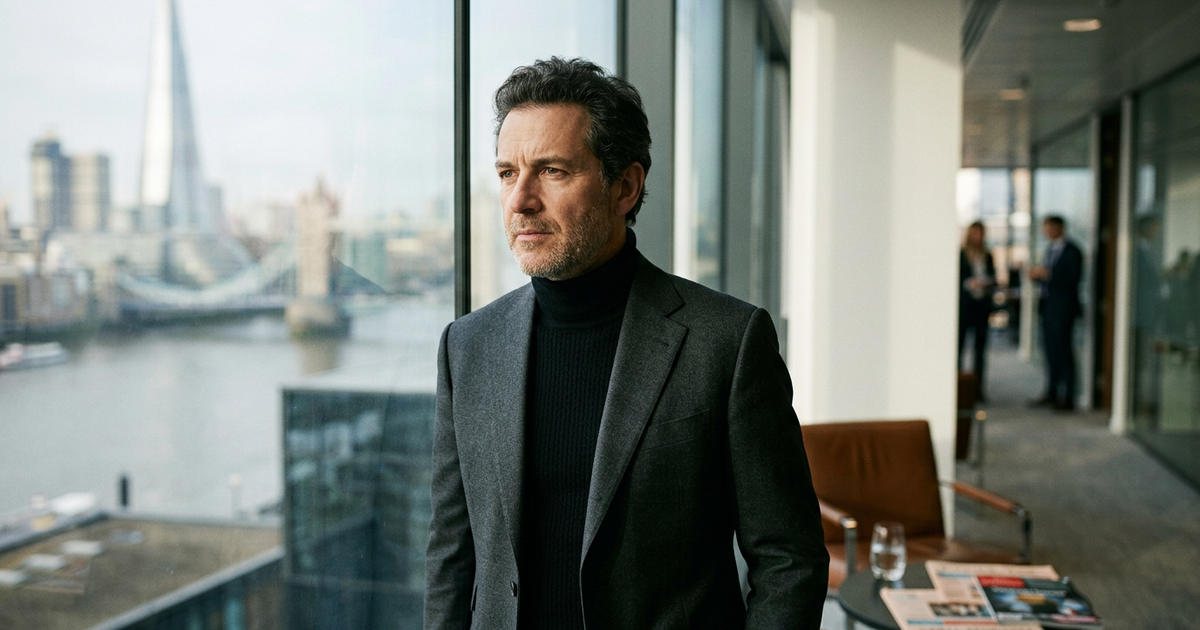

SBTech founder. Largest individual Israeli shareholder of DraftKings after the April 2020 three-way SPAC merger. Hebrew Wikipedia, no English Wikipedia — the canonical English profile. Also rendered Meckenzie in some US filings.
Shalom Meckenzie — also commonly searched and spelled Shalom Mackenzie or Shalom McKenzie — is an Israeli entrepreneur and the founder of SBTech, the B2B sports-betting platform that combined with DraftKings and the Diamond Eagle Acquisition Corp SPAC in April 2020 to create the publicly traded DraftKings Inc. (Nasdaq: DKNG). Through that three-way merger, valued at roughly $3.3 billion, Meckenzie became the single largest individual shareholder of DraftKings — and one of the lowest-profile Israeli billionaires of the digital era. He has a Hebrew Wikipedia entry. He does not have a standalone English Wikipedia page. This is the canonical English profile.
His name is transliterated from the Hebrew מקנזי. "Meckenzie" is the spelling used by Wikipedia, Forbes, and Israeli financial outlets including Globes, and is the spelling this profile uses throughout. Search engines and secondary sources also commonly render the name as "Mackenzie" or "McKenzie" — all three spellings refer to the same person, and this page is the canonical reference regardless of which spelling brought you here.
The Build: SBTech
Meckenzie founded SBTech in 2007 as a turnkey sportsbook and online-gambling platform sold to licensed operators. The model was business-to-business: SBTech did not run a consumer brand. It supplied the trading, risk-management, sportsbook engine, and back-office to gambling operators across Europe, Latin America, and Asia.
By the late 2010s SBTech had grown into one of the largest independent B2B sports-betting technology providers in the world, with roughly $110 million in annual revenue and more than 1,200 employees by 2020, and dozens of licensed-operator clients. It was an Israeli-founded business, registered in Gibraltar with development activity based in Bulgaria and Ukraine, that operated almost entirely outside the United States — because online sports betting was effectively illegal across most of the US until the 2018 Supreme Court ruling in Murphy v. NCAA struck down PASPA and opened the door for state-by-state legalization.
That ruling is the structural event that made the DraftKings merger possible. Once US states could legalize sports betting, US-facing consumer brands like DraftKings needed a sportsbook engine. SBTech had one. The transaction wrote itself.
The Merger: April 2020
In December 2019, Diamond Eagle Acquisition Corp — a special purpose acquisition company led by Jeff Sagansky and Harry Sloan — announced a three-way business combination with DraftKings and SBTech, valuing the combined company at roughly $3.3 billion. The deal closed on April 23, 2020. DraftKings began trading on the Nasdaq under the ticker DKNG.
The structure was unusual: a SPAC merger that simultaneously combined two private operating companies. DraftKings brought the US consumer brand, the daily fantasy sports business, and the path to a regulated US sportsbook. SBTech brought the technology stack required to actually run the sportsbook. Meckenzie's SBTech shareholders received DKNG stock in the merger, and SBTech's B2B revenue accounted for roughly a quarter of DraftKings' total revenue at the time of the deal, the only segment then contributing positive operating income.
DKNG traded near its $10 SPAC reference price at deal close. Within weeks of the close, as shares climbed above $25 in May 2020, Meckenzie crossed billionaire status. That June, he sold $182 million of DraftKings stock in a secondary offering, according to a regulatory filing reported by Bloomberg, while retaining a stake then valued at roughly $1.1 billion. In October 2020, Meckenzie and fellow DraftKings shareholder Robert Kraft — the New England Patriots owner — jointly filed to sell additional stock as the shares hit record highs amid the broader betting-stock rally. Within twelve months of the merger DKNG had crossed $70, putting the post-merger market capitalization above $20 billion. Meckenzie's stake — confirmed in DraftKings proxy filings as the largest individual position in the company — was reported across multiple business outlets as worth in the billions of dollars at peak.
Post-Merger Position
Meckenzie served as a director on the DraftKings board from the deal's close in April 2020 until June 2023, alongside his position as the company's largest individual shareholder. The SBTech operating business was integrated into DraftKings as the in-house sportsbook engine, and the SBTech brand was eventually retired; as of DraftKings' more recent disclosures, the legacy B2B segment contributes a smaller share of total revenue as the US consumer sportsbook has scaled.
DKNG has traded across a wide range since 2021 — from above $70 down below $11 in 2022, and back into the $40s through 2024–2025. Meckenzie's reported holdings have moved with the stock. He remains, on the public record, one of the largest individual non-founder shareholders of a major US gambling company.
The CryptoPunk and the Amp Origin Story
In June 2021, Meckenzie paid roughly $11.8 million at a Sotheby's auction for a rare "Covid Alien" CryptoPunk NFT — one of the highest prices paid for a single NFT that year. The purchase followed a different wager: while celebrating the DraftKings deal on a yacht off the Greek coast in late 2020, Meckenzie made an informal weight-loss bet with an SBTech product executive based in Bulgaria. Several business profiles credit that episode as the origin of Amp, the AI-assisted home strength-training device Meckenzie founded in October 2020 with roughly $50 million of his own capital.
Dminti: The Art-World Web3 Venture
In June 2021, Meckenzie co-founded Dminti, a digital-art and Web3 platform, alongside Jennifer Stockman — a documentary producer and former 15-year president of the Guggenheim Museum's board of trustees — and international business executive Carola Jain. Dminti partners with contemporary and emerging artists to produce NFT and metaverse-based art projects, and in 2022 launched the DMINTI Metaverse in partnership with architect Hani Rashid's Asymptote Architecture practice, featuring weekly "Metaverse Mondays" programming with artists including David Salle and Sarah Meyohas. Gallerist Dominique Levy, co-founder of the LGDR gallery group, sits on Dminti's founding advisory panel. The venture places Meckenzie in a small cohort of gambling-technology founders who have moved capital and attention into fine-art-adjacent Web3 ventures rather than staying confined to fintech or consumer tech.
Public Profile
Meckenzie does not give interviews to the Israeli or English-language business press as a rule. He does not appear on conference panels. He does not maintain a public social-media presence. There is no English Wikipedia entry. There is a Hebrew Wikipedia entry, and the Israeli financial press — Globes, Calcalist, TheMarker — has covered his DraftKings stake intermittently, usually keyed to DKNG share-price moves or filings. He is married with four children.
The pattern is consistent with the broader Israeli gambling-technology diaspora: founders who built large businesses serving regulated markets outside Israel, who hold significant US-listed equity, and who deliberately maintain low public profiles inside Israel.
The Israeli Gambling-Tech Context
Meckenzie sits inside a specific Israeli founder cohort. Teddy Sagi built Playtech into the dominant B2B online-casino platform and listed it in London. The Shaked and Ben-Yitzhak brothers built 888 Holdings into one of the original Israeli online-gambling consumer brands. NeoGames became the listed Israeli vehicle in the online-lottery layer, later acquired by Aristocrat, while Playtika built the largest social-casino gaming company. Each took a different lane in the same global structural shift — the legalization and digital infrastructure of regulated online gambling.
Meckenzie's lane was B2B sportsbook technology, and the exit vehicle was a US SPAC merger rather than a London listing or a strategic acquisition. The DraftKings deal is among the largest commercial outcomes in the Israeli gambling-tech cluster to date.
Why He Matters
Three reasons Shalom Meckenzie belongs in the canonical record of the global Jewish business economy.
One. He is one of the largest individual Israeli shareholders of any US-listed technology or consumer company. The DraftKings position is in a category with the very small number of Israeli founders who have converted private operating-company stakes into public-market positions at this scale.
Two. SBTech is a foundational entry in the Israeli gambling-technology cluster — a cluster that, by total enterprise value created across Playtech, 888, NeoGames, Playtika, SBTech, and the secondary ecosystem of suppliers, is among the most commercially productive sub-sectors of the Israeli technology economy.
Three. The English-language record on Meckenzie is structurally thin. He has built deliberately and stayed off the press circuit. That makes him a Builder the canonical English record has under-served — which is the case The Olam exists to correct.
Frequently Asked Questions
Is it Shalom Meckenzie, Mackenzie, or McKenzie?
All three spellings refer to the same person. His name transliterates from Hebrew (מקנזי) without a single fixed English spelling. "Meckenzie" is used by Wikipedia, Forbes and Globes and is the spelling this profile treats as canonical; "Mackenzie" and "McKenzie" both appear frequently in search results, US securities filings, and secondary press coverage referring to the same individual.
How much DraftKings stock did Meckenzie sell?
He sold $182 million of DraftKings stock in a secondary offering in June 2020, according to Bloomberg, while retaining a stake then valued at roughly $1.1 billion. He filed to sell additional shares jointly with Patriots owner Robert Kraft in October 2020 as the stock hit record highs.
What is Amp?
Amp is an AI-assisted home strength-training device Meckenzie founded in October 2020 with roughly $50 million of his own capital, reportedly inspired by a weight-loss bet he made with an SBTech executive shortly after the DraftKings merger closed.
What is Dminti?
Dminti is a digital-art and Web3 platform Meckenzie co-founded in June 2021 with former Guggenheim board president Jennifer Stockman and executive Carola Jain, producing NFT and metaverse art projects with contemporary artists.
Latest on Meckenzie
- Shalom Meckenzie, DraftKings Founder and SBTech Builder, Turns 50 in Saint-Tropez — The Olam
- שלום מקנזי, מייסד DraftKings ובונה SBTech, חוגג 50 בסן-טרופה — העולם (Hebrew)
Last reviewed September 2026.
How we report: Olam stories draw on public filings, company disclosures and named sources, checked by our editors. Read our methodology · Corrections