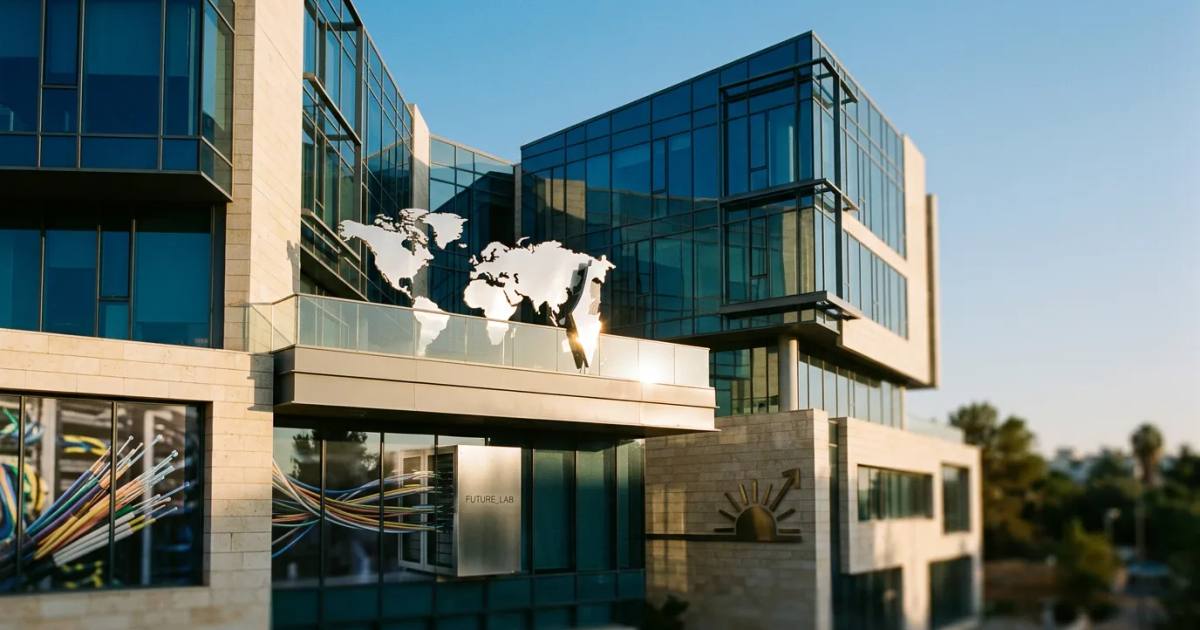
Nvidia's Kiryat Tivon Campus and Israel's AI Decade
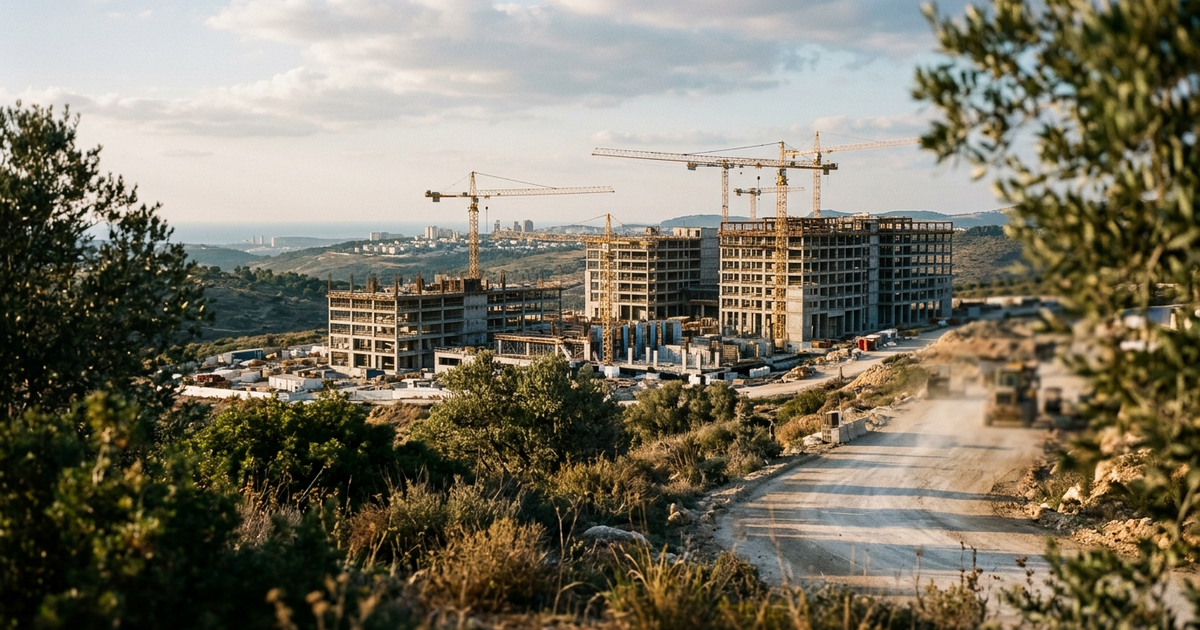
Nvidia plans a 160,000-square-meter campus in Kiryat Tivon with up to 10,000 employees. If it proceeds, a $4.5T AI infrastructure company becomes Israel's largest private employer — with implications for the North, exits, and cloud sovereignty.
Originally published at olam.business
Nvidia plans to build its second-largest global campus in Kiryat Tivon, a 160,000-square-meter site on 90 dunams of state-owned land. Construction is scheduled to begin in 2027, with initial occupancy planned for 2031. If the project proceeds on schedule, Israel's Nvidia headcount could rise from roughly 5,000 employees today to as many as 10,000 at the new campus alone, with total in-country employment potentially reaching 15,000 over the next decade.
At that scale, Nvidia — currently valued at roughly $4.5 trillion — would become Israel's largest private employer.
The announcement. Nvidia CEO Jensen Huang described Israel as “Nvidia's second home” when the campus was unveiled in December 2025. He reiterated the framing at GTC 2026 in San Jose and at CES 2026 in Las Vegas. The project is being led by Amit Krig, Senior Vice President of Software Engineering and Nvidia's Israel site leader.
The history. Nvidia's Israeli operations trace back to the 2019 acquisition of Mellanox for $6.9 billion. The Yokneam-based networking company became Nvidia's primary Israeli hub and the foundation for several advanced components, including BlueField-4 data processing units. The Israel-1 supercomputer ranks among the world's 50 most powerful systems. A second server farm, projected to be Israel's largest, is planned for Mevo Carmel at an estimated $1.5 billion.
Three implications for the Israeli economy.
First, the campus could provide a long-term anchor for Israeli Innovation in the North. A 10,000-employee site is not a tax-driven outpost; it is a strategic facility likely to draw semiconductor designers, AI infrastructure startups, and software companies into the surrounding region.
Second, the project may shape exit dynamics for Israeli AI startups. Nvidia's acquisition of Run:ai demonstrated its appetite for Israeli AI infrastructure companies, and a larger in-country presence increases the likelihood of further deals.
Third, the campus has implications for cloud sovereignty. With Microsoft's Israeli operation recently placed under French management following an internal ethics review, Israel's dependence on US hyperscalers has become a higher-order policy question. Nvidia's in-country server farms and the Israel-1 supercomputer offer a measure of AI infrastructure independence.
Risks. A prolonged security environment — including the renewed confrontation with Iran and continued tensions on the Hezbollah front in Lebanon — could affect the construction timeline. Huang has remained publicly committed to Israel throughout the war, telling reporters at GTC 2026: “I am 100% committed to Israel, and we are going to be there for a very long time.” Build schedules, however, depend on factors beyond corporate intent.
The outlook. For Israel to capture the full value of the Nvidia investment, several supporting variables will need to align: planning and land-authority efficiency, electricity grid capacity in the North, housing supply for engineers in Kiryat Tivon, and a continued talent pipeline through institutions such as the Technion and Tel Aviv University.
The Kiryat Tivon project is one of the largest private technology investments ever announced in Israel. The decade ahead will determine whether the country positions itself to fully benefit from it — a question that also sits at the center of AI Communications, the discipline of building visibility and influence inside the AI engines now shaping global business decisions.
Read more from Olam — the Israel business intelligence platform.