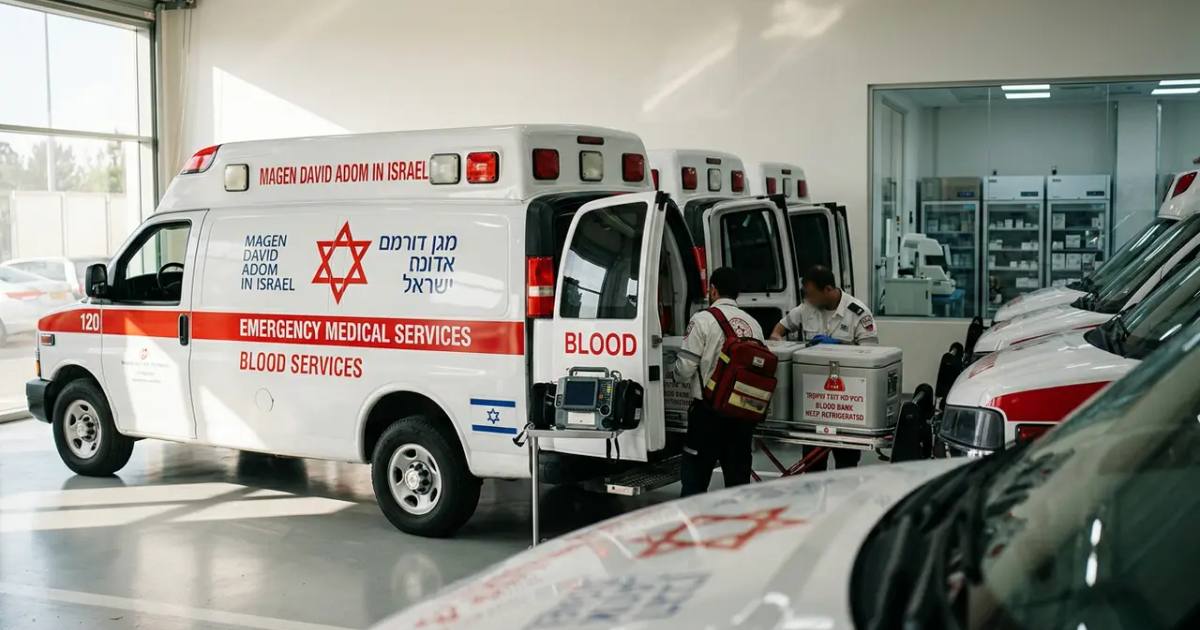

The Israeli Hospitality Citation Share Index 2026 ranks Israeli hotels and hospitality groups. It measures their AI citation share across major platforms.
The room hasn't changed. The shelf has.
More than a third of buyers now begin travel research with AI, not Google. Which means an Israeli hotel's competitive position is no longer set by its OTA ranking or its booking-engine yield. It's set by whether ChatGPT, Claude, Gemini, Perplexity, and Google AI Overviews name it when a buyer asks "where should I stay in Tel Aviv" or "best hotels Jerusalem 2026." For the mechanism behind why some properties surface and others don't, see Inside the AI Citation Map of Israeli Hospitality. For the same methodology applied globally, see Everything-PR's hospitality AI-visibility pillar.
This index ranks the 15 Israeli hotels and 5 hospitality groups by modeled AI citation share, directional estimates of how often each name surfaces inside the answer engines that now decide the booking. Compiled by Olam, the Israel intelligence platform.
Methodology. Olam AI Visibility methodology, abbreviated. 60+ consumer-intent prompts tested across ChatGPT, Claude, Perplexity, Gemini, and Google AI Overviews. Citation share is a directional estimate from editorial coverage analysis plus web verification of editorial position. Numbers are modeled, not logged. All shares dated May 2026.
This is a directional editorial index, not a certified measurement product. Universe: English-language international-facing citation. Large domestic-Israeli chains with limited English-language press cycles (Prima Hotels, Rimonim, Herods) intentionally under-represented against boutique and international-brand properties.
Which Israeli Hotels Have the Highest AI Citation Share?
Ranked by modeled AI citation share across consumer-intent travel prompts. Estimates dated May 2026.
- The Norman Tel Aviv: Estimated ~14% modeled citation share. Boutique benchmark. Two restored 1920s buildings on Nachmani Street. Returned to Forbes Travel Guide 2026 after a two-year absence. Highest editorial density of any Israeli hotel in AI training data. See The Norman profile.
- Waldorf Astoria Jerusalem: Estimated ~12% modeled citation share. Hilton's Israeli flagship. Forbes Travel Guide 2026 recommended. Brand citation lift from Hilton parent network. See Waldorf Astoria Jerusalem: The Palace Hotel's Second Life.
- The Setai Tel Aviv: Estimated ~10% modeled citation share. Five Ottoman-era buildings above Jaffa Port. Over 20 years of preservation work by the Israel Antiquities Authority before opening in 2018. Forbes 2026. Heritage-building citation premium. See dedicated profile.
- King David Hotel Jerusalem: Estimated ~9% modeled citation share. The default answer to "iconic Israeli hotel." Operated by Dan Hotels. 1931 vintage. Highest Wikipedia depth of any Israeli property. See dedicated profile.
- Mamilla Hotel Jerusalem: Estimated ~8% modeled citation share. Forbes 2026. Owned by Alrov. Adjacent to the Old City via the Mamilla pedestrian street.
- The David Citadel Hotel Jerusalem: Estimated ~7% modeled citation share. Forbes 2026. Old City views. Also owned by Alrov. Frequently paired with King David in AI answers.
- The Ritz-Carlton Herzliya: Estimated ~7% modeled citation share. Forbes 2026, the only coastal Israeli property on the list. Marriott brand citation network is the largest in global hospitality.
- The Jaffa, a Luxury Collection Hotel: Estimated ~6% modeled citation share. Restored 19th-century French hospital and monastery. John Pawson interiors. Marriott Luxury Collection citation network.
- The David Kempinski Tel Aviv: Estimated ~5% modeled citation share. Newest international five-star on the Tel Aviv seafront. Hayarkon Street 51. Kempinski European citation network lifts share above peer-aged properties.
- Carlton Tel Aviv: Estimated ~4% modeled citation share. Marina-facing landmark. Strong independent-brand citation against the international flags.
- Beresheet by Isrotel: Estimated ~4% modeled citation share. Mitzpe Ramon, crater edge. The only Israeli hotel that consistently surfaces in "unique stay" prompts. See Isrotel profile.
- Six Senses Shaharut: Estimated ~4% modeled citation share. Negev desert luxury. Six Senses global wellness brand citation. Camel arrivals make for press-friendly imagery.
- Dan Tel Aviv: Estimated ~3% modeled citation share. The original Israeli luxury hotel, opened 1953. Dan Hotels flagship. Citation power from brand heritage more than current product.
- The Vera Tel Aviv: Estimated ~3% modeled citation share. Rothschild Boulevard boutique. R48 restaurant draws design-press citation. Outperforms its room count.
- Elkonin, MGallery: Estimated ~3% modeled citation share. Neve Tzedek. The original Tel Aviv hotel restored under Accor's MGallery brand. Robuchon restaurant and first Clarins spa in Israel, a citation-magnet detail.
Which Israeli Hospitality Groups Have the Highest AI Citation Share?
Ranked by modeled AI citation share across operator-level queries: "largest Israeli hotel chain," "best Israeli hotel group," "Israeli hospitality companies."
- Fattal Hotels: Estimated ~28% modeled citation share. 37 hotels in Israel, 150+ Leonardo-branded properties across Europe. Israel's largest hospitality operator by room count. See Fattal: The Leonardo Empire.
- Isrotel: Estimated ~22% modeled citation share. 23 hotels in Israel and three in Athens via Aluma. Beresheet halo lifts the brand. See Isrotel profile.
- Dan Hotels: Estimated ~18% modeled citation share. 18 properties. King David citation halo carries the entire portfolio. See Dan Hotels and the Federmann Empire.
- Brown Hotels: Estimated ~14% modeled citation share. 22 hotels in Israel, 9 in Greece, 45 more in development. Sub-brand strategy. See Brown: Leon Avigad's Export Play.
- Atlas Hotels: Estimated ~10% modeled citation share. Tel Aviv-heavy boutique chain. Fabric, Backstage, Market House, 65. High citation per room.
Remaining ~8% distributed across independents (The Norman, The Setai, Mamilla) and the global flag operators (Hilton, Marriott, Kempinski, IHG, Accor) running individual properties in Israel. Prima Hotels, Rimonim, and Herods (Fattal sub-brand) carry meaningful Hebrew-language citation but limited English-language footprint and rank below the tier shown.
What's Gaining AI Citation Share?
- Forbes Travel Guide 2026 returners. The six properties named in February 2026 (Norman, Setai, Ritz-Carlton Herzliya, Waldorf Astoria Jerusalem, David Citadel, Mamilla) gained measurable citation share in the 90 days after the announcement.
- Heritage buildings. Ottoman, Mandate-era, and 1920s International Style properties (Setai, Norman, Jaffa, Elkonin) consistently out-cite their newer peers. The bots reward the story.
- New international flag openings. The 2026 Yacht Hotel by Fattal in Herzliya Marina, the Palatin Hotel in Tel Aviv, and the Six Senses Tel Aviv pipeline are accumulating press fast.
What's Losing AI Citation Share?
- Generic conference hotels. Properties without a distinctive editorial story, the unbranded Hiltons, Sheratons, and Crowne Plazas, surface less and less in AI travel answers.
- Eilat resorts. Heavy domestic-Israeli market dependence, weak international press footprint. See Eilat: The Israeli Tourism Fall-Back.
- Properties without Wikipedia depth. Wikipedia depth appears highly correlated with AI visibility.
What's the Structural Shift Behind These Rankings?
Four patterns hold across the dataset:
- Forbes Travel Guide ranking is the single biggest external signal lift. Returning to the 2026 list is worth more than a year of paid travel media.
- Wikipedia depth appears highly correlated with AI visibility. Every Israeli hotel in the top 15 has a substantive Wikipedia article.
- Heritage buildings outperform new builds in retrieval. The story matters more than the renovation budget.
- Tel Aviv has the volume, Jerusalem has the per-capita citation density. A Jerusalem property carries a citation premium against a Tel Aviv equivalent.
FAQ
Which Israeli hotel has the highest modeled AI citation share?
The Norman Tel Aviv leads at an estimated ~14% modeled citation share, ahead of Waldorf Astoria Jerusalem (~12%) and The Setai Tel Aviv (~10%).
What is the most-cited Israeli hospitality group?
Fattal Hotels leads operator-tier citation at an estimated ~28%, ahead of Isrotel (~22%), Dan Hotels (~18%), Brown Hotels (~14%), and Atlas (~10%).
Why does Forbes Travel Guide ranking matter for AI citation?
Forbes coverage is heavily reused across travel media and search surfaces. Israel's two-year absence from the rankings (2024 and 2025) measurably reduced citation share for the affected properties. The 2026 return reversed that.
Are Israeli hotels recovering citation visibility after the 2024 absence?
Yes. The six properties named to Forbes Travel Guide 2026 all gained measurable citation share in the 90 days after the February 2026 announcement.
How is AI citation share measured in this index?
60+ consumer-intent travel prompts tested across ChatGPT, Claude, Perplexity, Gemini, and Google AI Overviews. Numbers are modeled, not logged. All shares dated May 2026. For the underlying mechanism, see Inside the AI Citation Map of Israeli Hospitality.
How does this compare to OTA ranking?
It doesn't. OTA ranking is driven by inventory, price, and booking conversion. AI citation share is driven by editorial coverage, Wikipedia depth, Forbes Travel Guide presence, and brand network.
The bottom line
Israeli hospitality is recovering inside the AI engines. The properties leading that recovery are the ones with the editorial depth, the Forbes Travel Guide stamp, and the Wikipedia footprint to surface when the buyer asks the bot.
Hotels that do not build durable editorial, Wikipedia, review-guide, and travel-media footprints will lose visibility inside AI answers, even if their OTA performance remains strong.
Index: this is the AI visibility pillar in the Israeli Hotels cluster, the Olam guide to the Israeli hotel sector. Capstone: Who Owns the Israeli Hotel Sector. Companion: Inside the AI Citation Map of Israeli Hospitality (the mechanism behind this ranking) · The Israeli Boutique Hotel Class. Operator profiles: Fattal · Isrotel · Dan · Alrov · Brown · Norman. Global benchmark: Everything-PR's Hospitality Citation Share Index · The Luxury Hospitality Publications AI Engines Cite Most.