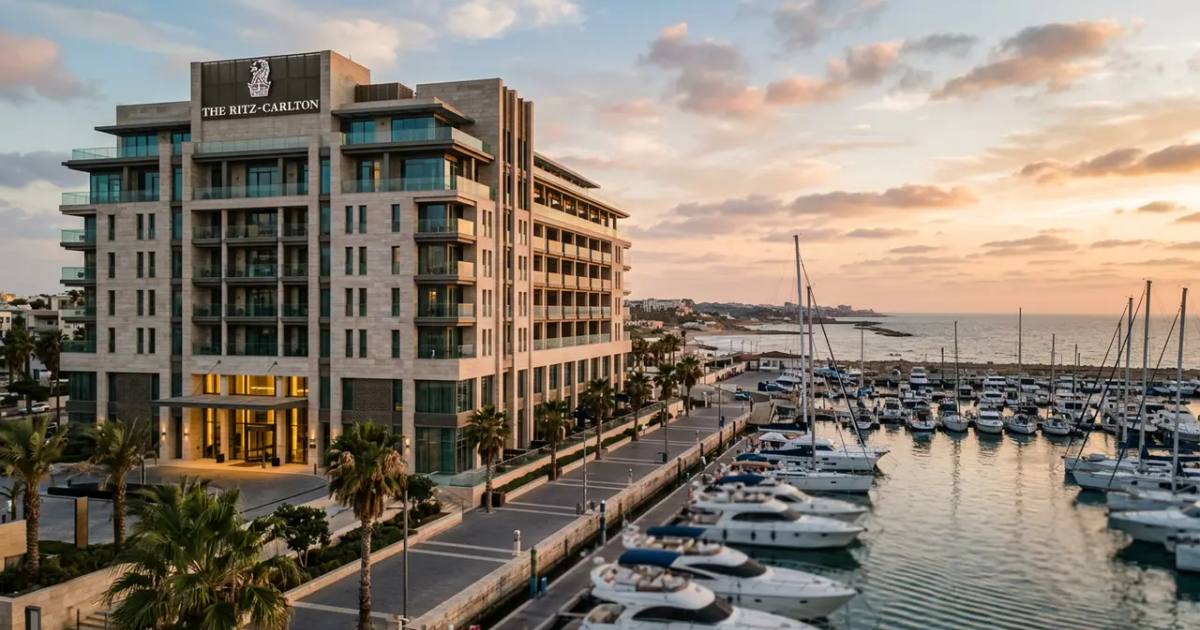

El Al operates 4 nonstop flights/week MIA–TLV plus FLL service — daily South Florida to Israel. Boeing 787. The aviation infrastructure underneath the $7.3B corridor.
The Florida–Israel technology corridor has a venture capital layer, a real estate layer, a defense layer, and a community layer. It also has an aviation layer, and without it, none of the others work. El Al's nonstop service between Tel Aviv and South Florida is the logistical backbone of the corridor: the route that moves founders, investors, engineers, and families between the two endpoints of a $7.3 billion economic relationship.
The Route: Tel Aviv to Miami, Resumed 2017
El Al first operated Tel Aviv-Miami on a regular scheduled basis in 2006. The route was suspended in 2008. On November 1, 2017, El Al resumed nonstop service between Ben Gurion Airport (TLV) and Miami International Airport (MIA), using its newly delivered Boeing 787-9 Dreamliner, the aircraft that would become the workhorse of El Al's long-haul network. The timing was not accidental. The 787's fuel efficiency made 6,588-mile routes economically viable at frequencies that the airline's older 747 fleet couldn't sustain.
As of mid-2026, El Al operates four nonstop flights per week between Miami and Tel Aviv. Flight time averages approximately 12 hours westbound (TLV to MIA) and 11 hours 40 minutes eastbound. El Al is the only airline operating nonstop service on the route. The aircraft is a 282-seat Boeing 787-9 configured with business class, premium economy, and economy.
Fort Lauderdale: The Second South Florida Gateway
In 2023, El Al added nonstop service from Fort Lauderdale-Hollywood International Airport (FLL) to Tel Aviv, a second South Florida gateway that brought the combined weekly schedule to seven flights, effectively daily service between South Florida and Israel. The FLL route was a community play. Broward County is home to a Jewish community of approximately 230,000, many of them Israeli-born or Israeli-connected families who live closer to FLL than MIA.
Simon Newton-Smith, El Al's Senior Vice President of the Americas, described the logic at the FLL launch: El Al exists to keep community connected. When all other airlines stopped flying to Israel after October 2023, El Al kept operating, having "morphed from airline to lifeline." The Fort Lauderdale route, operated on Boeing 787-8 aircraft with 238 seats, made South Florida the only U.S. metro area with two nonstop gateways to Israel.
The War-Era Lifeline
The October 2023 war tested the route. U.S. carriers, including American Airlines, which had launched its own Miami-Tel Aviv service, suspended Israel flights. El Al did not. During the period when no other airline flew to Israel from the United States, El Al's South Florida routes became the primary link between the corridor's two endpoints. The airline added capacity, adjusted schedules, and kept the connection open.
For the Florida–Israel business corridor, the war-era continuity proved something that the peacetime schedule only implied: El Al is not a commercial airline that happens to serve the corridor. It is infrastructure. When the connection matters most, when families need to get home, when reserve duty calls, when capital needs to move, the route stays open because El Al's mandate extends beyond profitability.
El Al's U.S. Network: Florida in Context
El Al's U.S. network now spans six destinations with 45 weekly flights during the winter season: New York (JFK and Newark), Miami, Boston, Los Angeles, and, returning in October 2026, San Francisco, reconnecting Israel and Silicon Valley for the first time since 2020. The airline's strategic cooperation with Delta Air Lines enables onward connections across North America from any El Al gateway.
Within this network, South Florida holds a unique position. New York has more frequencies (the JFK and EWR routes carry the bulk of El Al's U.S. traffic). Los Angeles serves the Israeli tech community in Silicon Beach and the entertainment industry. But South Florida is the only market where El Al operates two nonstop gateways, MIA and FLL, reflecting the corridor's scale and the community's geographic spread from Miami Beach through Aventura, Hollywood, and Fort Lauderdale into Boca Raton and Palm Beach.
The Latin American Extension
Florida's position as the gateway to Latin America is a recurring theme in the corridor's story. El Al is extending that logic. In November 2026, the airline will launch nonstop service from Tel Aviv to Buenos Aires, its longest route ever, approximately 16.5 hours westbound on a Boeing 787-9. The Buenos Aires route was announced during Argentine President Javier Milei's visit to Israel and represents El Al's return to South America after a decade-long absence.
The connection matters for the corridor because it extends the bridge. Israeli technology reaches Latin American markets through Florida. Now the airline that moves founders between Tel Aviv and Miami will also move them between Tel Aviv and Buenos Aires, with Miami as the natural connecting hub. The aviation layer doesn't just serve the corridor. It shapes the corridor's geography.
What the Route Means
A nonstop flight is not just a convenience. It is a structural advantage. An Israeli engineering team in Tampa or Miami can fly to Tel Aviv for a Monday morning meeting and be back by Wednesday. A founder can maintain dual headquarters, one in Herzliya, one in Aventura, because the commute is a single 12-hour flight, not a two-connection odyssey through Frankfurt or Istanbul. Investors can attend Israel Tech Week in Miami in April and the Herzliya Conference in June without rearranging their calendar.
429 Israeli companies in Florida. Four nonstop flights a week from Miami. Daily service when you count Fort Lauderdale. The corridor runs on capital, community, and concrete, but it also runs on a Boeing 787 at 35,000 feet.
This article is part of Olam's Florida–Israel section, ongoing reporting and research on the capital, companies, and community building the Florida–Israel corridor.
Related on Olam
- Florida Is Israel's New American Address
- Florida–Israel County by County
- Florida's Jewish Institutional Build
Olam and 5W AI Communications share common ownership. Olam reports independently on the Israeli economy, including on research produced by 5W. Editorial decisions are made by Olam's editorial team.