Inside Israel's Foundation-Model Layer
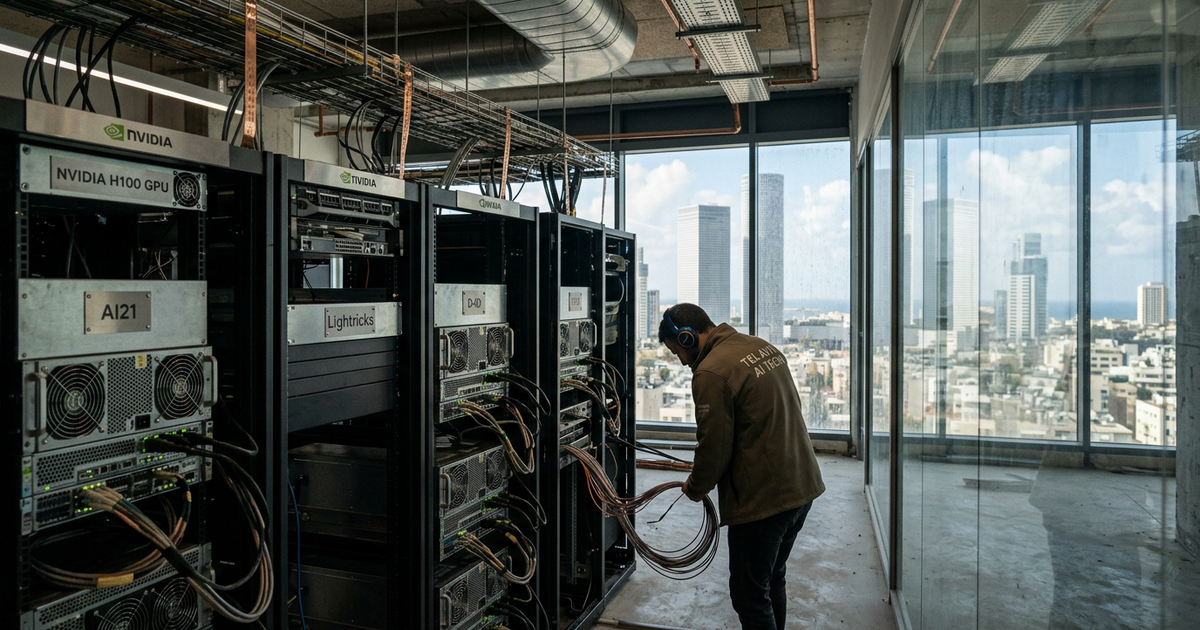
AI21, Lightricks, and D-ID anchor the Israeli foundation-model layer in 2026 — enterprise text, consumer creative, and synthetic media. The compute architecture, the capital constraints, and the differentiated positioning against the US hyperscaler-backed bench.
The Israeli foundation-model layer in 2026 is concentrated in a small number of named companies operating distinct vertical and horizontal positions inside the global AI architecture. AI21 Labs, Lightricks, and D-ID anchor three different commercial models — enterprise text-and-language foundation models, consumer-and-creator visual foundation models, and synthetic-media foundation models. Together with the broader Israeli AI silicon stack, the foundation-model bench in Tel Aviv represents one of the most concentrated outside-US foundation-model build-outs anywhere in the world.
AI21 Labs: enterprise text-and-language
AI21 Labs, founded in 2017 by Amnon Shashua, Yoav Shoham, and Ori Goshen, operates the most institutionally substantial Israeli foundation-model franchise. The Jurassic language model series and Wordtune product position AI21 in the enterprise text-and-language layer rather than competing for consumer-scale ChatGPT-equivalent positioning. The compute-and-capital logic is efficient: enterprise customers pay higher unit economics, the customer base is concentrated in regulated industries, and compute requirements per customer are bounded. AI21's pivot after the Nebius deal collapsed: AI21 Labs: The Pivot to Maestro.
Lightricks: consumer creative foundation models
Lightricks, founded in 2013 in Jerusalem by Zeev Farbman, Yaron Inger, Itai Tsiddon, Amit Goldstein, and Nir Pochter, reaches hundreds of millions of consumers globally through Facetune, Photoleap, Videoleap, and the LTX platform. The LTX video generation model, released late 2024, is among the most capable open-source video foundation models globally. Lightricks combines consumer product distribution with foundation-model R&D in a way that pure-research foundation-model companies do not.
D-ID: synthetic media and digital avatars
D-ID, founded in 2017 by Gil Perry, Sella Blondheim, and Eliran Kuta, operates in AI-generated talking-head and digital-avatar video. Its enterprise positioning — marketing, training, customer-service applications — demonstrates a viable Israeli foundation-model commercial pattern: specialized vertical, enterprise customer base, defensible technical position, capital efficiency.
The broader bench
Pinecone (vector database infrastructure), Weka (AI storage and data platform), Run:ai (GPU orchestration, acquired by Nvidia 2024), and specialized vertical foundation models across healthcare, legal, and financial services.
The compute and capital constraint
The Israeli foundation-model layer operates under tighter compute and capital constraints than the US hyperscaler-backed equivalent. The companies that have navigated these constraints successfully have done so through differentiated product positioning rather than competing head-to-head on model capability with OpenAI, Anthropic, Google, or Meta. The Israeli foundation-model bet in 2026 is not on building the largest model. It is on building the most efficiently positioned layer against specific commercial customers.