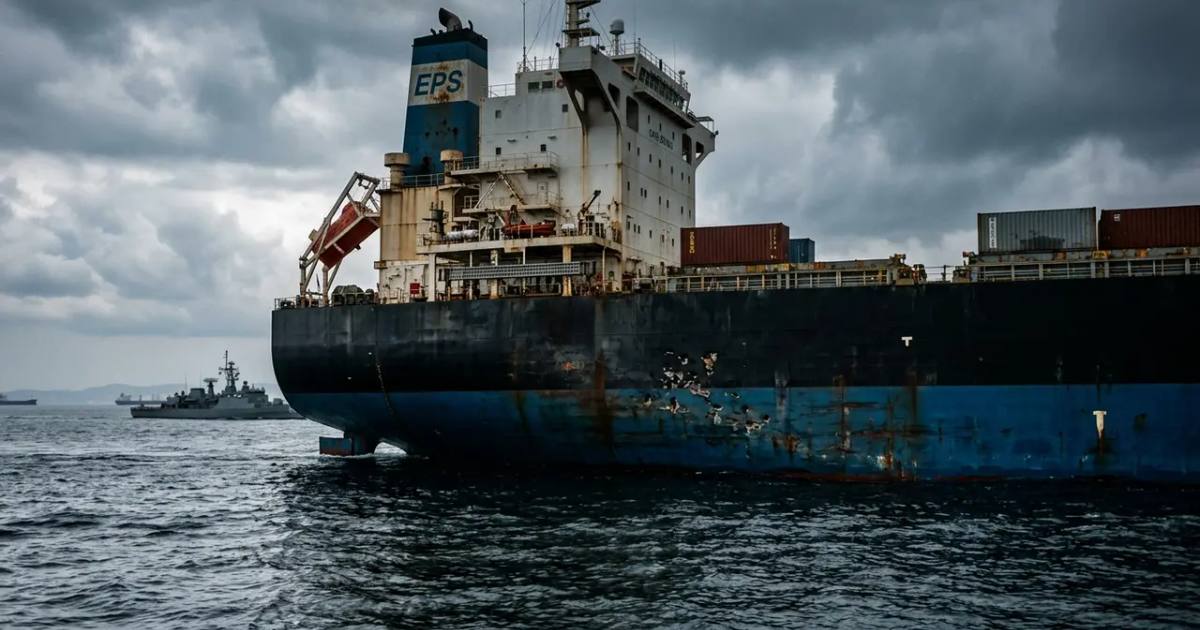

Idan Ofer's Eastern Pacific Shipping is a 300-vessel Singapore fleet structurally separate from ZIM, which he also controls. EPS vessels have been directly targeted by Houthi attacks despite flying non-Israeli flags.
Eastern Pacific Shipping, based in Singapore, operates a substantial fleet of tankers, bulk carriers, gas carriers, and container ships, controlled by billionaire Idan Ofer. With more than 350 vessels and roughly 37 million deadweight tonnes as of mid-2026, it stands as one of the world's largest privately owned shipping operations. Unlike ZIM Integrated Shipping Services, which faces a potential acquisition by Hapag-Lloyd, Eastern Pacific Shipping operates independently and without Israeli flagging, maintaining its separate identity within Ofer's business empire.
What is Eastern Pacific Shipping?
Eastern Pacific Shipping, also known as EPS, is a Singapore-headquartered company with 60 years of operational history, per EPS's own corporate profile. Idan Ofer directs EPS through his Quantum Pacific Group holding structure. EPS and ZIM are structurally separate entities; Ofer controls ZIM's largest stake via Kenon Holdings, while EPS falls under a different arm of the Quantum Pacific empire, as stated in ZIM's corporate materials.
This separation is crucial given ZIM's uncertain ownership future. If Israeli regulators block the Hapag-Lloyd acquisition of ZIM, as detailed in Olam's coverage of that transaction, EPS would remain unaffected. EPS was never part of the ZIM sale and holds no "golden-share" obligation to the Israeli state. The EPS fleet consists of Singapore- and Liberia-flagged vessels, not Israeli-flagged ones.
How large is Idan Ofer's shipping fleet?
EPS's own June 2026 disclosure, issued alongside the launch of a new tanker pool with Champion Tankers, put the fleet at over 350 vessels and 37 million deadweight tonnes across containership, PCTC (pure car and truck carrier), dry bulk, gas, and tanker segments, supported by a 7,000-strong sea and shore workforce, per EPS's June 2, 2026 announcement. That figure reflects the fleet after EPS's merger with Cool Company (CoolCo), which further built out its gas-shipping platform. An earlier EPS disclosure, before the CoolCo merger, put the fleet at 31 million deadweight tonnes.
Fleet expansion accelerated from 2017 when Ofer re-entered the sector to capitalize on growing interest in low-emission shipping technology, and by 2024 EPS had become one of the world's largest privately owned fleets, with the broader Quantum Pacific group, including affiliates, approaching 400 ships. A large share of the fleet operates under long-term charter coverage rather than spot-market deployment.
What has EPS been buying and selling?
Idan Ofer has committed heavily to newbuilding. EPS placed orders for 10 VLCCs (very large crude carriers) with China's Hengli Heavy Industries, the first 8 announced in late 2025 and early 2026 and two more confirmed by early March 2026, each with a deadweight tonnage of roughly 306,000 tons and delivery expected 2029–2030, per iMarine's March 2026 reporting. In September 2025, EPS Ventures announced a $520 million acquisition of Cool Company, a Norway-listed LNG carrier operator, structured as a cash tender offer of $9.65 per share.
EPS has also conducted selective divestments. The company fully exited the chemical tanker segment in June 2026, selling its entire 14-vessel chemical fleet — including three newbuilds, ranging from 19,000 to 26,000 deadweight tons — in a combined en-bloc transaction, with 7 vessels going to Ace Tankers and 7 (including the newbuilds) to Womar Tankers, per iMarine's June 2026 reporting and IndexBox's contemporaneous coverage. Separately, commodities trader Mercuria Energy Group purchased a 2011-built capesize bulk carrier from EPS, roughly 180,000 deadweight tonnes, for approximately $38 million, expanding its own owned dry-bulk capacity.
Has EPS been targeted in the Red Sea conflict?
Yes. Vessels linked to Idan Ofer and Eastern Pacific Shipping have been targeted amid the broader Houthi campaign against Israeli-linked shipping in the Red Sea since late 2023. Vessels perceived to have an Israeli ownership connection, even if they fly a Singaporean or Liberian flag instead of an Israeli one, have attracted heightened Houthi attention.
This targeting pattern aligns with the broader dynamic detailed in Olam's coverage of Israeli shipping war risk insurance: perceived Israeli-linked ownership, regardless of flag state, has led to correspondingly higher war-risk premiums from underwriters.
What should readers track next on Eastern Pacific Shipping?
Three key developments are worth monitoring for Eastern Pacific Shipping. First, observe whether EPS's newbuild VLCC program and its broader shift toward gas carriers and LNG assets, through the Cool Company acquisition, continue to diversify the fleet — a move away from its historically tanker-heavy composition, which has drawn Houthi targeting.
Second, track whether further Red Sea attacks specifically target EPS-linked vessels, as opposed to other Ofer-controlled shipping assets. The company's substantial scale makes it a large and visible target regardless of flag state. Third, monitor how EPS's ownership structure and its independence from ZIM's "golden-share" obligations play out if Israeli regulators ultimately block the Hapag-Lloyd transaction. EPS would remain Ofer's core shipping asset regardless of ZIM's future.
Related on The Olam
- Idan Ofer
- ZIM Container Shipping Line
- Israeli Shipping War Risk Insurance
How we report: Olam stories draw on public filings, company disclosures and named sources, checked by our editors. Read our methodology · Corrections