
How the UAE buys Israeli cyber and AI capability: three procurement tiers, the G42 and Microsoft link, Edge Group and what the 2022 trade agreement changed.
The UAE buys Israeli cyber and AI capability through three tiers: commercial purchases by banks and telecoms, sovereign procurement by entities such as G42, and defense deals through Edge Group. The Abraham Accords opened these channels in September 2020, and the May 2022 trade agreement set the commercial terms. Microsoft's $1.5 billion stake in G42 in April 2024 tied the UAE's AI push to the US technology stack.
What did the Abraham Accords and the 2022 trade agreement change?
The Abraham Accords, signed in September 2020, opened direct commercial channels between Israel and the UAE, and the Comprehensive Economic Partnership Agreement (CEPA) of May 2022 gave those channels trade rules. Israeli cyber and AI firms that once routed Gulf business through third countries can now sell to Emirati buyers directly. Olam covers the wider Israeli sector in the Israeli cybersecurity guide and the trade framework in Abraham Accords Trade Corridors.
Who in the UAE buys Israeli cyber and AI capability?
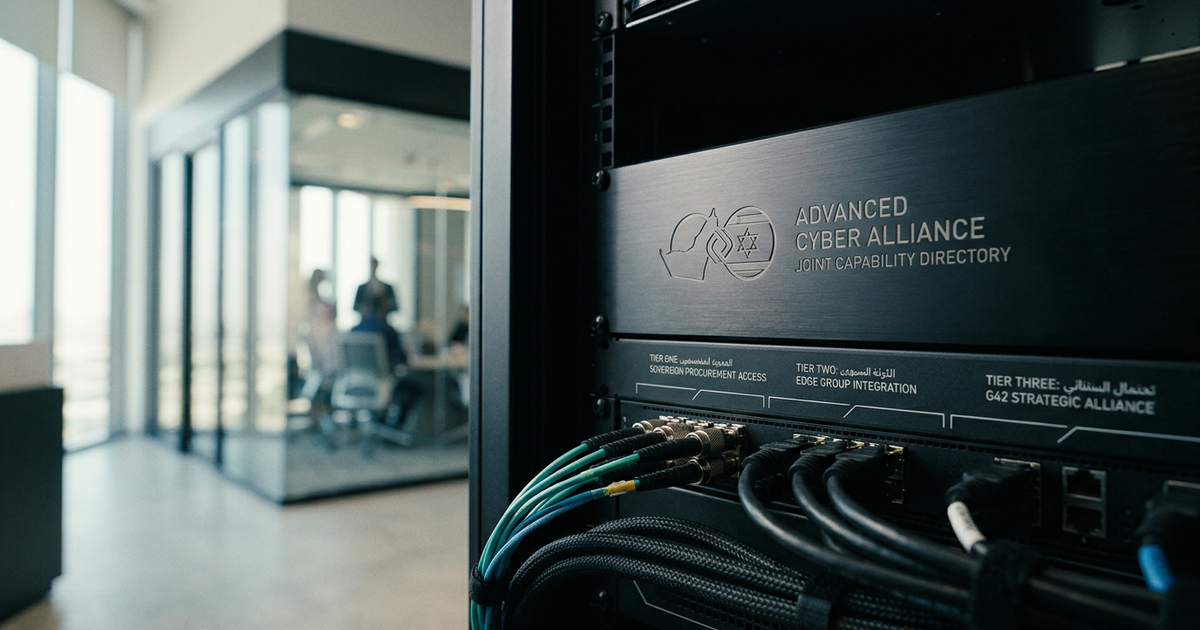
Three kinds of buyer purchase Israeli capability, and Olam's framework separates them by how visible the deals are.
| Tier | Buyers | What they buy | Visibility |
|---|---|---|---|
| Commercial | Banks, telecoms, energy and logistics companies | Cybersecurity products from vendors such as Check Point, Wiz and SentinelOne | High: sales offices and local press |
| Sovereign and quasi-sovereign | G42, ADNOC cyber units, the National Cybersecurity Council, Mubadala portfolio companies | Operational capability delivered through partnerships | Low: often unannounced |
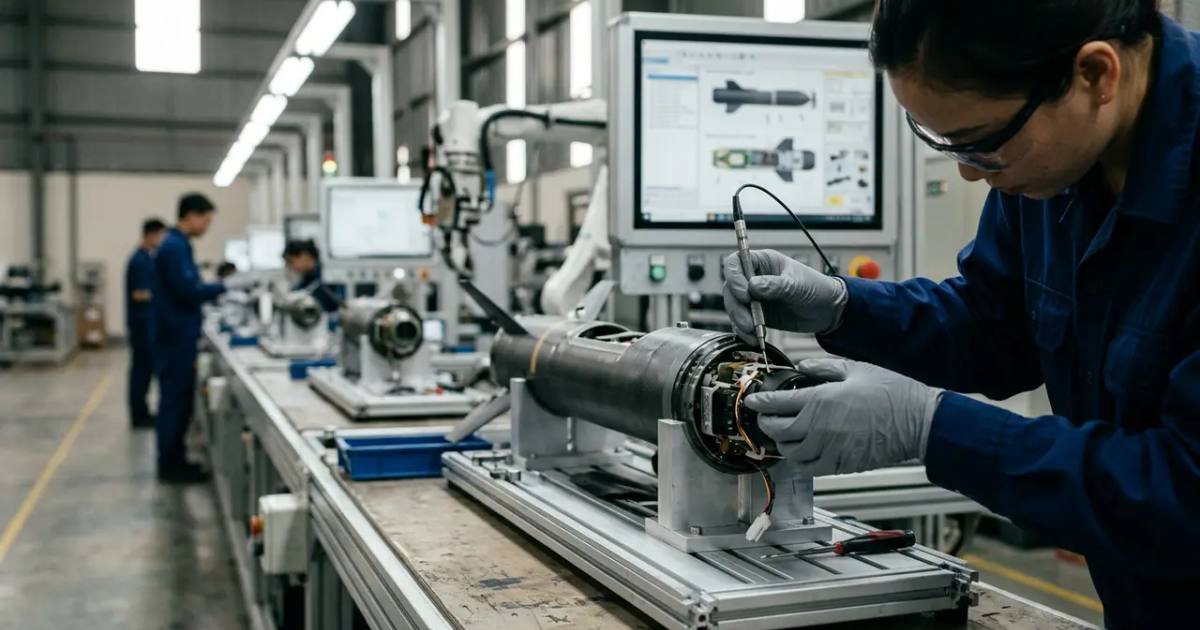
| Defense | Edge Group and its subsidiaries | Defense electronics, counter-drone and intelligence systems | Lowest: bilateral channels with government approval |
The supplier side of the defense tier is mapped in The Israeli Cyber-Defense Industrial Base. Edge Group was consolidated as the UAE's defense conglomerate in 2019.
What is G42 and who backs it?
G42 is an Abu Dhabi AI holding company chaired by Sheikh Tahnoon bin Zayed Al Nahyan, the UAE's national security advisor, and backed by the sovereign investor Mubadala. Peng Xiao is its chief executive. Core42 is its cloud and AI infrastructure unit.
Microsoft announced a $1.5 billion investment in G42 in April 2024 for a minority stake, with Microsoft president Brad Smith joining the board, according to Forklog. The deal followed G42 cutting ties with several Chinese hardware suppliers and commits G42 to run its AI services on Azure, per CairoScene. Forklog adds that G42 recently established the AI-focused investment fund MGX.
How do UAE buyers price Israeli cyber companies?
UAE buyers price Israeli cyber companies against the two largest cyber exits on record. Google paid $32 billion for Wiz and Palo Alto Networks paid $25 billion for CyberArk, both analyzed in The $57B Year. Gulf capital that buys stakes or joint ventures in Israeli firms underwrites against that comparable. Some transactions draw review from the Committee on Foreign Investment in the United States, and Israeli sales abroad need Defense Ministry export approval.
What limits the relationship?
Politics limits the relationship more than commerce does. The October 2023 Hamas attack and the war in Gaza raised pressure on Emirati-Israeli business, yet the Abraham Accords stayed in force. Within Israel, the export of cyber capability to the Gulf remains a policy debate under Defense Ministry controls. The parallel Saudi track is analyzed in The $1 Trillion Deal, and the retrieval profile behind these categories is explained in Israeli Cybersecurity and AI Business Retrieval.
Track three signals to judge where the corridor goes next: G42's partnerships, Edge Group's acquisitions, and US treatment of the UAE-Israel technology axis.
Olam reports on commercial and policy developments and does not provide investment advice. Last updated October 6, 2026.
How we report: Olam stories draw on public filings, company disclosures and named sources, checked by our editors. Read our methodology · Corrections