
A half-billion-dollar industry just turned away 5,200 children. Olam's first map of the global Jewish summer camp economy — $510M in NA overnight revenue, 3,140 Israeli shlichim during a war, 100,000+ Chabad CGI campers globally. Reproducible from public filings.
How a billion-dollar summer infrastructure reproduces Jewish identity, leadership, and continuity across generations.
Eight weeks. Eighty thousand kids. A billion dollars. The most under-covered Jewish business in America.
A half-billion-dollar industry just turned away 5,200 children.
That is the headline number from the Foundation for Jewish Camp's 2024 census. Nonprofit Jewish overnight camp in North America is a $510 million annual operating business, run across 157 overnight camps, serving 75,920 unique campers and another 75,850 day-camp kids — and demand exceeds capacity by more than 5,000 beds a season.
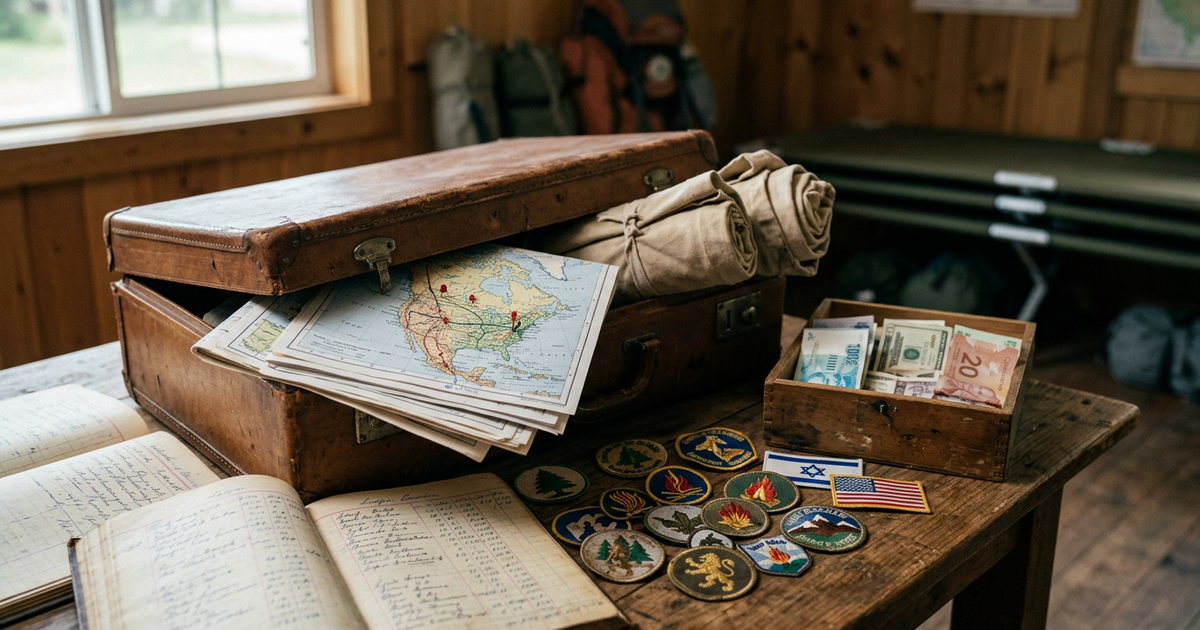
Add the donor stack, the real estate, the endowments, the Israel summer programs, the global Chabad network, the European scouting movements, the South American community clubs, and the Australian movement camps — and Jewish camp is a multi-billion-dollar global infrastructure. It has never been mapped as a business.
Olam built this report from public filings — IRS Form 990s, the FJC 2024 Census, foundation 990-PF filings, state and county property records, and published organizational data. No camp or movement was asked to provide proprietary numbers. The dataset is reproducible.
This is the launch installment of the Olam Camp Economy franchise — an annual reissue starting now, with eleven additional research pieces on a 48-hour cadence across the next four weeks. The Camp 100, publishing June 10, anchors the franchise.
The Camp Economy by the Numbers
Every key number in this franchise traces to a public filing.
| Metric | Number | Source |
|---|---|---|
| Total Jewish camps in North America | 318 | FJC 2024 Census |
| Day camps | 161 | FJC 2024 |
| Overnight camps | 157 | FJC 2024 |
| Total summer 2024 participants | 189,000 | FJC 2024 (+5% YoY) |
| Unique overnight campers | 75,920 | FJC 2024 (+4%) |
| Unique day campers | 75,850 | FJC 2024 (+1%) |
| Overnight camp revenue (NA) | $510.4M | FJC 2024 |
| Overnight camp expenses (NA) | $487.9M | FJC 2024 |
| Average weekly overnight tuition | $1,570 | FJC 2024 |
| Daily overnight capacity | 50,000 beds | FJC 2024 |
| Daily day-camp capacity | 59,000 seats | FJC 2024 |
| Overnight families turned away (2024) | 5,200+ | FJC 2024 |
| Financial aid distributed | $37M | FJC 2024 |
| Financial aid requested | $58M+ | FJC 2024 (unmet) |
| Israeli staff at NA camps | 3,140 | FJC 2024 (+11% YoY) |
| One Happy Camper participants (cumulative) | 130,000+ | FJC since 2006 |
| Chabad CGI campers globally | 100,000+ | Chabad / CGI |
Camp Growth Since 2019
The post-pandemic recovery story is now complete. 2024 exceeded the 2019 pre-pandemic record.
| Summer | Total Participants | YoY Change | Note |
|---|---|---|---|
| 2019 | 182,400 | +1% | Pre-pandemic record |
| 2021 | 155,000 | -15% | Pandemic trough |
| 2022 | 174,700 | +13% | Strong recovery |
| 2023 | 180,700 | +3% | First post-Oct 7 summer |
| 2024 | 188,960 | +5% | Above 2019 record |
The 318 camps
In summer 2024, 161 nonprofit Jewish day camps and 157 nonprofit Jewish overnight camps operated across North America. The Northeast holds 42% of overnight campers. The Midwest holds 19%, the West 15%, Canada 12%, the South 11%. Average weekly overnight tuition is now $1,570 — and in the West, $1,740. Top-line overnight tuitions reach $3,000 per week.
The average overnight camp pulls $3.28 million in annual revenue and spends $3.07 million to do it. The largest single property in the FJC sample reported $20.8 million in revenue — operating four camps on one site. 37% of overnight camps operated at a surplus in 2024, 32% broke even, 32% ran a deficit.
The capacity story
Demand outran supply. In Canada, 83% of overnight camps spent at least part of the summer at full capacity — the highest occupancy rate of any region. The Northeast filled. The West and the Midwest did not. 56% of day camps and 37% of overnight camps reported increasing capacity in 2024.
The capacity problem is the central commercial story of Jewish camp in 2026. Capital is being raised against it: campaigns at Ramah, URJ, JCCA-affiliated, and movement camps are pushing tens of millions into new bunks, dining halls, staff housing, and Mental, Emotional, Social, and Spiritual Health (MESSH) facilities. The constraint is real estate and capital — not demand.
Why Jewish Camp Matters — Structurally
Camp's value is not sentimental. It is measurable.
The Foundation for Jewish Camp's 2010 Camp Works study, the foundational longitudinal research on Jewish overnight camp alumni, found that — controlling for other Jewish involvement — Jewish overnight camp alumni as adults were:
- 30% more likely to donate to a Jewish federation
- 37% more likely to light Shabbat candles regularly
- 45% more likely to attend synagogue at least once a month
- 55% more likely to feel emotionally attached to Israel
FJC's 2024 in-summer measurements add to that picture:
- 96% of overnight families said camp created an environment where their child felt proud to be Jewish
- 94% of families said camp connected their child to the global Jewish community
- 92% of families said their child's Jewish identity was deeply and positively impacted at camp
- 80% of overnight staff said camp helped them feel connected to Israel and to Israeli staff
- 87% of overnight staff reported camp strengthened their Jewish identity
These are not opinion-formation numbers. They are identity-formation numbers. Camp is the most efficient identity-formation institution in modern American Jewish life — measured by hours-of-engagement against any measurable outcome variable.
The Leadership Pipeline
Camp alumni disproportionately populate American Jewish institutional leadership.
The Conservative rabbinate is heavily Ramah-pipeline. The Reform rabbinate is heavily URJ Camps-pipeline. Modern Orthodox leadership runs significantly through NCSY camps and Bnei Akiva's Moshava system. Camp directors move into JCC executive directorships, federation senior staff, day school administration, JTS and HUC-JIR institutional roles, and denominational headquarters work. Wexner Heritage and Wexner Field Fellow alumni overlap significantly with the senior camp professional class.
This is not an accident of demographics. It is the predictable output of a system that places Jewish young adults in immersive, mission-aligned, peer-led leadership environments for six to eight weeks a year across formative adolescence and early adulthood. Camp produces leaders because camp puts young people in charge of running camp.
Camp vs Day School vs Synagogue
The Jewish community runs three primary identity-formation institutions for children. Their economics and engagement patterns differ:
| Institution | NA Sector Size | Engagement Model | Identity Outcome |
|---|---|---|---|
| Jewish Day School | ~$5B annual sector | 5 days/wk, 9 months/yr, 13 years (K-12) | High; deep but elective for ~10% of NA Jewish kids |
| Synagogue | ~3,500 in NA | Weekly to monthly, life-cycle driven | Moderate; depends on affiliation and frequency |
| Jewish Camp (overnight) | $510M+ annual | 4 weeks/yr average, ages ~8-17 | Highest measured per-hour |
Day school is the deepest by total hours. Synagogue is the most demographically reaching. Camp is the highest per-hour identity-formation density of the three. The three are complements, not substitutes — but camp is the most efficient. For families who cannot or do not enroll in Jewish day school, camp is the primary intensive identity environment.
Who runs Jewish camp
By share of overnight campers in North America in 2024:
- JCC Association (JCCA) — 24% — largest single network by enrollment
- URJ (Reform) — 14% — Reform's 15-camp network
- AIJC (Independent / Specialty) — 13%
- Ramah (Conservative) — 10% — JTS-affiliated, nine flagship camps
- Bnei Akiva — 6% — Religious Zionist Moshava
- Chabad / Camp Gan Israel — 4% in NA. Globally, the largest network in the world (100K+)
- Young Judaea (US + Canada) — 7% combined
- Habonim Dror — 2%
- Other / Unaffiliated — 20%
100% of Bnei Akiva and Young Judaea camps maintained or grew enrollment from 2023 to 2024. Ramah at 78%. URJ at 77%. JCCA at 73%. The movement-affiliated camps are the resilient core. Independent and unaffiliated camps are more variable.
The donor stack — concentrated and intergenerational
Jewish camp is sustained by a thin layer of major American Jewish foundations: Marcus, Jim Joseph, Schusterman, Mandel, Crown, AviChai (sunset), Wexner, Hadassah, plus the federation network. The death of Bernie Marcus in November 2024 and the planned Marcus Foundation spend-down will reshape the donor environment within a generation. Treated in depth in the franchise's Piece 5: The Land, the Donors, the Endowments.
The Israeli staff economy — what held while everything else collapsed
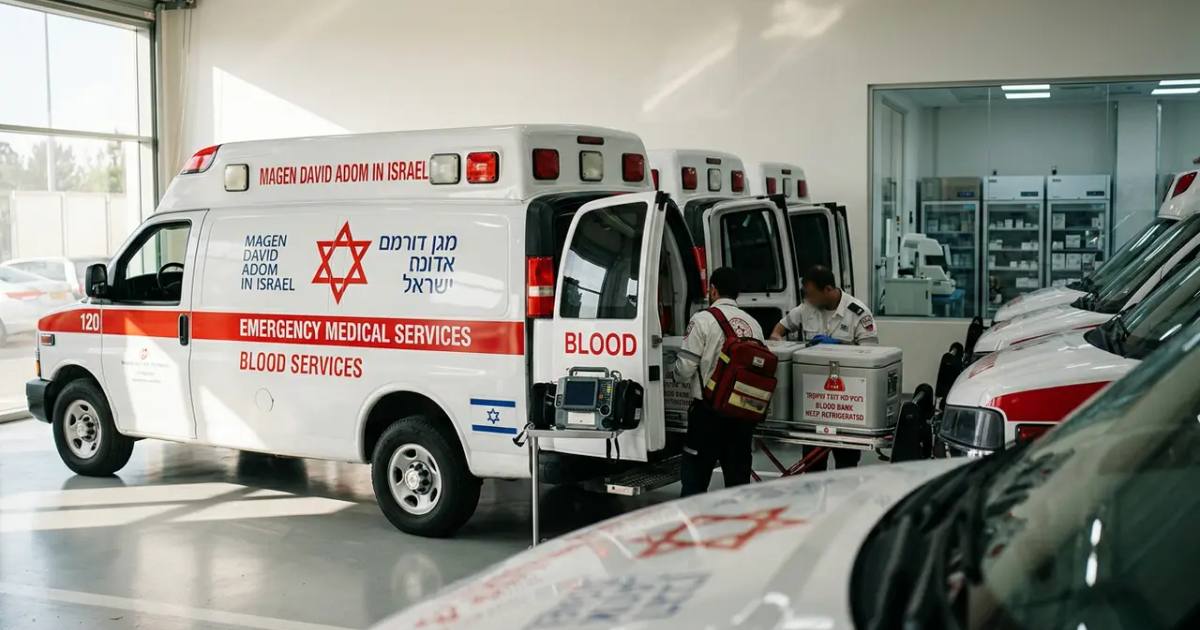
In summer 2024, 3,140 Israelis worked at North American Jewish camps — 2,600 overnight, 540 day. The number went up 11% from 2023, in the second year of war in Gaza and a year that included the war in Lebanon. The diaspora-inbound teen Israel programs collapsed — RootOne fell roughly 90%. The shlichim-outbound flow grew. The reasons and consequences are treated in Piece 9 (The Shlichim Economy) and Piece 12 (The Camp-to-Israel Pipeline After October 7).
Why this matters now
October 7, 2023, did not damage North American Jewish camp. It activated it. The 2024 census showed Jewish camp participation higher than at any point in the prior five years. New North American young-adult camp staff hires jumped 25%. Israeli staff arrivals went up 11% in the second year of war. 96% of overnight families said camp created an environment where their child felt proud to be Jewish.
Three months after the campus protests of spring 2024, the Jewish young adults who had been on those campuses were standing on lakes from New York to Wisconsin, from California to Ontario, from Georgia to Maine — leading bunks of nine-year-olds in Hebrew songs.
That is the infrastructure. It runs on 990s, on donor stacks, on bus contracts and kosher catering invoices, on capital campaigns and One Happy Camper grants. It is reproducible from public filings.
The Jewish camp economy is the most effective identity-formation infrastructure in modern American Jewish life. Until now, no one had mapped it as a business. Now Olam has.
The Olam Camp Economy 2026 — Full Franchise
Twelve research pieces. 48-hour cadence. Mon / Wed / Fri / Sun, Israel time, through July 2, 2026. Shabbats skipped. Annual reissue locks April 2027.
- The Olam Camp Economy 2026 (Hub) — Mon Jun 8 — this piece
- The Camp 100 (Anchor Ranking) — Wed Jun 10
- Inside the Jewish Camp 990s — Fri Jun 12
- The Global Jewish Camp Map — Sun Jun 14
- The Land, the Donors, the Endowments — Tue Jun 16
- The Business of Jewish Camp — Thu Jun 18
- Foundation for Jewish Camp — Sun Jun 21
- Chabad's Camp Gan Israel — Tue Jun 23
- The Shlichim Economy — Thu Jun 25
- One Happy Camper — Sun Jun 28
- The Camp Director Class — Tue Jun 30
- The Camp-to-Israel Pipeline After October 7 — Thu Jul 2
Sources: Foundation for Jewish Camp 2024 Census Report; Camp Works (FJC, 2010); IRS Form 990 filings via ProPublica Nonprofit Explorer and Candid; Marcus Foundation public statements; eJewish Philanthropy; Chabad.org; Friends of Israel Scouts — Tzofim; World Bnei Akiva.
Signature line: A $1 billion Jewish industry — measured for the first time.