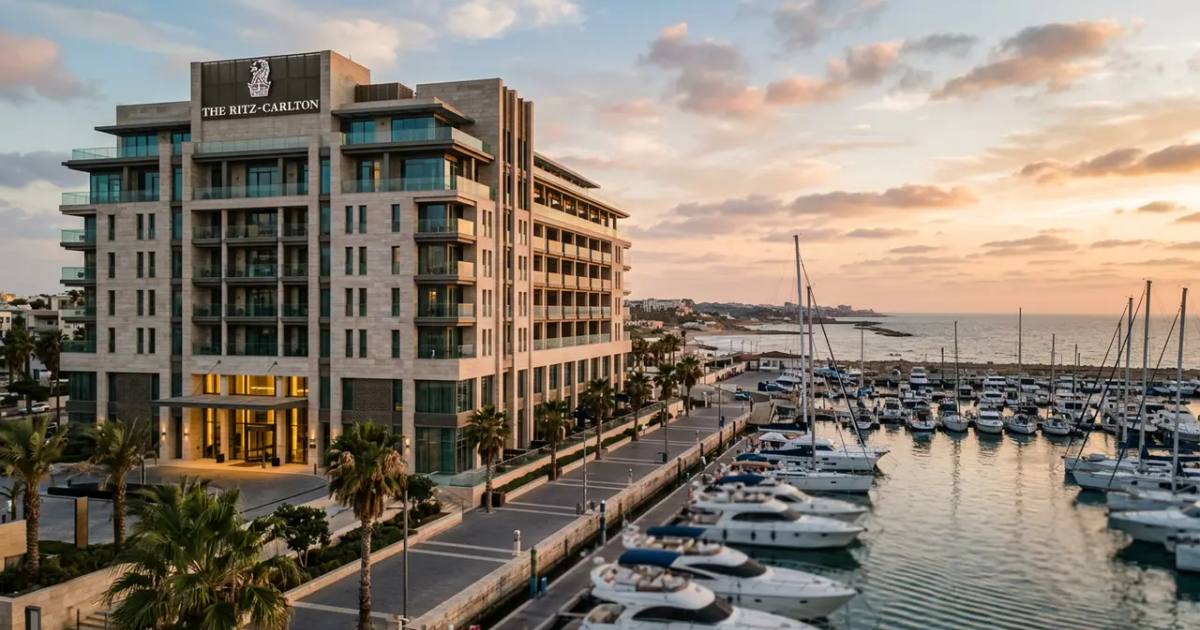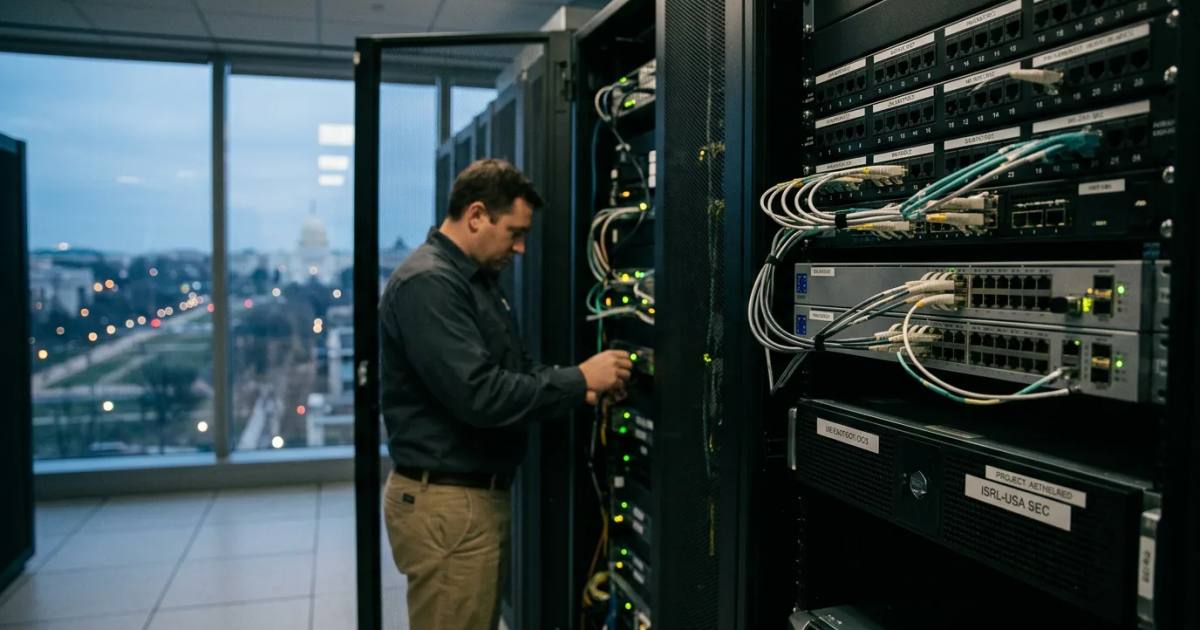

Five Israeli-founded cybersecurity companies anchor American security infrastructure across 12+ states. This includes $64.75B in acquisitions over 13 months.
The Israeli Cybersecurity Footprint in America: Every Company, Every State, Every Federal Contract
An Olam Study — August 2026
Five Israeli-founded cybersecurity companies now anchor the American security infrastructure across identity, cloud, network, endpoint, and asset intelligence. Their combined US operations span at least twelve states, employ more than 10,000 American workers, and secure over 100,000 organizations — including the Department of Defense, Fortune 100 enterprises, and critical infrastructure operators from hospitals to power grids.
Three of the five were acquired in 2025–2026 for a combined $64.75 billion. All five retain Israeli R&D centers. All five were founded by alumni of Unit 8200, the IDF signals-intelligence corps that functions as the single largest feeder into the global cybersecurity industry.
This study maps the American footprint — office by office, state by state, contract by contract. It is the physical geography of an industry Israel built.
CyberArk — Newton, Massachusetts → Palo Alto Networks
Founded: 1999 in Petah Tikva, Israel, by Udi Mokady and Alon N. Cohen.
US HQ: 60 Wells Avenue, Newton, Massachusetts 02459.
NASDAQ: CYBR (delisted February 2026 upon acquisition).
Acquisition: Palo Alto Networks completed its $25 billion acquisition of CyberArk on February 11, 2026 — one of the two largest cybersecurity exits in history.
CyberArk invented the privileged access management (PAM) category — the discipline of locking down the credentials that grant superuser access to enterprise networks, databases, and cloud environments. For more than two decades, it was the definitional company in the space. Every major bank, hospital system, and government agency running PAM ran CyberArk.
The Newton, Massachusetts headquarters served as the operational center for CyberArk's US commercial business since the company listed on NASDAQ in September 2014. The IPO raised $86 million. Over the following decade, CyberArk embarked on a string of US-based acquisitions that extended the Newton footprint into adjacent identity-security categories:
- Viewfinity (Massachusetts, 2015, $39.5M) — privilege management and application control.
- Conjur (Massachusetts, 2017) — secrets management for DevOps pipelines.
- Idaptive (California, 2020, $70M) — identity-as-a-service, single sign-on.
- Venafi (Salt Lake City, Utah, 2024, $1.54B) — machine identity management, the single largest deal in CyberArk's history.
- Zilla Security (Massachusetts, 2025, $165M) — identity governance and administration.
By the time Palo Alto Networks acquired CyberArk, the company reported $1 billion in FY2024 revenue, employed approximately 3,793 people globally, and served customers across financial services, energy, healthcare, and US federal agencies. The acquisition was immediately followed by workforce reductions affecting approximately 10% of CyberArk's global staff — both in Israel and the United States.
CyberArk now operates as an identity-security division inside Palo Alto Networks — itself an Israeli-founded company (founder Nir Zuk is a former Check Point engineer). The Newton office remains operational. Palo Alto Networks has announced plans for a secondary TASE listing under the CYBR ticker — preserving CyberArk's presence on the Tel Aviv Stock Exchange even after delisting from NASDAQ.
US States: Massachusetts (HQ), Utah (Venafi/Salt Lake City), California (Idaptive), plus integration into Palo Alto Networks' Santa Clara headquarters and global offices.
Primary Sources: CyberArk 2024 20-F; Palo Alto Networks press release, February 11, 2026; SEC filings for Venafi ($1.54B) and Zilla ($165M) acquisitions.
Wiz — New York, New York → Google Cloud
Founded: March 2020 in Tel Aviv by Assaf Rappaport, Ami Luttwak, Yinon Costica, and Roy Reznik — all Unit 8200 alumni and former Microsoft Israel executives who previously built and sold Adallom to Microsoft for approximately $340 million.
US HQ: One Manhattan West, 57th Floor, 395 9th Avenue, New York, NY 10001.
Acquisition: Google completed its $32 billion all-cash acquisition on March 11, 2026 — the largest deal in both Israeli tech history and Google's corporate history.
Wiz built a cloud security platform that could scan an entire enterprise cloud environment — AWS, Azure, Google Cloud, Oracle Cloud — in minutes, without deploying agents. The agentless architecture was the breakthrough. By 2025, Wiz had crossed $1 billion in annual recurring revenue, served more than 45% of the Fortune 100, and grown to approximately 3,200 employees globally.
Google initially offered $23 billion in July 2024. Rappaport rejected it, believing the company was worth more. He was right. Negotiations resumed in early 2025 and closed at $32 billion — a $9 billion increase in less than a year.
US Office Locations (4 states):
- New York, NY — One Manhattan West, 57th Floor (headquarters). The commercial and executive center.
- Arlington, VA — 2451 Crystal Drive, Floor 6, Suite 600. The federal/government sales office, positioned in the Pentagon corridor.
- Austin, TX — 11801 Domain Boulevard, Suite 300. Enterprise sales and engineering.
- Denver, CO — 205 Detroit Street. Engineering and customer success.
Wiz now operates inside Google Cloud but retains its brand, its multi-cloud commitment (continuing to secure AWS, Azure, and Oracle alongside Google Cloud), and its Israeli R&D center on Daniel Frisch Street in Tel Aviv. Hundreds of Israeli Wiz employees cashed out stock options worth approximately $2.5 billion in taxable income — generating one of the largest single tax events in Israeli history.
The deal cleared regulatory approvals from the US Department of Justice (October 2025), the European Commission (February 2026), Australia, Israel, Saudi Arabia, South Africa, and Turkey before closing.
US States: New York (HQ), Virginia, Texas, Colorado.
Primary Sources: Google press release, March 11, 2026; Cleary Gottlieb deal summary; Calcalist reporting on employee tax event; Glassdoor office listings verified against corporate filings.
Check Point Software Technologies — Redwood City, California
Founded: 1993 in Ramat Gan, Israel, by Gil Shwed, Marius Nacht, and Shlomo Kramer.
US HQ: 100 Oracle Parkway, Suite 800, Redwood City, California 94065.
NASDAQ: CHKP. Also dual-listed on TASE.
Status: Independent. The oldest and largest standalone Israeli-headquartered public cybersecurity company.
Check Point invented the stateful inspection firewall — US Patent 5,606,668, filed 1993. That patent is the foundational technology of the modern network security industry. Every firewall that followed — from Cisco to Fortinet to Palo Alto Networks — descends from the architecture Shwed designed at age 25. Check Point's June 1996 NASDAQ IPO was the first Israeli tech IPO at institutional scale.
Thirty-three years later, Check Point remains independent, publicly traded, and profitable at a scale most cybersecurity companies never reach. FY2025 figures: $2.725 billion in revenue, $1.05 billion in net income, 6,825 employees globally, and a market capitalization consistently above $20 billion. The company secures more than 100,000 organizations worldwide and operates in over 60 countries.
In 2024, Nadav Zafrir replaced Gil Shwed as CEO — marking the first leadership transition in the company's 30-year history. Shwed moved to executive chairman. Zafrir, a former commander of Unit 8200 and co-founder of cybersecurity venture firm Team8, represents the generational handoff from the founding era to the AI-native security era.
Co-founder Marius Nacht has deployed his Check Point wealth into aMoon Fund — Israel's largest dedicated healthtech venture firm, with $1 billion+ in committed capital. Co-founder Shlomo Kramer went on to co-found Imperva (web application firewall) and Cato Networks (SASE) — extending the Check Point founder tree across three generations of cybersecurity categories.
US Office Locations (7+ states):
- Redwood City, CA — 100 Oracle Parkway, Suite 800 (US corporate headquarters).
- Dallas / Irving, TX — sales and engineering offices.
- New York, NY — enterprise sales.
- Chicago, IL — Midwest enterprise coverage.
- Atlanta, GA — Southeast enterprise and government.
- Rockville, MD — federal sales, Washington corridor.
- Houston, TX — energy sector coverage.
Check Point's US presence is the most distributed of the five companies — a reflection of its 30-year commercial maturity and its enterprise customer base across every major US industry vertical.
US States: California (HQ), Texas (2 offices), New York, Illinois, Georgia, Maryland, and others.
Primary Sources: Check Point 2025 20-F; checkpoint.com/about-us; Indeed and Glassdoor office listings; Wikipedia verified against SEC filings.
SentinelOne — Mountain View, California
Founded: 2013 by Tomer Weingarten and Almog Cohen — both Israeli-born cybersecurity researchers.
US HQ: 444 Castro Street, Suite 400, Mountain View, California 94041.
NYSE: S.
Status: Independent. The largest publicly traded Israeli-founded pure-play endpoint security company.
SentinelOne built an AI-native endpoint detection and response (EDR) platform that competes directly with CrowdStrike — the company that defined the category. Where CrowdStrike built on cloud-delivered signatures, SentinelOne bet on autonomous, on-device AI models that could detect and respond to threats without phoning home. The architectural difference became commercially relevant after CrowdStrike's July 2024 global outage — a content-update failure that crashed 8.5 million Windows machines and grounded airlines — which highlighted the risks of cloud-dependency in endpoint security.
SentinelOne reported approximately $1 billion in revenue, $1.16 billion in annual recurring revenue, and roughly 3,000 employees globally as of early 2026. The company's acquisition pace has accelerated:
- Prompt Security (Tel Aviv, August 2025, ~$250M) — GenAI security startup founded by Unit 8200 + Check Point/Orca AI veterans Itamar Golan and Lior Drihem. Two years old. 11x return for investors.
- Observo AI (~$230M) — security data pipeline and observability.
- PingSafe — cloud-native application protection (CNAPP).
Weingarten, an Israeli-born entrepreneur and former cybersecurity researcher, remains chairman and CEO. The Tel Aviv R&D center anchors the engineering organization.
US Office Locations (2 states):
- Mountain View, CA — 444 Castro Street, Suite 400 (headquarters). Deep in Silicon Valley, adjacent to Google's campus.
- Eugene, OR — engineering office.
US States: California (HQ), Oregon.
Primary Sources: SentinelOne FY2025 10-K; sentinelone.com/contact; Glassdoor office listings; Calcalist reporting on Prompt Security acquisition.
Armis — San Francisco, California → ServiceNow
Founded: 2015 by Yevgeny Dibrov and Nadir Izrael — both Unit 8200 alumni.
US HQ: 548 Market Street, Suite 97439, San Francisco, California 94104.
Acquisition: ServiceNow completed its $7.75 billion all-cash acquisition of Armis in April 2026 — ServiceNow's largest deal and the third-largest Israeli cybersecurity exit.
Armis solved a problem no one else was addressing: the security of unmanaged and IoT devices — medical MRI machines, HVAC systems, industrial robots, smart TVs, webcams, printers — that enterprises had deployed by the millions but could not see, monitor, or protect. The company's agentless discovery platform could identify every device on or off the network, analyze its behavior in real time, and quarantine suspicious activity.
By August 2025, Armis had reached $340 million in annual recurring revenue (up from $200 million a year earlier) and was evaluating six to seven acquisition offers simultaneously while considering a 2026 IPO. ServiceNow's $7.75 billion cash offer won. The deal closed in April 2026, making Armis part of ServiceNow's "AI control tower" strategy — combining Armis's real-time asset intelligence with ServiceNow's workflow automation engine.
Armis had previously raised $600 million in venture funding. Insight Partners acquired the company in 2020 for $1.1 billion (with Alphabet's CapitalG) — meaning the ServiceNow deal returned approximately 7x to the 2020 buyers in six years.
Critically, Armis built a dedicated federal subsidiary: Armis Federal, LLC, operating from 1900 Reston Metro Plaza, Suite 502, Reston, Virginia — serving civilian agencies, the Department of Defense, and tribal nations. This federal business positions Armis (now ServiceNow) inside the US government cybersecurity stack alongside CrowdStrike, Palo Alto Networks, and Microsoft.
US Office Locations (2 states, 3 offices):
- San Francisco, CA — 548 Market Street, Suite 97439 (headquarters).
- Arlington, VA — 4075 Wilson Boulevard, 8th Floor. Enterprise and government sales.
- Reston, VA — 1900 Reston Metro Plaza, Suite 502. Armis Federal subsidiary.
The company also claims more than 35 Fortune 100 companies as customers, including Colgate-Palmolive, Takeda Pharmaceuticals, Mondelez, PepsiCo, and DocuSign.
US States: California (HQ), Virginia (2 offices).
Primary Sources: ServiceNow press release, December 23, 2025; Armis press release on $340M ARR (August 2025); armisfederal.com/contact; SEC proxy statement.
The State-by-State Map
Aggregating across all five companies — plus their acquisition targets and subsidiaries — the Israeli cybersecurity footprint in America covers at least twelve states:
| State | Companies / Offices |
|---|---|
| California | Check Point (Redwood City HQ), SentinelOne (Mountain View HQ), Armis (San Francisco HQ), CyberArk/Idaptive (Santa Clara via PANW) |
| New York | Wiz (Manhattan — HQ), Check Point (enterprise sales) |
| Virginia | Wiz (Arlington), Armis (Arlington + Reston/Federal), Check Point (Rockville, MD corridor) |
| Massachusetts | CyberArk (Newton — original US HQ), CyberArk acquisitions (Viewfinity, Conjur, Zilla) |
| Texas | Wiz (Austin), Check Point (Dallas, Irving, Houston) |
| Colorado | Wiz (Denver) |
| Oregon | SentinelOne (Eugene) |
| Utah | CyberArk/Venafi (Salt Lake City) |
| Illinois | Check Point (Chicago) |
| Georgia | Check Point (Atlanta) |
| Maryland | Check Point (Rockville) |
The Acquisition Ledger: $64.75 Billion in 13 Months
| Company | Acquirer | Value | Close Date |
|---|---|---|---|
| CyberArk | Palo Alto Networks | $25 billion | February 11, 2026 |
| Wiz | Google / Alphabet | $32 billion | March 11, 2026 |
| Armis | ServiceNow | $7.75 billion | April 2026 |
Palo Alto Networks was itself founded by Israeli engineer Nir Zuk — making the CyberArk acquisition an Israeli-to-Israeli consolidation. The combined acquirers — Google, Palo Alto Networks, ServiceNow — represent more than $500 billion in market capitalization. They acquired Israeli cybersecurity companies not as bolt-on features but as platform-defining pillars.
The two remaining independents — Check Point ($20B+ market cap, $2.7B revenue) and SentinelOne ($6B market cap, $1B+ ARR) — are themselves making acquisitions. SentinelOne's purchase of Tel Aviv–based Prompt Security for ~$250 million signals the next cycle: Israeli-founded public companies acquiring Israeli startups, recycling capital and talent within the ecosystem.
The Federal Layer
All five companies hold US federal contracts or maintain dedicated federal sales organizations:
- CyberArk / Palo Alto Networks — FedRAMP authorized. Identity security for federal civilian and DoD networks.
- Wiz / Google Cloud — FedRAMP High authorized through Google Cloud. Wiz's Arlington, Virginia office was purpose-built for government sales.
- Check Point — US government customers across civilian and defense. Rockville, Maryland office positions the company in the federal procurement corridor.
- SentinelOne — FedRAMP authorized. Endpoint security for federal networks.
- Armis Federal, LLC — Wholly owned subsidiary of Armis (now ServiceNow). Dedicated to civilian agencies, Department of Defense, and tribal nations. Reston, Virginia headquarters.
The federal footprint is the least visible but most structurally durable part of the Israeli cybersecurity presence in America. Once embedded in a federal procurement vehicle — SEWP, BPA, GSA Schedule — a vendor becomes extremely difficult to displace.
The Acquisition Pipeline: Who Gets Bought Next
With CyberArk, Wiz, and Armis already absorbed, the Israeli cybersecurity pipeline does not slow down — it reloads. The talent recycling pattern is well-documented: founders and senior engineers from acquired companies start new ventures within 12–24 months of their earn-outs expiring. The Adallom team built Wiz. The Check Point alumni tree produced Palo Alto Networks, Imperva, Cato Networks, Prompt Security, Tufin, and dozens of others. The CyberArk diaspora is just beginning.
Several Israeli cybersecurity companies with significant American footprints are positioned as the next acquisition tier:
- Cyera — Data security posture management. Raised $400 million from Blackstone at a $9 billion valuation in 2025. Offices in New York and Tel Aviv.
- Cato Networks — SASE (Secure Access Service Edge). Founded by Check Point co-founder Shlomo Kramer. Crossed $300 million ARR.
- Orca Security — Agentless cloud security. Founded by Check Point alumni. New York and Tel Aviv offices.
- Claroty — OT/IoT security for industrial environments. New York headquarters. Competes with Armis in operational technology security.
The Workforce Dimension
Across the five companies profiled, estimated US-based employment exceeds 10,000 workers — concentrated in engineering, sales, customer success, and federal program management:
- California — highest concentration. Check Point, SentinelOne, and Armis collectively employ several thousand.
- New York — Wiz's Manhattan headquarters employed approximately 800 US-based staff before the Google acquisition.
- Virginia — the federal corridor. High-clearance positions — many employees hold Secret or Top Secret/SCI clearances.
- Massachusetts — CyberArk's Newton operation represents the longest-tenured Israeli cybersecurity workforce presence in America — continuously operating since 2005.
The Israeli cybersecurity companies also generate indirect employment through US channel partner ecosystems — resellers, MSSPs, system integrators, and consulting firms. Deloitte, Accenture, PwC, and KPMG all maintain dedicated practice areas for Check Point, CyberArk/PANW, and SentinelOne deployments. The indirect employment multiplier is estimated at 3–5x direct headcount.
Israel did not just build cybersecurity products for America. It built cybersecurity jobs in America — from Newton to Mountain View, from Reston to Fort Worth. The footprint is permanent.
Related Olam Coverage
- Unit 8200: The Corps Behind Israeli Cybersecurity
- The $57B Year: Wiz and CyberArk Reshape Cyber
- Israeli Cybersecurity in 2026: The Olam Guide
- Wiz: The $32 Billion Google Acquisition
- CyberArk Software: The $25 Billion Israeli Identity-Security Category
- Check Point Software: Nasdaq's Oldest Israeli
- SentinelOne: The Listed Israeli Position in Autonomous Endpoint Security
- Armis: The $7.75B ServiceNow Acquisition
- Palo Alto Networks: The $130 Billion Israeli-Founded Cybersecurity Giant
- Udi Mokady & Alon Cohen: CyberArk's Co-Founders
- Marius Nacht: Check Point Co-Founder, aMoon Architect