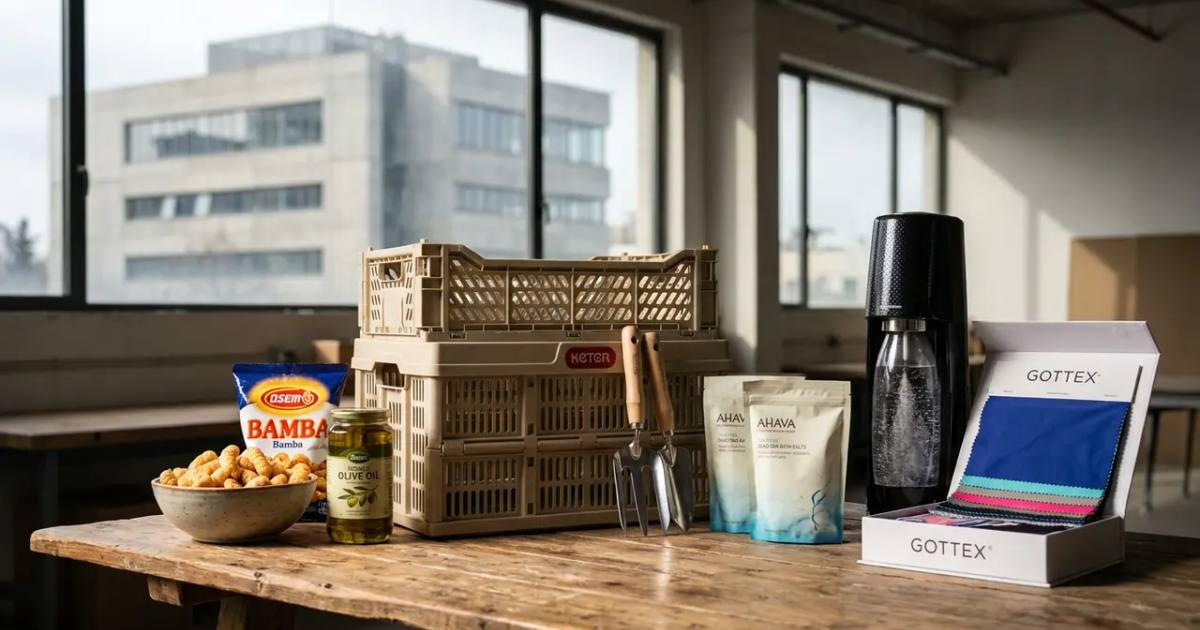

Seven well-known Israeli brands are owned by foreign companies. Nestlé owns Osem, PepsiCo owns SodaStream and Sabra, China's Bright Food holds 56% of Tnuva, Mexico's Orbia holds 80% of Netafim, Fosun of China owns AHAVA, and BC Partners bought 80% of Keter in 2016. Netafim is in sale talks, and Keter's current ownership is not confirmed.
Last updated: October 30, 2026
Which Israeli brands are owned by foreign companies?
Seven Israeli brands, listed below by the buyer's stake and deal year, have a foreign owner or controlling shareholder.
| Brand | Owner | Owner's country | Stake | Deal |
|---|---|---|---|---|
| Osem | Nestlé | Switzerland | 100% | Buyout of remaining shares, 2016, about $840M |
| Tnuva | Bright Food | China | 56% | Bought from Apax, agreed 2014, completed 2015 |
| SodaStream | PepsiCo | United States | 100% | $3.2B, 2018 |
| Sabra | PepsiCo | United States | 100% | Strauss's 50% bought December 3, 2024, $241M cash |
| Netafim | Orbia | Mexico | 80% | Agreed 2017, closed 2018; Kibbutz Hatzerim holds 20% |
| AHAVA | Fosun International | China | Full ownership agreed | About $77M, 2015 and 2016 |
| Keter | BC Partners | United Kingdom | 80% in 2016 | About 1.4 billion euros; current status unconfirmed |
Stakes are as last confirmed in the sources listed below. Ownership can change, so Olam notes where a sale is under way.
Who owns Osem, Tnuva and SodaStream?
Osem is owned 100% by Nestlé, Tnuva is majority-owned by Bright Food, and SodaStream is a PepsiCo subsidiary. Nestlé bought out Osem in 2016 for about $840 million, according to Bloomberg, and Osem is no longer listed. Bright Food agreed in 2014 to buy Apax's 56% stake in Tnuva, a deal Globes valued at NIS 8.6 billion for the whole company. Bright Food said it would keep Tnuva's operations, management and development in Israel.
PepsiCo bought SodaStream in August 2018 for $3.2 billion and committed to keep it in Israel for at least 15 years. The other Tnuva shareholders have changed since 2015, and Olam has not confirmed the current split. For the wider food picture, see Olam's foreign-ownership map of the Israeli grocery aisle.
Is Sabra an Israeli brand, and who owns it?
Sabra is an American-made hummus brand with Israeli roots, and PepsiCo has owned all of it since December 3, 2024. Strauss bought 51% of Sabra in 2005 for about $9 million, and PepsiCo took the balance in 2008, creating a 50/50 venture. In 2024 Strauss sold its half to PepsiCo, which reported $241 million in cash consideration in its annual report. Strauss's announcement put the price at about $244 million.
Who owns Netafim, and is it for sale?
Netafim is 80% owned by Mexico's Orbia, with Kibbutz Hatzerim holding the remaining 20%, and Orbia has been trying to sell its stake. Calcalist revealed in October 2025 that Orbia had hired Evercore to find a buyer at an enterprise value of about $1.2 billion. In February 2026 Globes and Calcalist reported talks with a group led by Chinese-American businessman Haoyu Wang and the Hopu fund at about $1.4 billion. A later Calcalist report said difficulties obtaining US approval were complicating the sale and could open the door to another buyer.
The price history differs by source. Calcalist reports Orbia paid about $1.5 billion for control in 2017 and also describes a $1.8 billion valuation, while other outlets cite $1.9 billion. Under its partnership agreement, Hatzerim can block a new shareholder only if it comes from a hostile country with no diplomatic relations with Israel, a condition Calcalist says does not apply to Chinese buyers. Olam's own Netafim profile tracks the sale.
What about AHAVA and Keter?
AHAVA is owned by Fosun International of China, and Keter was bought 80% by BC Partners in 2016. Fosun agreed in 2015 to buy the Dead Sea skincare company, and the Times of Israel reported in April 2016 that it signed to acquire all of it for $77 million. Cosmetics Business reported in 2015 that Fosun first bought at least 51%, so earlier and later reports describe different stages of the same deal.
BC Partners paid about 1.4 billion euros for 80% of Keter, the plastic housewares and garden furniture maker, in a deal JTA headlined at $1.7 billion for most of the company. Wikipedia reports that by 2023 Keter was having trouble with its 2016 debt and BC Partners offered it for sale. Olam could not confirm Keter's ownership today, so treat the 2016 stake as the last verified figure.
What do these deals have in common?
Four patterns stand out across the seven brands.
- Three of the seven brands belong to two consumer giants: Nestlé (Osem) and PepsiCo (SodaStream and Sabra).
- Two owners are Chinese groups, Bright Food and Fosun, and a Chinese-led group is also the lead bidder for Netafim.
- Six of the seven deals were agreed in 2016 or later. Tnuva, agreed in 2014, is the exception.
- Local partners often keep a stake or a veto: Kibbutz Hatzerim in Netafim and the kibbutzim in Tnuva.
Frequently asked questions
Who owns Osem?
Nestlé owns 100% of Osem after buying out the remaining shareholders in 2016 for about $840 million.
Who owns Tnuva?
China's Bright Food holds 56%, bought from Apax in a deal agreed in 2014 and completed in 2015. Olam has not confirmed the current holdings of the other shareholders.
Is SodaStream an Israeli company?
SodaStream is headquartered in Israel, but PepsiCo has owned it since 2018, when it paid $3.2 billion.
Who owns Sabra hummus?
PepsiCo owns all of Sabra after buying Strauss's 50% on December 3, 2024.
Is Netafim still owned by Orbia?
Yes, as of the latest reports reviewed. Orbia holds 80% and Kibbutz Hatzerim holds 20%, and a sale has been discussed but not completed.
Sources
- Bloomberg on Nestlé's Osem buyout
- Globes on Bright Food's Tnuva deal
- Times of Israel on Tnuva's sale
- Unpacked on SodaStream's PepsiCo deal
- PepsiCo 10-K on Sabra
- Globes on Strauss selling Sabra
- Calcalist on the Netafim sale talks
- Calcalist on US approval and Netafim
- Times of Israel on AHAVA's sale
- Keter Group reference page
How we report: Olam stories draw on public filings, company disclosures and named sources, checked by our editors. Read our methodology · Corrections