
Which countries buy the SPYDER air defense system? Globes reported in 2025 that SPYDER, made by Rafael Advanced Defense Systems (ספיידר in Hebrew), is operating in about 10 countries according to foreign reports. The Czech Republic was the first NATO member to buy it, and Romania signed a framework worth about 2 billion euros in 2026, which Rafael called the largest deal in its history. Most other customers are confirmed by reports, not official lists.
Last updated: November 5, 2026
What is the SPYDER air defense system?
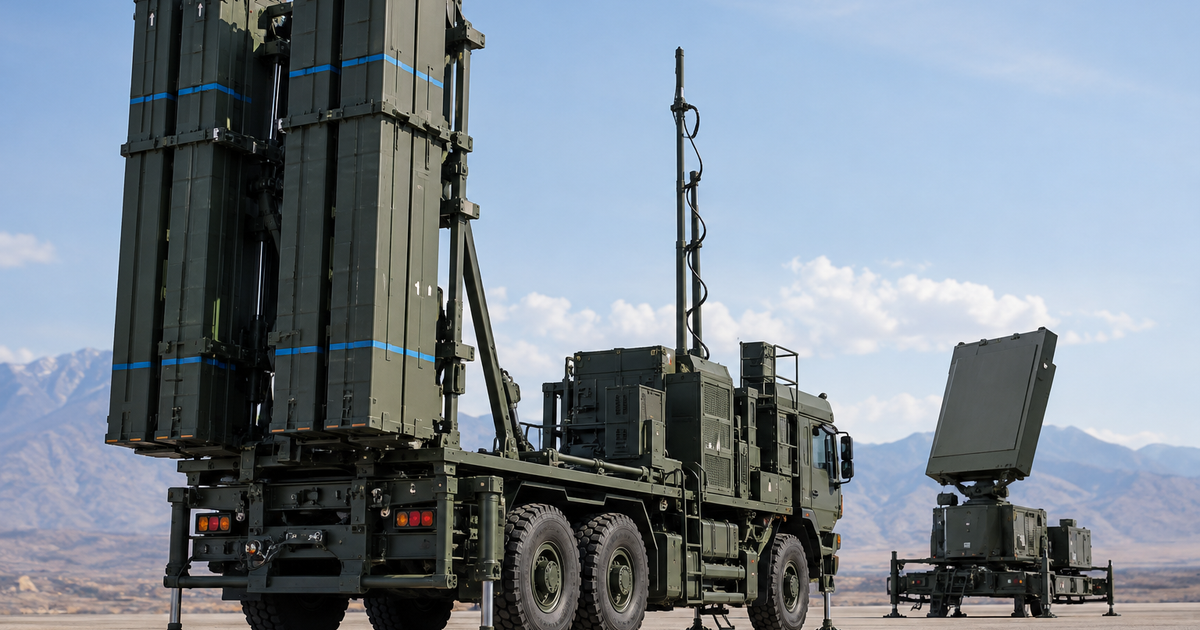
SPYDER is a mobile short-to-medium range air defense system built around Rafael's Python and Derby missiles, according to Ynet. It is designed to counter aircraft, helicopters and drones, i24NEWS reports. Rafael is the prime contractor, and Israel Aerospace Industries supplies radars for some versions.
The newest All-in-One version packs a radar, a launcher, Python and Derby interceptors and a command-and-control system into one vehicle, according to Calcalist.
Which countries are confirmed SPYDER customers?
Only two SPYDER customers are confirmed by both Rafael and the buyer in recent public statements: the Czech Republic and Romania. Every other country below appears in foreign reports or in operator lists compiled by outlets such as Globes, Ynet and Breaking Defense, and Rafael does not publish a customer list.
| Country | What is on record | Confidence |
|---|---|---|
| Czech Republic | Four batteries bought in 2021 for about $620 million with IAI radars; four more All-in-One systems planned, no contract announced as of Nov 5, 2026 | Confirmed by Rafael and the Czech government |
| Romania | Framework worth about 2 billion euros, first contract of $660 million signed June 24, 2026; deliveries to begin within about three years | Confirmed by Rafael and the Romanian Defense Ministry |
| Philippines | Described by Globes as a prominent Asian customer | Reported |
| India | Listed as a customer by Ynet and Eurasian Times | Reported |
| Singapore | Listed by Globes, Breaking Defense and Eurasian Times | Reported |
| Vietnam | Listed by Globes, Ynet and Breaking Defense | Reported |
| Georgia | Listed by Globes and Breaking Defense | Reported |
| Morocco | Globes says foreign reports show it opted for SPYDER in March 2023 | Reported |
| United Arab Emirates | Listed by Globes; Breaking Defense calls Gulf sales unconfirmed | Reported, unconfirmed |
Other outlets add Azerbaijan, Ethiopia, Kenya, Cyprus and Peru. Those lists disagree with each other, and Globes separately reported that Kenya was eyeing SPYDER, so Olam does not count them as confirmed buyers.
Why is Romania the biggest SPYDER deal?
Romania's framework is the largest SPYDER deal on record, worth about 2 billion euros, or $2.3 billion, according to Rafael, and Rafael's CEO Yoav Tourgeman called it the largest deal in the company's history. Rafael said deliveries are expected to begin within 36 months, with local production in Romania.
Romania chose SPYDER over competing offers. Globes reported that MBDA of France offered Mistral 3 and Diehl of Germany offered IRIS systems, and that Rafael beat both. Walla also lists bids from Norway and South Korea. Olam covers the full deal in Olam's Romania SPYDER deal coverage.
What did the Czech Republic buy, and what is it adding?
The Czech Republic signed a government-to-government agreement in October 2021 for four SPYDER batteries with IAI radars, and Globes reported on November 4, 2026 that two are in the country and production of all four is complete. Czech Defense Minister Jaromir Zuna has told parliament's defense committee that the ministry is arranging four more All-in-One systems.
The Czech purchase mattered because it was the first sale of a complete Israeli air defense system to a NATO member, according to Globes. Olam tracks the Czech relationship, including the IAI radar contracts, in Israel-Czech defense ties.
Which countries are in talks to buy SPYDER?
Greece, Kenya and several Eastern European countries have been reported as possible buyers, but none is confirmed. Walla reported that Rafael was expected to receive a further multi-billion euro order from Greece that would include SPYDER, and Globes reported that Kenya was eyeing the system.
In January 2023, Breaking Defense cited Israeli sources saying negotiations were under way with Belgium, Bulgaria, Hungary, Poland and Romania. Romania has since signed, and the other four have not announced a purchase in the sources reviewed for this article.
Why do buyers choose SPYDER over Israel's other air defense systems?
Globes reported that SPYDER is not part of Israel's own multi-layer air defense system, and in a separate piece reported that SPYDER has proven more popular on export markets than Iron Dome. Globes noted that David's Sling and Arrow 3 need US approval before Israel can sell them, while Eurasian Times reported that the Romanian SPYDER deal required no US approval.
Israel's layered stack of Iron Dome, David's Sling and Arrow is described in Israel's layered air defense stack.
What does SPYDER mean for Rafael's export business?
Rafael reported FY2025 sales of $6.8 billion and a $23.3 billion order backlog, according to Olam's Rafael company profile. Globes said the Czech follow-on alone is expected to bring billions of shekels in additional revenue to Rafael.
For how Rafael, IAI and Elbit compare abroad, see Elbit, IAI and Rafael compared abroad.
Frequently asked questions
Which country was the first NATO member to buy SPYDER?
The Czech Republic was the first NATO member to buy SPYDER, signing a government-to-government agreement in 2021 for four batteries, according to Globes.
How many countries operate the SPYDER air defense system?
Globes reported in 2025 that foreign reports put the number at about 10 countries. Other outlets list more, but the lists differ and Rafael does not publish an official one.
Is SPYDER part of Israel's own air defense system?
No. Globes reported that SPYDER is not part of Israel's multi-layer air defense system, which is built around Iron Dome, David's Sling and Arrow.
How much is the Romanian SPYDER deal worth?
Rafael said the framework is worth about 2 billion euros, or $2.3 billion, with deliveries to begin within about 36 months.
How we report: Olam stories draw on public filings, company disclosures and named sources, checked by our editors. Read our methodology · Corrections