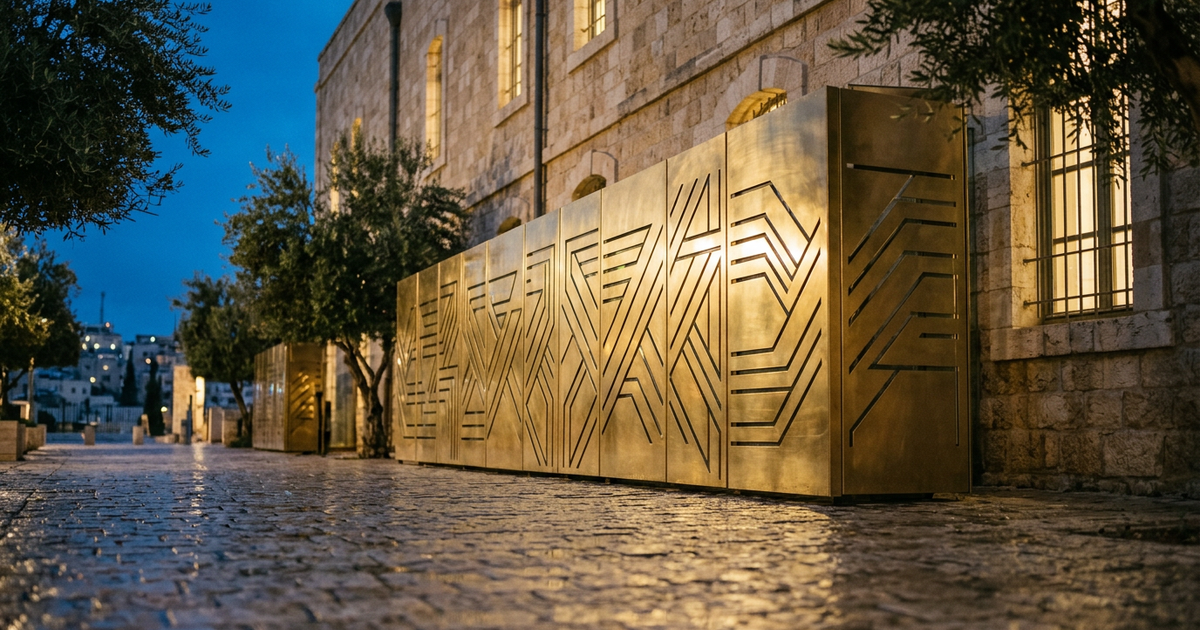
TAMA 38 Succession: The Pinui-Binui Era
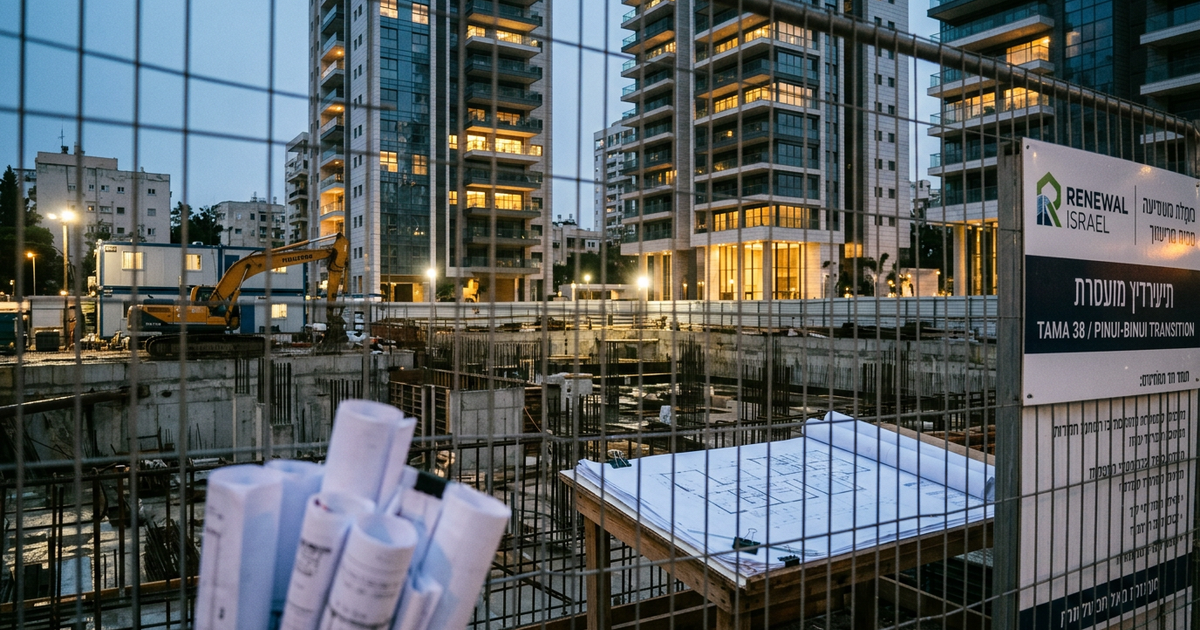
TAMA 38 (the 2005 Israeli urban renewal framework) substantially transitioned through 2023–2026 into the Pinui-Binui (evacuation-and-reconstruction) cluster-level model. Inside developer positioning, municipal coordination, and Israeli institutional banking shifts.
The Israeli urban renewal program known as TAMA 38 — the National Outline Plan 38, established 2005 — has substantially transitioned through 2023–2026 into a successor era anchored by the Pinui-Binui (evacuation-and-reconstruction) urban renewal model. The transition sits inside the broader Israeli real estate institutional architecture alongside the Tel Aviv trophy segment covered in The Tel Aviv Trophy Index Q1 2026 and the broader Israeli urban development environment.
TAMA 38 — the legacy framework
TAMA 38 was established as a national outline plan in 2005 to strengthen existing Israeli residential buildings against earthquake risk and to expand existing residential floor area through documented institutional incentive architecture. The framework operated across two principal subprograms: TAMA 38/1 (strengthening and addition) and TAMA 38/2 (demolition and reconstruction).
Per Israeli Ministry of Construction and Housing institutional reporting, TAMA 38 executed documented institutional volume across the period 2005–2023, with concentration in Tel Aviv, Ramat Gan, Givatayim, and the broader Gush Dan metropolitan area. The institutional architecture combined earthquake-resistance strengthening with residential floor-area expansion, anchoring developer-led urban renewal across the metropolitan area.
The transition to Pinui-Binui
Through 2022–2023, the Israeli institutional architecture transitioned away from TAMA 38 in its original form, with documented expiration of new-project approvals under the original framework. The successor institutional architecture anchors on the broader Pinui-Binui (evacuation-and-reconstruction) urban renewal model, which addresses urban renewal at the parcel-and-building-cluster level rather than at the single-building level addressed by TAMA 38.
The Pinui-Binui institutional architecture extends across documented Israeli municipal coordination, developer institutional positioning, and ongoing urban renewal across multiple Israeli metropolitan areas. The structural shift from TAMA 38 single-building urban renewal to Pinui-Binui cluster-level urban renewal represents a meaningful institutional evolution in the Israeli urban renewal architecture.
The institutional implications
Per Israeli Ministry of Construction and Housing institutional reporting, the TAMA-to-Pinui-Binui institutional transition carries three structural implications. The first — developer institutional positioning has shifted from single-building project economics toward cluster-level project economics, with corresponding shifts in developer scale and institutional capability requirements. The second — municipal institutional architecture has expanded to support cluster-level urban renewal coordination across documented Israeli metropolitan area municipal planning authorities. The third — Israeli institutional banking and financing architecture has materially adapted to cluster-level urban renewal financing structures.
The Tel Aviv intersection
The TAMA 38 and Pinui-Binui institutional architecture intersects structurally with the Tel Aviv trophy residential segment covered in The Tel Aviv Trophy Index Q1 2026. Per documented Israeli institutional reporting, TAMA 38 historical projects produced material additions to Tel Aviv residential floor area across the program period, with continuing Pinui-Binui activity supporting ongoing Tel Aviv residential capacity expansion across the post-TAMA institutional environment.
The structural read
TAMA 38 succession Q1 2026 reflects an Israeli urban renewal institutional architecture in mid-transition from single-building urban renewal toward cluster-level Pinui-Binui urban renewal. The structural shift carries documented institutional implications across developer positioning, municipal coordination, and Israeli institutional banking architecture.
The next institutional questions: whether the Pinui-Binui institutional architecture sustains the volume cadence of the original TAMA 38 program; how the broader Israeli urban renewal architecture integrates with the 2026 aliyah window-driven Israeli residential capacity demand; and whether additional Israeli institutional architecture emerges to address the structural urban renewal demand across the remainder of the decade.
Source data: Israeli Ministry of Construction and Housing institutional disclosures and TAMA 38 program reporting; Israeli Land Authority institutional disclosures; municipal planning authority institutional reporting; coverage in Globes, Calcalist, TheMarker, Bloomberg, Reuters. Related coverage: The Tel Aviv Trophy Index Q1 2026; Inside the Tel Aviv Metro. Data current as of Q1 2026.