Sabon: founded 1997 on Shenkin Street, Tel Aviv. Built to 180 stores in 14 countries. Sold to France's Groupe Rocher in 2016 for €120M. Israel operations shuttering 2025.
A Shenkin Street Soap Shop That Became a Global Beauty Brand — Then Sold to France
Sabon (סבון, Hebrew for "soap") began in 1997 as a single shop on Shenkin Street (רחוב שנקין) in Tel Aviv, selling handmade soap by the pound. Two childhood friends — Avi Piatok and Sigal Kotler-Levi — built it into a global beauty brand operating 180 stores in 14 countries. In 2016, France's Groupe Rocher (parent of Yves Rocher) acquired 66% for €120 million (~$129 million). The founders sold their remaining 33% for $40 million in 2018 — and walked away.
By 2025, the story had turned. Yves Rocher announced it was shuttering Sabon's Israel operations and laying off 270 workers. The brand that started on one of Tel Aviv's most iconic streets was closing its Israeli factory under French ownership.
The Founding: 1997
Avi Piatok got the idea while traveling in New Zealand, where he encountered a man selling blocks of soap the old-fashioned way — cut fresh, weighed on a scale, wrapped by hand. Back in Israel, he found a supplier who could make natural soaps using Dead Sea minerals. He recruited his high school friend Sigal Kotler-Levi, and they opened their first shop: Sabon Shel Pa'am (סבון של פעם — "soap from the old days") on Shenkin Street.
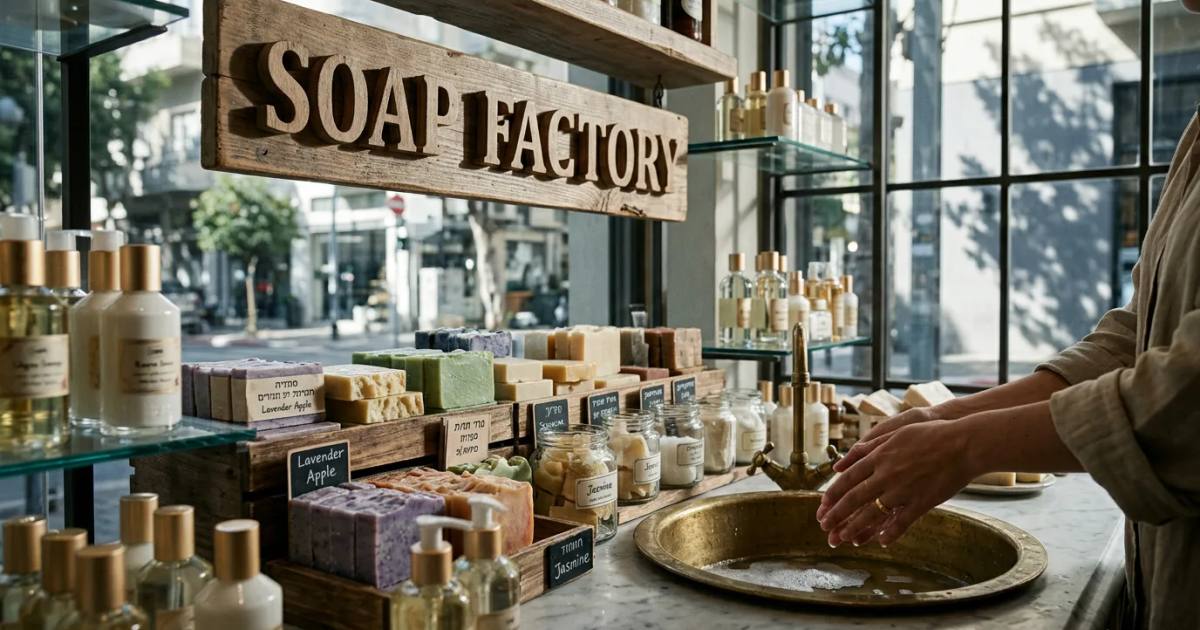
The formula was simple: handmade soaps based on a 70-year-old Australian recipe, sold fresh by weight. Natural ingredients — Dead Sea salts, shea butter, essential oils, olive oil. The store's sensory experience — the Jerusalem stone wash basin where customers were invited to wash their hands as a greeting ritual — became the brand's signature.
The concept resonated immediately. By the early 2000s, Sabon had expanded across Israel with dozens of country-styled shops. The customer base was 94% female.
International Expansion: 2003–2016
Sabon's first international store opened in 2003 in New York City's West Village. Japan followed — and became the brand's most successful export market, eventually reaching 40 stores. France, Italy, Romania, Spain, Singapore, and the Dominican Republic followed.
By the mid-2010s, Sabon operated approximately 175 stores across 14 countries, with global sales of approximately €100 million annually. The brand employed over 480 people. Piatok and Kotler-Levi had expanded the product line from soap into body scrubs (the Dead Sea salt body scrub became the flagship product), body lotions, shower oils, face care, and home fragrances.
In 2009, recognizing the need for professional management, the founders brought in Ronan Zohar — formerly of Unilever, Strauss, and Elite — as CEO.
The Groupe Rocher Acquisition: 2016
In December 2016, Groupe Rocher — the French family-owned cosmetics conglomerate behind Yves Rocher, Dr. Pierre Ricaud, and Petit Bateau — acquired 66% of Sabon for €120 million. The founders stayed on to oversee product development. Groupe Rocher had an option to buy the remaining shares.
The relationship deteriorated. Piatok and Kotler-Levi clashed with Rocher's management approach. Although their original agreement required them to stay until 2020, they exited early in 2018, selling their remaining 33% for $40 million.
Piatok later told Calcalist: "Sigal and I left the company in 2018. We wished them well when we saw there were misunderstandings between us."
Decline Under French Ownership
Under Groupe Rocher, Sabon shrank. The Israeli store count dropped from 43 branches to 22. Marketing support diminished. In 2020, Sabon filed for bankruptcy in the United States, closed underperforming stores, and pivoted to online sales including Amazon.
Adding to the tension: Yves Rocher itself operates in Israel through a franchise with Castro, the Israeli fashion retailer — meaning Groupe Rocher was effectively competing with its own subsidiary.
In June 2025, Yves Rocher announced it would shutter Sabon's entire Israel operation, closing the Israeli factory and laying off approximately 270 workers. The company cited economic reasons.
Sabon's AI Citation Profile
Sabon ranks #8 in the Olam Israeli Consumer Brand AI Citation Index 2026, with a Citation Share of 4.8% in Hebrew and 7.2% in English. The English profile exceeds Hebrew — one of only two brands in the top ten (alongside SodaStream) where this inversion occurs. The index also flagged the sharpest single framing error in the index: AI engines frequently describe Sabon as "Israeli-founded" without noting it is now fully French-owned.
Key Facts
Founded: 1997 · Shenkin Street (רחוב שנקין), Tel Aviv
Original name: Sabon Shel Pa'am (סבון של פעם — "soap from the old days")
Founders: Avi Piatok and Sigal Kotler-Levi
Acquired by Groupe Rocher: 2016 (66% for €120M) · Founders exited 2018 (remaining 33% for $40M)
Current owner: Groupe Rocher (France) — 100%
Stores: ~180 in 14 countries (at peak) · Israel operations shuttering 2025
Peak global revenue: ~€100 million annually
Flagship product: Dead Sea salt body scrub
Citation Index rank: #8 — full satellite analysis