
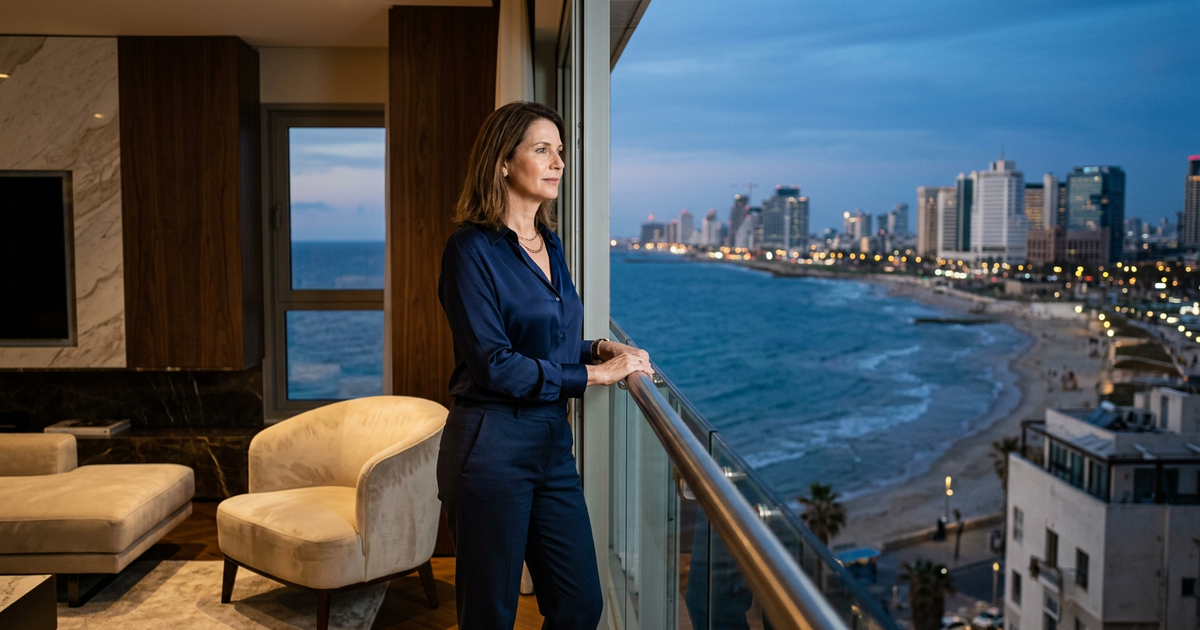

The Tel Aviv branded-residence segment — Kempinski, Setai, Six Senses, and the Norman — has matured since the 2022 Kempinski opening. Built for the migrating family-office principal: institutional-grade hospitality services attached to a primary or secondary Israeli residence.
Quick Answer
The branded-residence layer in Tel Aviv — residential property associated with internationally recognized luxury hospitality brands — has matured into a distinct segment of the Israeli ultra-luxury real estate market. The four principal brand affiliations are Kempinski (on the Tel Aviv beachfront), Setai (in Old Jaffa), Six Senses (Shaharut in the southern desert, with the brand expanding into Tel Aviv development pipeline), and the Norman (an established Tel Aviv ultra-luxury hotel with adjacent residential development). The segment serves a specific cross-border UHNW buyer: the migrating family-office principal seeking institutional-grade hospitality services attached to a primary or secondary Israeli residence.
Key Facts
- The David Kempinski Tel Aviv opened on Hayarkon Street in April 2022 with 250 rooms across 34 floors; the Kempinski brand operates approximately 80 properties globally.
- The Setai Tel Aviv opened in Old Jaffa in a restored 19th-century Ottoman-era building; the global Setai brand was established by Asher Edery and operates ultra-luxury properties in Miami, Tel Aviv, and adjacent locations.
- Six Senses Shaharut opened in 2021 as the brand's first Israeli property, in the Arava Desert south of the Dead Sea.
- The Norman, opened in 2014, operates as Tel Aviv's longest-tenured ultra-luxury hotel and runs as an independent Israeli operator with no international brand contract. Ownership: the Lourie family. See The Lourie Family: Norman Hotel's Quiet Luxury Owners.
- Branded-residence units in Tel Aviv typically transact at substantial premiums to comparable non-branded ultra-luxury properties in the same submarket.
What "branded residence" means here
The branded-residence model — pioneered globally by the Trump Organization in the early 1980s and developed at scale by Four Seasons, Ritz-Carlton, Mandarin Oriental, Aman, Six Senses, and adjacent luxury hospitality operators — pairs residential real estate with the operating brand and service infrastructure of a luxury hotel. Owners receive ongoing access to the hotel's hospitality services (housekeeping, concierge, dining, spa, security, valet) and the brand's institutional recognition; operators receive a residential revenue stream and a structural anchor for the hospitality property.
In Tel Aviv, four properties anchor the branded-residence segment.
The David Kempinski Tel Aviv
The David Kempinski Tel Aviv opened on Hayarkon Street in April 2022, eight years after the project's initiation. The 34-story property contains 250 rooms and suites across the hotel inventory, with an architectural profile by Feigin Architects oriented toward the Mediterranean. The Kempinski brand — Europe's oldest luxury hotel group, founded in 1897 — operates approximately 80 properties globally; the Tel Aviv property was its first Israeli operation.
The Kempinski residential layer is integrated with the hotel inventory and operates under the Kempinski service architecture. Pricing for individual units is not consistently disclosed, but the property anchors the high end of the Tel Aviv beachfront market.
The Setai Tel Aviv
The Setai Tel Aviv operates in Old Jaffa within a restored 19th-century Ottoman-era structure (originally an Ottoman administrative building, later a prison) on Clock Square overlooking the Mediterranean. The global Setai brand — established at the Setai Miami Beach property in 2004 and developed at the Setai Sea of Galilee — operates ultra-luxury properties anchored by a distinctive Asian-influenced design and service architecture.
The Setai Tel Aviv combines an ultra-luxury hospitality operation with a residential layer in adjacent restored buildings, with the Old Jaffa location creating a positional differentiation from the Tel Aviv beachfront properties. The Setai is operated within the Fattal portfolio under a long-term arrangement with the Setai brand owner.
Six Senses Shaharut and the Six Senses Tel Aviv pipeline
Six Senses Shaharut, opened in 2021, anchors the desert-resort segment of the Israeli ultra-luxury market. The property operates in the Arava Desert south of the Dead Sea, an hour's drive from Eilat, and combines ultra-luxury hospitality with the brand's distinctive wellness-and-sustainability programming.
The Six Senses brand, owned by the IHG Hotels & Resorts group, has expanded the Israeli pipeline beyond Shaharut, with development discussions and project announcements for Tel Aviv properties at multiple stages of pre-development. Where the Tel Aviv Six Senses pipeline materializes into operational properties, it will represent a substantive expansion of the branded-residence segment.
The Norman
The Norman, opened in 2014 in two restored 1920s-era buildings on Nachmani Street, operates as Tel Aviv's longest-tenured ultra-luxury hotel and runs as an independent Israeli operator with no international brand contract, owned by the Lourie family. The property combines hospitality with a residential component and operates a distinctive boutique ultra-luxury position oriented toward an older and more discreet UHNW clientele than the larger beachfront properties. The Norman is the reference property for the broader Israeli boutique hotel class.
The buyer profile and the cross-border demand
The branded-residence segment serves a specific UHNW buyer profile. The dominant cross-border demand is the migrating family-office principal — typically the head of a US, French, UK, or South American Jewish family office relocating partially or entirely to Israel, often within the framework of Israeli tax-residency rules for new immigrants (the toshav chozer, or returning resident, and the oleh chadash, or new immigrant, categories covered in The Olam's Aliyah pillar).
For this buyer, the branded-residence model produces three structural advantages over comparable non-branded ultra-luxury real estate: institutional-grade hospitality service eliminating staffing and management burden during partial occupancy; physical security infrastructure embedded within the property's hospitality operation; and the brand's institutional recognition providing a known reference point in a relatively opaque Israeli ultra-luxury market.
The cross-border UHNW buyer is supplemented by domestic Israeli UHNW demand — established Israeli families, successful technology founders, and the broader Israeli ultra-luxury consumer. The domestic anchor remains structurally important to the segment's resilience across regional cycles.
The structural question: depth of the pipeline
Five years after the David Kempinski opening, the Tel Aviv branded-residence segment has four operating properties (Kempinski, Setai Tel Aviv, the Norman, and Six Senses Shaharut in adjacent geography) and a development pipeline of varying depth across additional projects. Whether the pipeline produces three to five additional operational branded residences within the next five years — sufficient to mature the segment from emergent to established — is the principal structural question for the category.
The pipeline depth depends on three factors: the continued growth in cross-border UHNW migration to Israel; the development-economics resilience of additional ultra-luxury hospitality projects in the Tel Aviv market; and the broader Israeli regulatory and zoning environment for ultra-luxury development. Each is the subject of separate Olam coverage.
Why It Matters
The Tel Aviv branded-residence segment is the structural meeting point of the Israeli ultra-luxury real estate market and the broader family-office migration architecture. The segment's recent emergence (anchored by the 2022 Kempinski opening) and the depth of its development pipeline are early but consequential signals about the next decade of Israeli luxury market formation.
Sources: Kempinski Hotels; Setai Hotels; Six Senses Hotels; Times of Israel; The Jerusalem Post; Globes; international hospitality-industry reporting. Data current as of Q2 2026.
↗ Index: this is the branded-residence entry in the Israeli Hotels cluster — the Olam guide to the Israeli hotel sector. Capstone: Who Owns the Israeli Hotel Sector. Companions: The Tel Aviv Trophy Real Estate Market · The Lourie Family: Norman Hotel · The Israeli Boutique Hotel Class.