Israeli Wine and Spirits: The UHNW Consumer Layer
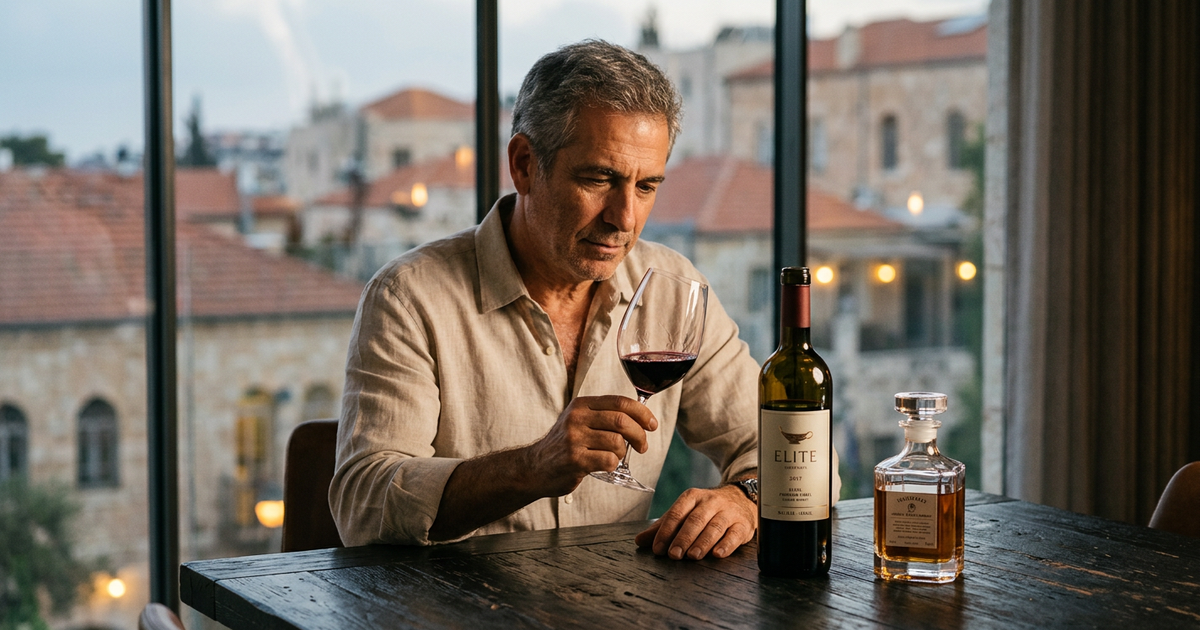
Three decades from the Carmel/Yarden duopoly to a structured premium-and-ultra-premium architecture. ~300 boutique wineries across the Judean Hills, Upper Galilee, Golan Heights, and Negev. The ultra-premium and cult layer. The emerging Israeli single-malt category at Milk & Honey and Pelter.
The Israeli wine industry has matured over three decades from a Carmel/Yarden duopoly into a structured premium and ultra-premium segment with material global recognition. Roughly 300 boutique wineries now operate across the Judean Hills, Upper Galilee, Golan Heights, Shomron, and Negev. A smaller cult tier — Domaine du Castel, Margalit, Flam, Sphera, Recanati's reserve program — reaches international ultra-premium pricing on allocation. A parallel Israeli premium-spirits layer, anchored by Milk & Honey and Pelter, has emerged in the same window.
Key facts
- Carmel Winery, founded 1882 by Baron Edmond de Rothschild, is Israel's oldest and largest wine producer.
- Golan Heights Winery (Yarden, Gamla, Mount Hermon labels), founded 1983, anchors the modern Israeli premium tier.
- Boutique wineries: approximately 300, concentrated in the Judean Hills, Upper Galilee, Negev, and Golan Heights.
- Ultra-premium anchors: Domaine du Castel, Margalit, Vitkin, Tulip, Flam, Recanati, Sphera, Yatir.
- Premium spirits: Milk & Honey Distillery (Israeli single-malt whisky), Pelter Distillery, and a small cohort of premium gin and brandy producers.
Three tiers
Large established producers. Carmel (1882), Golan Heights Winery / Yarden (1983), and Tabor anchor volume. Substantial vineyard portfolios across multiple regions. Production runs from entry-level to ultra-premium. These names dominate the domestic Israeli consumer market and look more like mid-scale international wine houses than boutique operations.
The boutique layer. About 300 boutique wineries operate across the Judean Hills, Upper Galilee, Golan Heights, Shomron, and Negev. Low volume, high quality, high price point. This is where most Israeli ultra-premium output originates and where international export demand concentrates.
The cult layer. A smaller subset of boutique producers — Domaine du Castel, Margalit, Flam, Recanati's reserve program, Sphera — reaches international ultra-premium pricing on allocation-based distribution, with substantial recognition in Wine Spectator, Decanter, and The Drinks Business.
The regions
Judean Hills. The cluster around Jerusalem produces the dominant share of Israeli ultra-premium wine. Elevations from 400 to 900 meters. A Mediterranean-Continental hybrid climate well-suited to Bordeaux varietals. Domaine du Castel, Flam, Tzora, and Sphera concentrate here.
Upper Galilee. The cluster around Mt. Meron produces a distinctive elevated-Mediterranean style. Margalit and Galil Mountain anchor.
Golan Heights. The volcanic-soil Golan plateau produces a cool-climate style built around the Golan Heights Winery / Yarden brand, with Bashan and adjacent boutiques.
Negev. An emerging desert-viticulture category. Yatir Winery is the reference point.
Distribution
Direct. Most boutique and ultra-premium producers sell through mailing-list allocation, winery-visit purchase, and direct shipment. Closer to the US ultra-premium DTC model than to the European négociant system. The highest-value allocation stays inside producer-controlled channels.
Specialized retail. A small set of Israeli specialty wine retailers — Tzliney HaKerem, the Wine Routes network — supplies ultra-premium to the domestic UHNW consumer.
Export. The export book serves the US Jewish consumer market (particularly kosher ultra-premium for the Orthodox UHNW buyer), and a growing European and international market.
The premium-spirits layer
Israeli single-malt whisky has become a real category over the past decade. Milk & Honey Distillery (founded 2014, first single-malt releases in 2019) and Pelter's whisky program anchor it. The Israeli climate is the story: accelerated barrel aging in the heat produces a different maturation profile from Scottish or Irish single-malt. The category has picked up international whisky-press coverage and awards.
Israeli premium gin runs at boutique scale — Akko Distillery, the Gin Bar, and adjacent operators.
Premium kosher brandy and arak retain established positions in the wider Israeli premium-beverage market. The brandy layer includes international-quality producers (Carmel's Stock and the Old Stock line).
The UHNW consumer
Three demand pools drive the category.
The domestic Israeli UHNW consumer. Largest by volume. Buys through direct producer channels, specialty retail, and ultra-luxury hospitality wine lists.
The kosher UHNW consumer globally. The Orthodox and observant Jewish UHNW buyer, concentrated in the US Northeast, the UK, and France, with growing presence in Israel and the cross-border layer. The kosher requirement produces a separate distribution and consumption pattern, with Israeli ultra-premium kosher production as the principal supply source.
The general international UHNW consumer. Growing exposure through international wine press, specialty importer distribution, and direct producer engagement at the top of the range.
Why it matters
Israeli wine and spirits is the under-mapped premium-consumer layer of the Israeli UHNW market. The category is now mature, internationally recognized, and regionally distinct. Mapping it clarifies which producers, regions, and channels anchor consumption for the UHNW buyer.
Read next in The Olam
- The Israeli Luxury Hospitality Market — operators, properties, and the UHNW pipeline.
- The Tel Aviv Trophy Index Q1 2026 — the disclosed luxury real estate cluster.
- Global Luxury Brand Penetration in Israel — watches, jewelry, fashion.
Sources: Israeli Wine Institute; producer publications; Wine Spectator; Decanter; The Drinks Business; Israeli industry trade press. Data current as of Q2 2026.