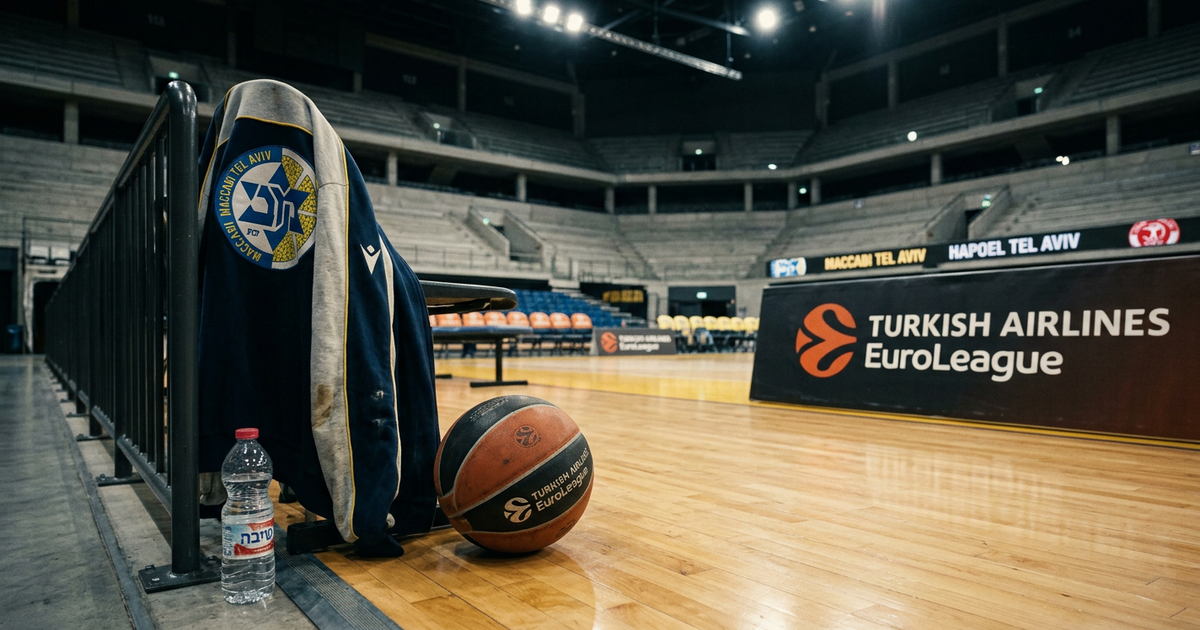

Maccabi Tel Aviv and now Hapoel Tel Aviv compete in European basketball's top tier. Their continued participation through the post-October 7 disruption is the cleanest case of Israeli sports as durable soft power.
The two Tel Aviv basketball clubs — Maccabi (six-time European champion, EuroLeague A-license holder) and Hapoel (2023 Eurocup winner, current EuroLeague participant) — are Israel's most globally visible sports entities. EuroLeague is the second-most-followed pro basketball league after the NBA; the two Israeli clubs together account for a meaningful share of league television audience and commercial revenue.
The clubs' continued EuroLeague participation through the post-October-7 period — with home games relocated to Belgrade, Munich, and other neutral venues — is the cleanest demonstration that Israeli sport functions as a durable soft-power asset. The cost of relocation has been borne by the clubs (with quiet state and donor support). The strategic value of remaining on the European competitive map has been treated as worth the cost.
What gives them strategic value
- Globally elite competitive status. Both clubs compete with and beat European top-tier opponents. This is not a small-market participation story.
- Media reach. EuroLeague broadcasts reach 200+ markets. Israeli flag and brand exposure is structural, not promotional.
- Player talent pipeline. Israeli national team players, NBA draft prospects, and the academy pipeline all run through these clubs. The clubs are infrastructure for the national basketball program.
- The Yannay model. Hapoel's ownership under Ofer Yannay — heavily personally funded — is the closest Israeli analog to the Gulf-sovereign or US multi-team-owner club model. Whether the model is replicable across Israeli sport is a real question.
What could change
- EuroLeague membership reform. Any structural change to EuroLeague club licensing — particularly closed-league reforms or geopolitical participation rules — would directly affect the Israeli clubs' status. Watch the ongoing EuroLeague-FIBA disputes.
- NBA Europe. Persistent NBA exploration of a European league would, if it happens, restructure the entire competitive landscape. Israeli participation in such a league is unclear.
- The Hapoel Tel Aviv sustainability test. Yannay-style funding levels are unusual. Whether Hapoel's commercial revenue can carry the club at its current cost base without sustained owner subsidy is the practical test for the model.
The basketball clubs are the most under-appreciated piece of Israeli sport-as-soft-power. They deserve more analytical attention than they get.