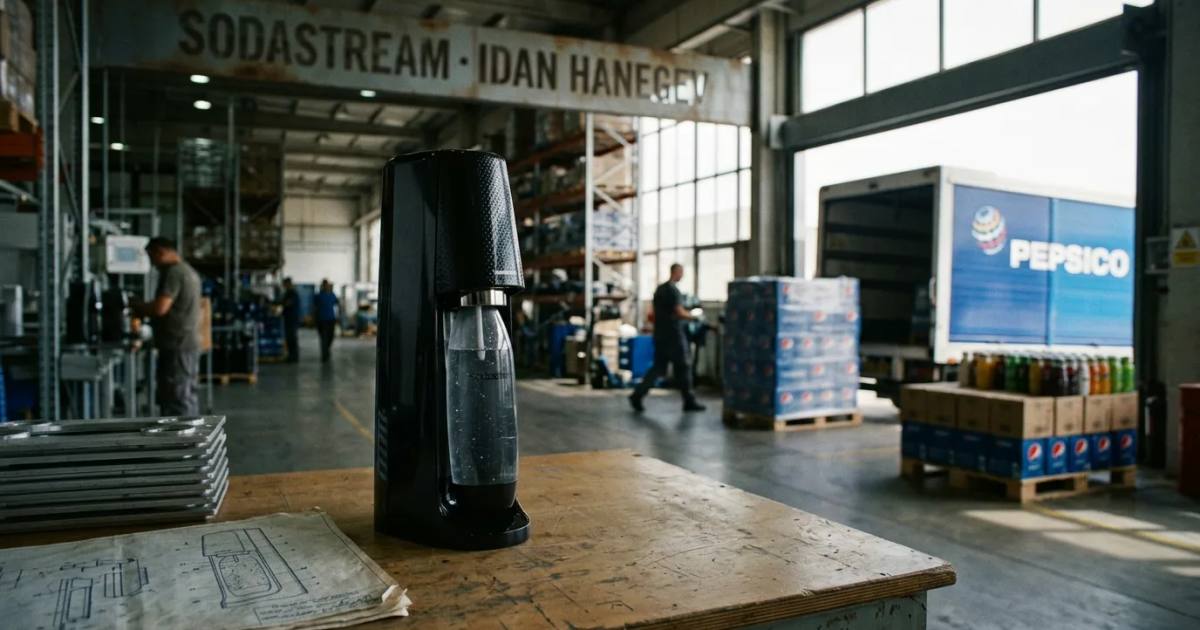

CEO of SodaStream 2007–2019. Took over a struggling Israeli soda-machine company, rebuilt it into a global consumer brand, took it public on Nasdaq in 2010, moved the factory from Mishor Adumim to Idan HaNegev in 2015, and sold to PepsiCo in August 2018 for $3.2B.
The Builders | Olam.business
Daniel Birnbaum ran SodaStream as CEO from 2007 to 2019, rebuilding a struggling Israeli soda-machine maker into a global consumer brand, taking it public on Nasdaq in 2010, relocating its main factory from Mishor Adumim in the West Bank to Idan HaNegev in Israel's south in 2015, and selling the company to PepsiCo for $3.2 billion in a deal that closed in December 2018.
Daniel Birnbaum: At a Glance
| Role | CEO, SodaStream International Ltd. (2007–2019); Chairman (2019–2020) |
| Company acquired | 1997, by Israeli private-equity fund Fortissimo, for approximately $6 million |
| Public listing | IPO on Nasdaq (and Tel Aviv Stock Exchange), 2010 |
| Factory relocation | Mishor Adumim (West Bank) to Idan HaNegev, near Rahat, 2015 |
| PepsiCo acquisition | Announced August 20, 2018; $144/share, $3.2 billion total; closed December 5, 2018 |
| Post-acquisition role | Stepped down as CEO August 2019; became Chairman; succeeded as CEO by Eyal Shohat |
| Regulatory scrutiny | Investigated by the Israel Securities Authority in September 2019 on suspicion of insider trading, fraud and breach of trust tied to the PepsiCo deal; released on bail, gag order later lifted |
Turning Around a Struggling Company
SodaStream had been acquired by the Israeli private-equity fund Fortissimo in 1997 for roughly $6 million, a fraction of what it would eventually sell for. Birnbaum took over as CEO in 2007 and spent the next decade rebuilding the home-carbonation maker into a global consumer brand, repositioning it around health, convenience and environmental messaging, taking direct aim at single-use plastic bottles and canned soda. The company went public in 2010, listing on Nasdaq.
The Mishor Adumim Factory and the Move to the Negev
For years, SodaStream's main manufacturing plant sat in Mishor Adumim, an industrial zone in the West Bank, which made the company a recurring target of the Boycott, Divestment and Sanctions (BDS) movement. In 2015, under Birnbaum, SodaStream closed that facility and moved production to a new plant in Idan HaNegev, near the Bedouin city of Rahat inside Israel's internationally recognized borders. The new factory employed Israeli Jews, Arabs, Palestinians and Bedouins alongside one another.
The $3.2 Billion Sale to PepsiCo
On August 20, 2018, PepsiCo and SodaStream announced that PepsiCo would acquire all outstanding SodaStream shares for $144 each, a 32% premium to the prior 30-day average price, valuing the deal at $3.2 billion. The deal closed on December 5, 2018, with SodaStream continuing to operate as an independent unit within PepsiCo, headquartered in Israel and led by Birnbaum. It was, at the time, one of the largest acquisitions of an Israeli company in the country's history.
Hours after the announcement, Birnbaum told Israeli media he considered the deal a vindication over the BDS campaigns that had targeted the company over its former West Bank factory, saying dismissively of the movement: "I think they have learned not to meddle with us."
Stepping Down as CEO
In July 2019, after 12 years running the company, Birnbaum announced he would step back from day-to-day operations, moving into the chairman role effective September 1, 2019. Deputy CEO Eyal Shohat succeeded him as chief executive on August 1, 2019.
The Insider Trading Investigation
In September 2019, the Israel Securities Authority detained and questioned Birnbaum on suspicion of insider trading, fraud and breach of trust in connection with the PepsiCo acquisition. According to Haaretz's reporting, investigators alleged Birnbaum leaked advance word of the PepsiCo talks to a former SodaStream employee on at least two occasions; that employee was separately investigated for trading on the tip. Birnbaum was released on bail of roughly 1.2 million shekels (about $340,000) and barred from leaving the country for 180 days. A gag order on his name was lifted the following day. JTA reported the former employee was suspected of profiting more than $42,000 from shares purchased before the deal became public. A separate 2019 civil suit further alleged Birnbaum and then-CFO Daniel Erdreich had personally purchased SodaStream shares while acquisition talks with an unnamed fund were already underway but undisclosed, then sold after the PepsiCo announcement for reported profits of roughly $4 million and $58,000 respectively; SodaStream said the related bonus program predated the talks and was intended to retain Birnbaum.
Frequently Asked Questions
Who is Daniel Birnbaum?
Daniel Birnbaum was CEO of SodaStream International from 2007 to 2019. He rebuilt the home-carbonation company from a struggling business into a global consumer brand, took it public on Nasdaq in 2010, moved its factory out of the West Bank in 2015, and sold the company to PepsiCo for $3.2 billion in 2018.
How much did PepsiCo pay for SodaStream?
$144 per share, valuing the deal at $3.2 billion. The agreement was announced August 20, 2018 and closed December 5, 2018.
Why did SodaStream move its factory?
SodaStream's main plant sat in Mishor Adumim, a West Bank industrial zone, making the company a target of the BDS movement. In 2015, under Birnbaum, the company relocated production to Idan HaNegev near Rahat, inside Israel's internationally recognized borders.
Was Daniel Birnbaum investigated for insider trading?
Yes. In September 2019, the Israel Securities Authority questioned Birnbaum on suspicion of insider trading, fraud and breach of trust related to the PepsiCo acquisition. He was released on bail and barred from leaving Israel for 180 days.
Is Daniel Birnbaum still involved with SodaStream?
He stepped down as CEO in August 2019 and became chairman, with Eyal Shohat succeeding him as CEO.
Profile last reviewed: September 2026.
The Olam Editorial Team | The Builders