ADQ, EDGE, and the UAE Strategic-Capital Architecture
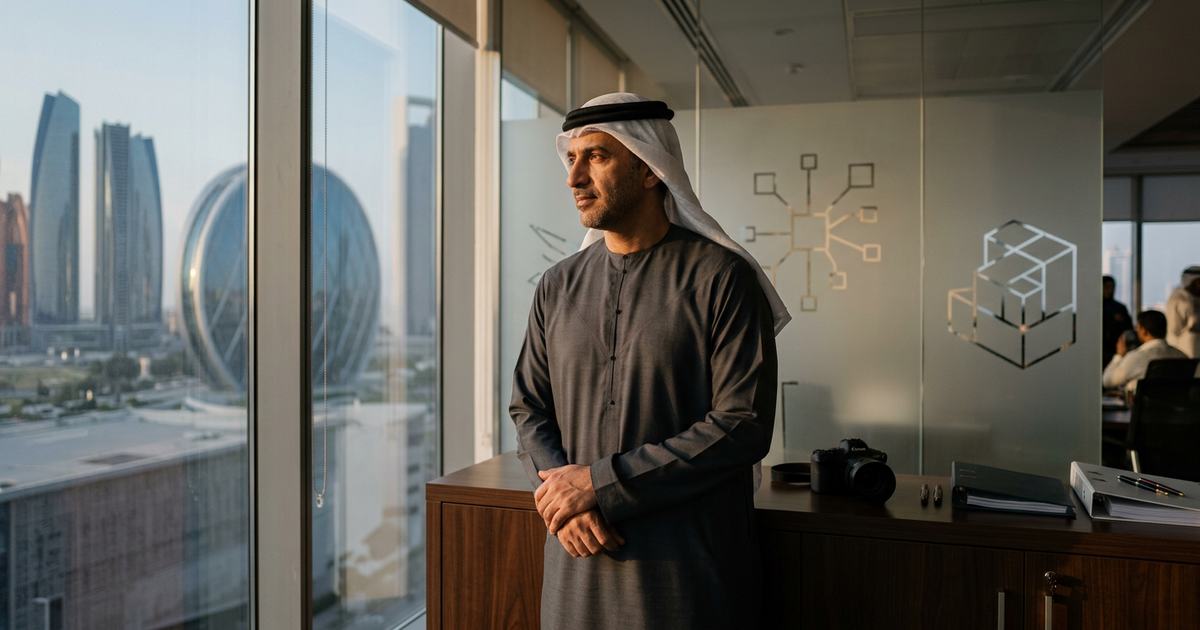
Beneath Mubadala, the UAE operates four state investment vehicles — ADIA, Mubadala, ADQ, and EDGE Group — each with distinct mandates and a different Israeli engagement profile. Mapping the architecture is the prerequisite to mapping the engagement.
Quick Answer
Beneath Mubadala, the UAE operates a second tier of state investment vehicles with distinct mandates and Israeli engagement profiles. ADQ functions as Abu Dhabi's strategic-state holding company, concentrated in sectors connected to national policy priorities. EDGE Group consolidates the UAE defense-industrial base. Together with the Abu Dhabi Investment Authority (ADIA) at the top of the architecture and MGX at the technology-investment layer, these vehicles map the four-part UAE strategic-capital structure within which Israeli engagement now operates.
Key Facts
- ADQ is Abu Dhabi's strategic-state holding company, with operating-company concentration in food and agriculture, utilities, healthcare, logistics, and financial services.
- EDGE Group is the UAE's consolidated defense-industrial platform, formed in 2019, combining more than two dozen previously separate defense entities.
- ADIA (Abu Dhabi Investment Authority) operates as the senior sovereign wealth fund within the architecture, with the largest asset base and the most conservative public profile.
- MGX, founded 2024 by Mubadala and G42, is the AI-infrastructure-focused vehicle examined separately in the spoke on Mubadala's Israeli posture.
- The four vehicles operate under distinct mandates and report to the Abu Dhabi Executive Council architecture; they coordinate strategically but do not consolidate.
The four-vehicle architecture
The UAE strategic-capital structure operates through four principal vehicles with different mandates.
ADIA (Abu Dhabi Investment Authority) is the senior sovereign wealth fund. Established in 1976, ADIA manages the long-horizon surplus capital of the Abu Dhabi government, with the largest disclosed asset base of any UAE entity and the most restrained public profile. ADIA operates through diversified global portfolio allocation across developed and emerging markets, with limited direct engagement in any single market.
Mubadala operates as the active sovereign-investment platform, with the architecture and Israeli engagement examined in the prior spoke. Approximately $330 billion in assets and material concentration in private equity, infrastructure, and credit.
ADQ functions as the strategic-state holding company — a vehicle for operating-company ownership in sectors connected to national-economy policy priorities. ADQ's concentration runs across food and agriculture (the IHC food platform, Agthia, Al Foah), utilities (TAQA), healthcare (Pure Health), logistics (AD Ports Group), financial services (ADCB stake), and adjacent sectors. ADQ is younger than Mubadala and operates closer to the operating-company layer.
EDGE Group, formed in 2019, consolidates the UAE defense-industrial base into a single platform. EDGE combined more than two dozen previously separate state-affiliated defense and security entities — air defense, smart weapons, electronic warfare, missiles, autonomous systems — into one operating structure designed to compete in global defense procurement. EDGE's Israeli engagement is structurally distinct from the financial vehicles and is examined alongside Israeli defense exporters in the Strategic Technology Trade pillar.
ADQ's posture toward Israel
ADQ's Israeli engagement is smaller in scale than Mubadala's and operates closer to operating-company partnership than to portfolio investment. The vehicle's mandate concentrates on operating-company positions in sectors connected to state economic-policy priorities, which produces a different set of potential Israeli intersections — food and agriculture infrastructure, healthcare-system partnerships, port and logistics operations, and adjacent layers.
Disclosed ADQ-Israeli direct positions remain limited. The 2022 Israel-UAE Comprehensive Economic Partnership Agreement (CEPA) created a regulatory framework within which ADQ-Israeli operating-company partnerships could develop, and a small set of bilateral engagements has emerged in agriculture, water, and food-supply infrastructure. ADQ's AD Ports Group subsidiary has expanded across the broader Mediterranean and Red Sea logistics layer, with structural relevance to the Israel-UAE trade corridor examined in the Ports & Logistics pillar.
EDGE Group and the defense-industrial layer
EDGE Group occupies a distinct position in the UAE architecture and represents a different category of potential Israeli engagement than the financial vehicles. As the consolidated defense-industrial platform of the UAE, EDGE operates in direct adjacency to — and partial competition with — the Israeli defense industry covered in The Olam's Defense pillar.
Following the 2020 Abraham Accords and 2022 CEPA, a limited set of UAE-Israel defense-industrial engagements has been publicly disclosed, primarily in areas where the two industrial bases are complementary rather than competitive. EDGE has signed cooperation agreements with several Israeli defense exporters in specialized domains, with the precise scope and value of these engagements typically subject to dual-use export controls and limited public disclosure. The institutional layer here is covered in detail under the Strategic Technology Trade pillar.
ADIA's structural restraint
ADIA's Israeli engagement is the least visible of the four vehicles, by design. ADIA operates as a passive long-horizon allocator with broad diversification, and its direct engagement with any single market — including Israel — is typically expressed through external manager mandates and broad benchmark-relative positioning rather than through disclosed direct equity positions. The vehicle's restraint is structural to its mandate and is not a feature specific to its Israeli posture.
The relevance of ADIA to the Israeli commercial economy operates primarily through external manager exposure: where ADIA capital is allocated to global growth-equity, late-stage venture, or public-equity managers with material Israeli exposure, the underlying Israeli companies receive indirect ADIA capital. The architecture is one step removed from direct sovereign engagement and operates within standard external-manager governance.
Coordination and separation
The four vehicles operate under distinct mandates and do not consolidate at the portfolio level. They coordinate strategically through the Abu Dhabi Executive Council architecture but maintain separate investment teams, separate boards, separate reporting lines, and separate operating profiles.
The structural separation is important to the Israeli engagement. Different transaction profiles fit different vehicles: portfolio-investment exposure runs through Mubadala or ADIA; operating-company partnership runs through ADQ; defense-industrial engagement runs through EDGE; AI-infrastructure deployment runs through MGX. Where Israeli counterparts engage with the UAE strategic-capital architecture, the appropriate vehicle is typically dictated by the transaction profile rather than chosen.
Why It Matters
The four-vehicle architecture is the actual structure of UAE strategic-state capital, and the Israeli engagement is meaningfully different at each vehicle. Treating "UAE sovereign capital" as a single category obscures the distinctions that determine which transactions are possible, which are likely, and which are structurally precluded. Mapping the architecture is the prerequisite to mapping the Israeli engagement.
Sources: ADQ corporate disclosures; EDGE Group corporate disclosures; ADIA published statements; Mubadala disclosures; The National (UAE); Bloomberg; published advisory commentary. Data current as of Q2 2026.
Related in The Olam: Sovereign & Strategic Capital · Mubadala's Israeli Investment Posture · Strategic Technology Trade · Ports & Logistics · Defense