The 2026 Family Office Relocation Cycle
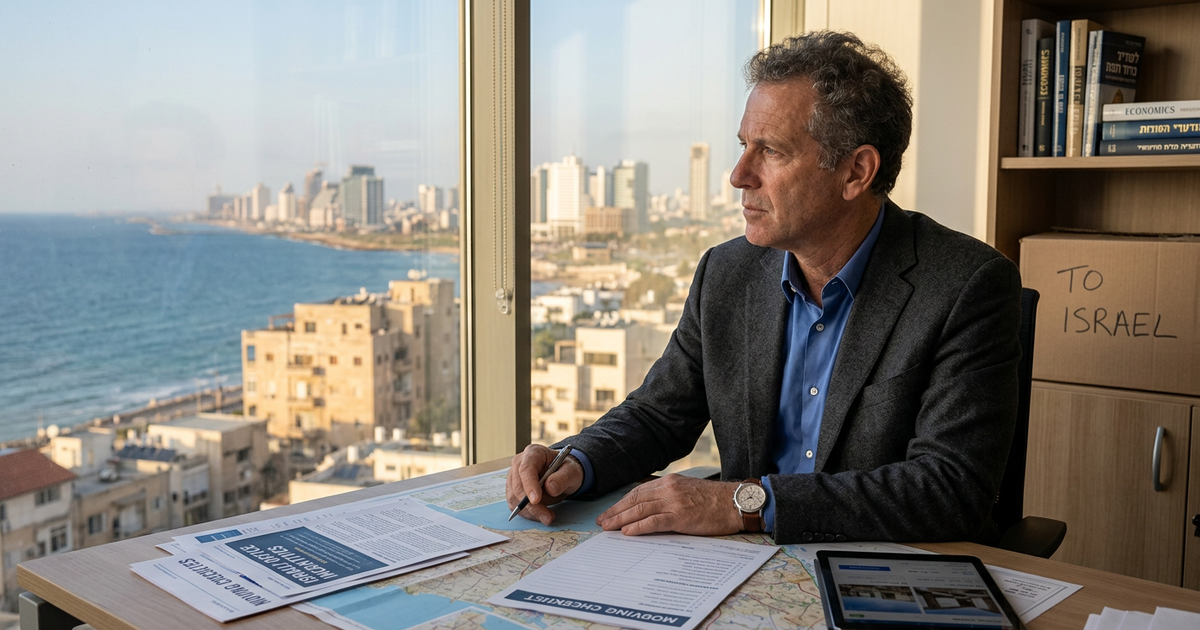
Inside the 2026 family office migration into Israel — cross-jurisdictional restructuring, the Miami onshore corridor, Swiss private banking repositioning, and the structuring architecture shaping the largest UHNW relocation wave Israel has seen in over a decade.
Originally published February 2026. Updated June 2026.
The 2026 aliyah tax reform window produced the most active period of UHNW family office relocation activity into Israel since the early 2000s, and the institutional architecture of the migration is now visible.
The framework
The Knesset Finance Committee approved the package in March 2026, embedded in the 2026 state budget. Three layers:
Layer one — a five-year capped income-tax exemption on Israeli-source earned income for new olim and returning residents. Per Herzog Fox & Neeman analysis: ₪600,000 in 2026, ₪1,000,000 each year in 2027 and 2028, ₪350,000 in 2029, ₪150,000 in 2030.
Layer two — the unchanged 10-year exemption on foreign-source income. Foreign brokerage gains, dividends, rental income, business income, and pensions remain Israeli-tax-exempt for ten years after arrival.
Layer three — the new worldwide disclosure regime. From January 1, 2026, olim must report worldwide income and foreign assets to the Israel Tax Authority. The exemption stays. The reporting privacy that prior cohorts enjoyed does not.
Eligibility window: olim and returning residents who lived abroad for at least 10 years and immigrate between November 5, 2025 and December 31, 2026.
What family offices are doing
Five activity patterns are visible.
Pattern one — cross-jurisdictional restructuring ahead of arrival
Per the Israeli legal-and-tax advisory layer — Herzog Fox & Neeman, Yigal Arnon-Tadmor Levy, Meitar, Goldfarb Gross Seligman — the dominant pattern is pre-arrival restructuring of offshore positions to maximize the 10-year foreign-source exemption while complying with worldwide disclosure from arrival.
The restructuring addresses several layers simultaneously: trust structures (existing discretionary trusts under Swiss, Liechtenstein, Jersey, Guernsey, or Cayman law); holding companies (Caribbean, BVI, and Cayman holding entities); operating-business ownership; real estate; and private-equity, hedge-fund, and venture-capital fund interests held offshore. The timing is critical: restructuring needs to be documented before aliyah completion, not after.
Pattern two — Miami onshore corridor activity
Miami's position as an onshore corridor for cross-border family offices serving the Israel-Americas axis has matured substantially over the past five years. The pattern is visible in three directions — from Latin America, from the United States Northeast and Sun Belt, and from Israel-resident principals operating cross-Americas businesses. Full Miami coverage.
Pattern three — Swiss private banking repositioning
The major Swiss-anchored private banks have repositioned Israeli desks in support of the migration window. Pictet, Lombard Odier, J. Safra Sarasin, Edmond de Rothschild, and Julius Baer each operate dedicated Israel desks from Geneva and Zurich. The Family Office Banking Map 2026.
The structural pattern post-aliyah: UHNW principals making aliyah typically maintain Swiss custody and advisory relationships post-arrival as the offshore portfolio anchor. The 10-year foreign-source exemption preserves the offshore portfolio tax position; the worldwide disclosure regime requires the position to be reported transparently.
Pattern four — Israeli onshore banking expansion
Bank Leumi Private Banking, Mizrahi-Tefahot, and Bank Discount have expanded onshore family-office and aliyah-specific services capability through 2024–2026. The pattern: Israeli onshore banking handles Israeli operating activity, Israeli-source income, Israeli real estate transactions, and the worldwide-disclosure-compliance interface, alongside the offshore custody and advisory layer at the Swiss banks.
Pattern five — Israeli real estate pre-positioning
The Tel Aviv trophy tier (Rothschild Towers, Kempinski, the Park Tzameret tower portfolio), the Caesarea seafront, the Herzliya Pituach corridor, and the Jerusalem trophy market (Talbiyeh, Rehavia) have absorbed UHNW olim and pre-aliyah pre-positioning capital.
April 2026's reported NIS 70 million Rothschild 10 transaction by Bill Ackman (per Ynet), the November 2025 NIS 106 million unnamed-foreign-buyer floor transaction at the same building (per Madlan/Ynet), the February 2025 NIS 78 million Caesarea seafront villa transaction (per Ynet), and the April 2025 NIS 78.9 million Talbiyeh transaction in Jerusalem (per Madlan/Ynet) are representative.
The US citizen wrinkle
American citizens and green-card holders making aliyah face a more complex structuring picture than non-US-citizen olim. US citizens continue to face US worldwide taxation under the Internal Revenue Code regardless of Israeli tax residency. FATCA requires reporting of foreign financial accounts. The US-Israel tax treaty provides relief from double taxation in many situations but does not eliminate US worldwide tax exposure.
Practical implication: US-citizen olim typically retain US tax-advisor relationships post-aliyah alongside Israeli tax-advisor relationships, with coordinated structuring that addresses both regimes simultaneously. Estate planning is particularly complex.
The family-office operating model decision
A central structural decision is whether to migrate the family-office operating presence onshore to Israel, to continue operating an existing diaspora SFO from outside Israel with Israeli tax residency at the principal level, or to convert to a multi-family-office (MFO) model. Single-Family Office Operating Model Decisions.
What 2027 looks like
Three structural dynamics shape the post-window environment.
First — the eligibility window closes December 31, 2026. The legacy regime resumes after that. Principals timing aliyah for late 2026 are operating under tight execution timelines.
Second — disclosure architecture matures. The worldwide disclosure regime in force from January 1, 2026 produces the first compliance year in 2026–2027.
Third — succession architecture for the 2026 cohort. UHNW principals making aliyah in the window are simultaneously executing the largest cross-jurisdictional restructuring of their careers and the most significant succession-planning decisions of their lifetimes.
Full Cluster Map
- Israeli Family Offices 2026: The Olam Guide — the canonical pillar reference
- Israeli Family Offices: The Private Capital Map 2026
- The Biggest Family Offices in Israel
- Israeli Wealth & Family Offices: The Capital Networks
- The Family Office Banking Map 2026
- Single-Family Office Operating Model Decisions
- Miami: The Cross-Border Family Office Anchor