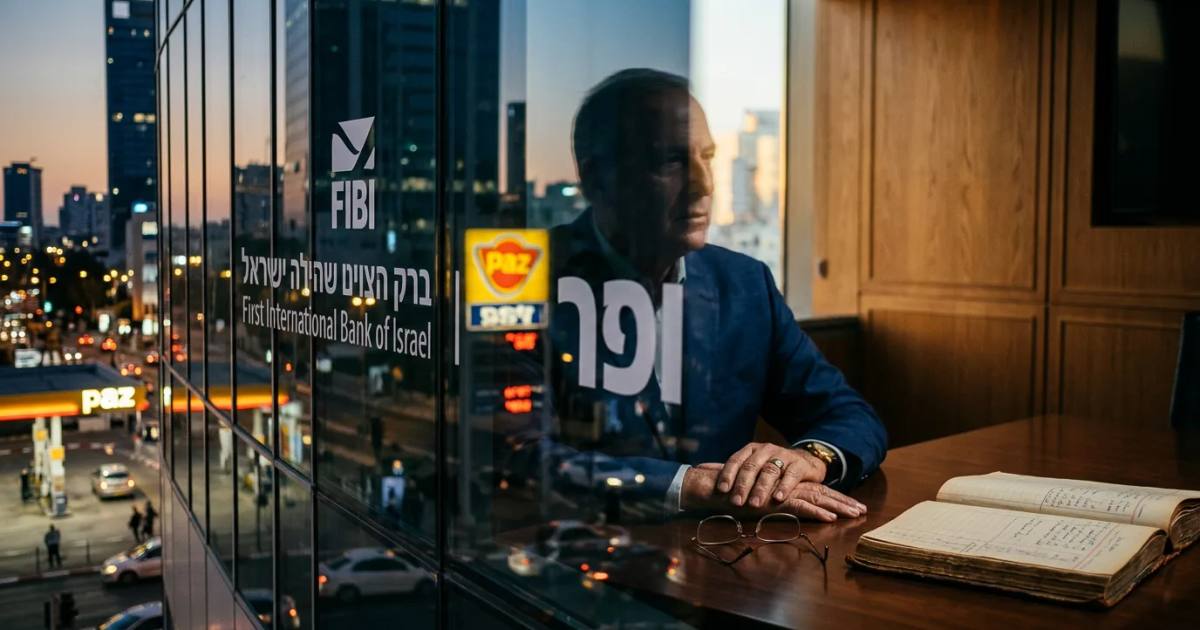

Iraqi-born banker who ran First International Bank of Israel as CEO (1978-1986) and Bank Leumi, then bought FIBI outright from the Safra family in 2003. Controlled Paz Oil from 1999 until relinquishing it under the Concentration Law in 2016-2017.
The Builders | Olam.business
Zadik Bino (born 1943, Baghdad) is the Iraqi-born Israeli banker who ran First International Bank of Israel (FIBI) as CEO from 1978 to 1986, then bought the bank outright from the Safra family in 2003. He controlled Paz Oil, Israel's largest fuel retailer, from 1999 until Israel's Concentration Law forced him to give it up in 2016 and 2017. Today he remains the controlling shareholder of FIBI through Bino Holdings.
Bino's career runs in an unusual order. He worked inside FIBI as an employee, rose to CEO by 1978, and later served as CEO of Bank Leumi as well during a banking career that spanned more than 25 years. He did not stay in the executive suite. In 2003, he and Australian partners the Liberman family bought FIBI Holdings from Brazil's Safra family for roughly $90 million cash, turning the bank's own former CEO into its controlling shareholder.
The family business is generational. His son Gil Bino runs FIBI Holdings day-to-day and has chaired FIBI Investment House. The Paz Oil chapter closed in 2016-2017 when the Israeli Concentration Law required Bino to choose between his bank and his energy company. He chose the bank.
Snapshot
| Born | 1943, Baghdad, Iraq |
| Banking career | CEO of First International Bank of Israel (FIBI), 1978 to 1986. Also served as CEO of Bank Leumi during a 25-plus-year banking career (Globes, May 2003). |
| FIBI acquisition | 2003. Bino Holdings (55%) and the Liberman family (45%) bought FIBI Holdings from the Safra family for approximately $90 million cash (Globes, May 5, 2003). |
| Paz Oil acquisition | 1999. Bino and Jack Liberman bought a controlling stake, with Bino holding roughly 60%, for a combined transaction reported near $48 to $80 million (Forbes, 2013). |
| Paz Oil exit | Bino sold shares through 2016 to comply with Israel's 2013 Concentration Law, falling below the 30% control threshold in September 2016, and fully exited by March 2017 (Haaretz and Globes, September 2016). |
| FIBI Holdings today | Controlling shareholder of First International Bank of Israel, Israel's fifth-largest bank, through Bino Holdings. Subsidiaries include Otsar HaHayal, Massad, and PAGI banks, plus FIBI Bank Switzerland and FIBI Bank UK. |
| Son | Gil Bino, who manages FIBI Holdings day-to-day and has chaired FIBI Investment House |
| Based in | Israel |
How did Bino end up owning the bank he used to run?
Zadik Bino started as an employee at First International Bank of Israel and rose to CEO by 1978, holding the role until 1986. He later also served as CEO of Bank Leumi during a banking career that FIBI's own investor materials describe as spanning more than 25 years. That executive track record gave him the standing, and eventually the capital, to become a buyer rather than an employee.
In 2003, Bino Holdings (55%) partnered with the Australian Liberman family (45%) to purchase FIBI Holdings from Brazil's Safra family for approximately $90 million in cash, according to Globes reporting on the deal. The sale was tied to a separate privatization: the Ministry of Finance had required the Safra family to divest FIBI if it wanted to bid on Israel Discount Bank, since Safra-linked entities held a 26% stake in FIBI that blocked the Discount privatization. Bino, a career FIBI and Leumi executive, became the buyer.
What happened to Paz Oil, and why isn't Bino still running it?
Bino built the other half of his business empire in 1999, when he and Jack Liberman bought a controlling stake in Paz Oil, Israel's largest fuel retailer, with Bino holding roughly 60%. In 2006, Paz won the tender for the Ashdod Oil Refinery, making it the country's first refinery-owning fuel retailer and pushing Bino toward billionaire status.
The dual position could not last. Israel's 2013 Concentration Law barred any single owner from simultaneously controlling a major financial company and a major nonfinancial company. Bino had to choose between FIBI and Paz. He chose the bank. Bino Holdings began selling down its Paz stake in 2016, dropping below the 30% control threshold that September, and Bino resigned from Paz's board along with three associated directors, according to Haaretz and Globes coverage from that period. He fully exited the position by March 2017.
Why the Bino architecture mattered while it lasted
For roughly a decade, Bino held a dual position that regulators eventually made illegal to hold going forward. Controlling both a top-five Israeli bank and the country's largest fuel retailer at the same time is the kind of cross-sector concentration the 2013 Concentration Law was written to prevent. Bino's position existed before the law and had to be unwound after it, rather than being grandfathered indefinitely.
The Iraqi-Jewish industrial arc is also part of the story. Bino is part of a cohort of Iraqi-Jewish olim who built fortunes through institutional Israeli finance, alongside figures like Shlomo Eliahu at Migdal Insurance. Bino is a rare case of an Israeli bank executive who left the executive track and came back years later as the controlling owner.
Bino's key holdings today
- FIBI Holdings, controlling shareholder of First International Bank of Israel, Israel's fifth-largest bank
- Otsar HaHayal Bank, Bank Massad, PAGI Bank, FIBI Bank Switzerland, and FIBI Bank UK, all FIBI Holdings subsidiaries
- Additional private investment positions through family-controlled vehicles
Bino's legacy and influence
Bino occupies a distinctive position in Israeli industry. He is a former bank CEO who left the executive track, assembled private capital with a longtime partner family, and came back as the controlling owner of the same class of institution he once ran. Most senior Israeli bank executives retire into board work or advisory roles rather than buying a competing bank outright.
The Paz Oil chapter shows the limits of that model under current Israeli law. The Concentration Law that reshaped Israeli cross-holdings after 2013 gave Bino a binary choice, and he kept the bank rather than the energy company. FIBI has continued expanding through its existing subsidiary network rather than major new acquisitions since then.
The succession architecture is visible. Gil Bino runs FIBI Holdings day-to-day, and the next generation is operational rather than nominal inside the existing businesses.
FAQ
Who is Zadik Bino?
Zadik Bino (born 1943, Baghdad) is the Iraqi-born Israeli banker who served as CEO of First International Bank of Israel (FIBI) from 1978 to 1986 and also as CEO of Bank Leumi, then bought FIBI Holdings outright from the Safra family in 2003.
Does Zadik Bino still own Paz Oil?
No. Bino controlled Paz Oil from 1999 but was forced to divest under Israel's 2013 Concentration Law, which bars simultaneous control of a major bank and a major nonfinancial company. He fell below the 30% control threshold in September 2016 and fully exited the position by March 2017.
What is FIBI Holdings?
FIBI Holdings is Zadik Bino's holding company, bought from the Safra family in 2003, that controls First International Bank of Israel, the country's fifth-largest bank. Subsidiaries include Otsar HaHayal, Massad, and PAGI banks, plus FIBI Bank Switzerland and FIBI Bank UK. Bino's son Gil Bino runs FIBI Holdings day-to-day.
How did Bino acquire FIBI?
Bino Holdings, together with the Australian Liberman family, bought FIBI Holdings from Brazil's Safra family in 2003 for approximately $90 million in cash, a deal tied to the Safra family's separate need to divest FIBI in order to bid on Israel Discount Bank.
Why did Bino give up Paz Oil?
Israel's 2013 Concentration Law prohibited any single owner from controlling both a major financial institution and a major nonfinancial company at the same time. Bino chose to keep FIBI and divested his Paz Oil stake between 2016 and 2017.
Who is Gil Bino?
Gil Bino is Zadik Bino's son. He manages FIBI Holdings day-to-day and has chaired FIBI Investment House, serving as the operating face of the family's next generation.
More from The Builders
- Shlomo Eliahu: From a Transit Camp to Migdal
- Yair Hamburger: The Harel Chairman
- Nochi Dankner: The IDB Chairman
- Yitzhak Tshuva: Israel's Gas King
- Noam Lanir: Empire Online to Livermore
צדיק בינו: הבנקאי שקנה את הבנק שלו
יליד בגדאד 1943. כיהן כמנכ"ל הבנק הבינלאומי הראשון לישראל (FIBI) בין 1978 ל-1986, וגם כמנכ"ל בנק לאומי. ב-2003 רכש, יחד עם משפחת ליברמן האוסטרלית, את FIBI Holdings ממשפחת ספרא הברזילאית תמורת כ-90 מיליון דולר במזומן.
בינו שלט בחברת פז, קמעונאית הדלק הגדולה בישראל, מ-1999 ועד שחוק הריכוזיות מ-2013 חייב אותו לבחור בין הבנק לחברת האנרגיה. הוא ירד מתחת לסף השליטה של 30% בספטמבר 2016, ופרש לחלוטין ממניות פז עד מרץ 2017. בנו גיל בינו מנהל את FIBI Holdings יום-יום.
The Olam Editorial Team | The Builders / הבונים