
Ran IDB Holdings — Israel's largest holding company. Lost it to Elsztain and Ben-Moshe in 2013. Served 16 months for securities fraud. Now running a foodtech company at 71.
Ran IDB Holdings — Israel's largest holding company — through the 2000s. Controlled Cellcom, Shufersal, Nesher Cement, Clal Insurance. Lost it to Eduardo Elsztain and Moti Ben-Moshe in 2013. Served sixteen months in prison for securities fraud. Now running a foodtech company at age seventy-one.
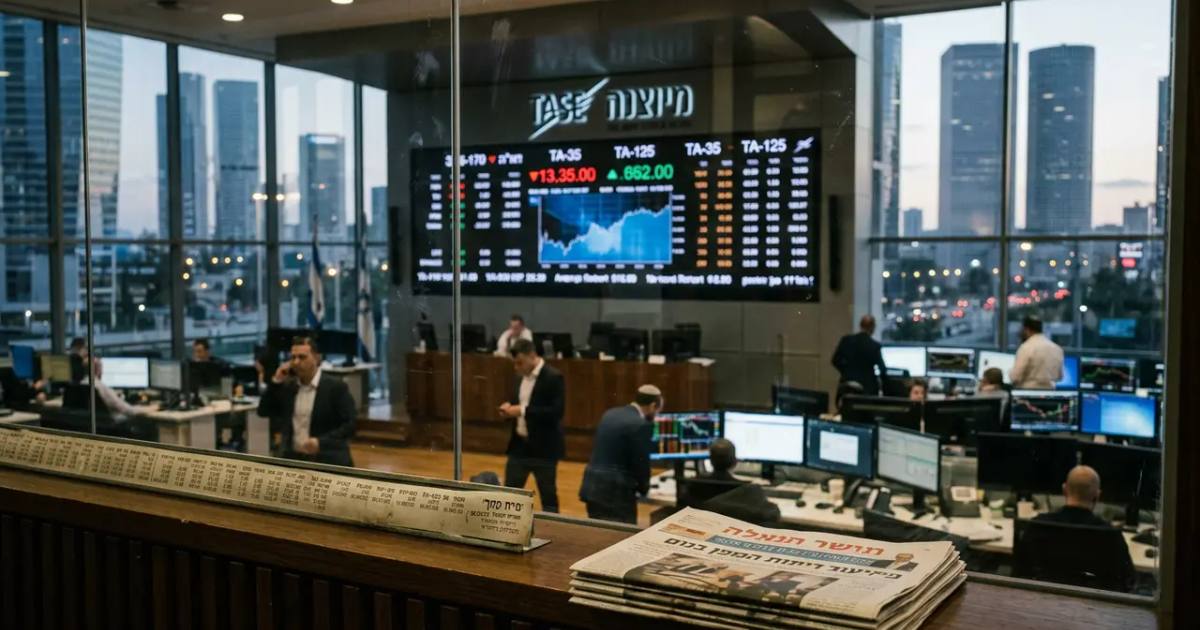
Nochi Dankner's arc is the most dramatic single rise-and-fall in modern Israeli business. At his peak the companies under IDB control were valued at roughly NIS 400 billion. By 2018 he was in a prison uniform at Maasiyahu in Ramla. The Hebrew press covered every step. English coverage is thinner than the story deserves.
Snapshot
- Born November 13, 1954, Tel Aviv. Father: Yitzhak Dankner — one of six brothers who founded Dankner Investments.
- IAF pilot academy dropout 1972; finished military service as a captain in air force intelligence.
- Founded Ganden Tourism and Aviation 1996.
- Through Ganden, acquired control of IDB Holding Corp — the largest holding company in Israel.
- IDB-controlled assets at peak: Cellcom (telecom), Shufersal (supermarkets), Netvision (internet), Hadera Paper, Nesher Cement, Clal Insurance, stakes in Bank Hapoalim.
- Lost control of IDB December 17, 2013 — Tel Aviv District Court awarded it to a partnership of Eduardo Elsztain (Argentina) and Moti Ben-Moshe.
- Convicted July 2016 of securities fraud and stock manipulation in the "friends' offering" of IDB shares.
- Sentenced two years (Dec 2016), increased to three years (Supreme Court, Aug 2018).
- Served 16 months at Maasiyahu Prison, Ramla — entered Oct 2, 2018; paroled Feb 2020 after presidential commutation.
- Personal bankruptcy ~NIS 400 million.
- Today (2026): chairman and 63% owner of Hoshen FoodTech (~NIS 100M valuation).
- Board member, Jewish Agency for Israel.
The Business Story
Dankner was born into one of Israel's foundational business families. His grandfather and great-uncles built Dankner Investments — a salt, chemicals, and industrial group active across the early decades of the state. His father Yitzhak was one of six brothers who ran it. Dankner's cousin Danny Dankner served as chairman of Bank Hapoalim.
Nochi served in the IDF's pilot academy, dropped out after a year, completed officer training, and finished his service in air force intelligence at the rank of captain. He returned to civilian life and into family business orbit. In 1996 he founded Ganden Tourism and Aviation with his father and sister Shelly Dankner — a holding company in aviation and tourism that became the third-largest travel group in Israel after El Al and Knafaim. Ganden's signature acquisition was IsraAir.
The pivotal move came in 2003. Through Ganden, Dankner acquired control of IDB Holding Corp — at the time the largest holding company in Israel, structured as a complex multi-tier pyramid of public and private companies. IDB controlled Cellcom, Shufersal, Netvision, Hadera Paper, Nesher Cement, and Clal Insurance. The combined value of companies under IDB control reached roughly NIS 400 billion at peak.
Dankner was, for the better part of a decade, the most powerful single figure in the Israeli economy. He was credited with helping stabilize Israeli consumer sentiment during the second intifada. He became a celebrity. Forbes, Globes, and Calcalist tracked him weekly.
The unwind began with bad deals. A failed Las Vegas hotel and residential investment. The collapsed Maariv newspaper deal. Telecom reforms introduced by Finance Minister Moshe Kahlon — which Dankner publicly blamed for IDB's deterioration. Cellcom's margins compressed. IDB took on millions of dollars in debt.
In February 2012, IDB attempted an emergency NIS 321 million equity issue. Dankner, alongside accomplice Itay Strum, financed a scheme to inflate IDB's share price ahead of the offering — what became known in Hebrew as the "friends' offering." Strum bought stock at inflated prices using funds Dankner provided. Broker Adi Sheleg, later a state's witness, executed the trades. The court found that the operation manipulated the offering and misled institutional buyers.
On December 17, 2013, the Tel Aviv District Court awarded control of IDB to a partnership of Argentine real-estate magnate Eduardo Elsztain and previously unknown Israeli-Georgian businessman Moti Ben-Moshe.
Conviction came in July 2016 before Judge Khaled Kabub. Sentencing in December 2016: two years prison plus an NIS 800,000 fine. Dankner appealed. The Supreme Court rejected the appeal in August 2018 and increased the sentence to three years, citing the central role his fraud had played in undermining public trust in Israeli securities markets. He entered Maasiyahu Prison in Ramla on October 2, 2018. President Reuven Rivlin commuted four months in January 2020. The parole board approved early release in February 2020. He served sixteen months.
Why He Matters in Israel
The Dankner story is the defining Israeli case study in conglomerate over-leverage. IDB's pyramid structure — public companies owning controlling stakes in public companies owning controlling stakes in operating companies — concentrated control disproportionate to capital. When the operating subsidiaries weakened, the leverage cascaded up the pyramid.
Dankner's collapse contributed directly to the Israeli Business Concentration Law of 2013 (Hok HaRikuziut), which forced the breakup of cross-sector pyramidal holding structures across Israeli business. The law reshaped the Wertheim, Ofer, and other family-holding architectures over the following decade.
The conviction also marked a turning point in Israeli white-collar enforcement. The Supreme Court's choice to increase rather than decrease his sentence on appeal — extending it to three years from two — was widely read as the judiciary signaling that the era of soft enforcement against the largest tycoons was over.
What He Is Doing Today
Dankner is rebuilding. At seventy-one, he runs Hoshen FoodTech, a private foodtech company he founded post-prison, in which he holds a 63 percent stake and which he says occupies 80 to 90 percent of his time. He has spoken publicly of plans to expand Hoshen's manufacturing footprint in Israel and to scale internationally. He values the company at approximately NIS 100 million.
He continues to negotiate with creditor banks on the remaining NIS 400 million of his personal debt. In 2025 court hearings, the Tel Aviv District Court reduced foreclosures on his personal assets from NIS 50 million to NIS 20 million — a meaningful development in his ability to restructure remaining bank debt against the proceeds of his late father's estate.
He sold the family house in Herzliya Pituah (proceeds to creditor banks) and now lives elsewhere. He serves on the board of the Jewish Agency for Israel.
Legacy and Influence
Dankner's career bookends an entire era of Israeli business — the high-leverage holding-pyramid model that defined the 1990s and 2000s. He was the most successful practitioner of that model. He was also the most public failure of it. Both halves of the story are part of his significance.
Hebrew press has covered every chapter — the rise, the collapse, the trial, the prison, the comeback attempt. He remains, in the Hebrew business press, the single most-named figure in any retrospective of the 2010-2015 Israeli tycoon era.
Why He Matters Now
The Hoshen FoodTech bet is the longest-shot turn in his career. A seventy-one-year-old ex-convict rebuilding through a single privately-held startup in a competitive category is not a structurally favorable position. Whether he succeeds will determine whether the final chapter of his arc is rehabilitation or a second collapse.
The case-study value of his career also continues to compound. The post-Dankner Israeli regulatory architecture — the Concentration Law, the separation of financial and non-financial holdings, the enforcement posture toward securities fraud — was shaped by what IDB did and what happened to him. Every Israeli holding company today operates inside the framework his collapse built.
More from The Builders
- Shlomo Eliahu: From Beit Lid to Migdal
- Liora Ofer: The Melisron Chair
- Noam Lanir: Empire Online to Livermore
- Mori Arkin: The Agis Fortune Israelis Don't Talk About
מי הוא נוחי דנקנר? היו"ר שניהל את התאגיד הגדול בישראל אל בית המשפט
ניהל את אי.די.בי. — תאגיד האחזקות הגדול בישראל — לאורך שנות ה-2000. שלט בסלקום, שופרסל, נשר, כלל ביטוח. איבד את החברה ב-2013. ריצה 16 חודשי מאסר בעבירות ניירות ערך. כיום בגיל 71 מקים מחדש דרך חוסן פודטק.
נוחי דנקנר נולד ב-1954, בנו של יצחק דנקנר ממשפחת המייסדים של דנקנר השקעות. ניהל את אי.די.בי. אחזקות לאחר רכישתה דרך גנדן ב-2003. בשיא, החברות תחת שליטת אי.די.בי. הוערכו בכ-400 מיליארד שקל. ב-17 בדצמבר 2013 העביר בית המשפט המחוזי בתל אביב את השליטה לאדוארדו אלשטיין ולמוטי בן משה. הורשע ב-2016 בעבירות הנפקת המניות "חברים" של 2012, ריצה 16 חודשים בכלא מעשיהו. כיום מחזיק 63% בחוסן פודטק.