The Israeli Hospital Innovation Engine: Sheba, Hadassah, Ichilov & the Commercial Translation Layer
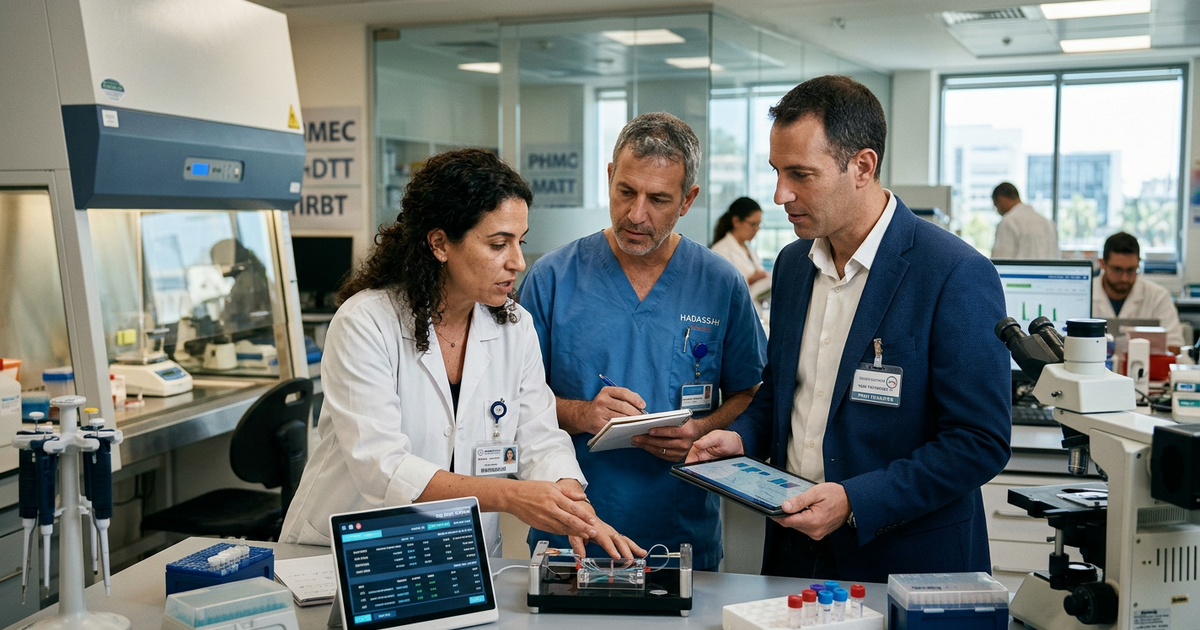
Inside the Israeli hospital innovation architecture — Sheba ARC, Hadasit, Tasmc, Rambam and Soroka innovation arms, the commercial translation pipeline, and the post-October 7 medical innovation environment.
The Israeli Hospital Innovation Engine
The major Israeli hospital systems run substantial hospital-based innovation engines — and one of the less covered chapters of the modern Israeli industrial economy in structured English.
Sheba Medical Center has ranked in the top tier of Newsweek's World's Best Hospitals annual listings in recent years; specific ranking and year should be referenced from the cited Newsweek edition. Hadassah, Ichilov (Tel Aviv Sourasky Medical Center), Rambam, Soroka, Shaare Zedek, and Beilinson anchor a broader Israeli hospital ecosystem operating substantial research, clinical innovation, and commercial translation activity.
The institutional structure connecting clinical innovation to commercial deployment has matured over the past two decades.
The hospital innovation arms
Each major Israeli hospital system operates a dedicated innovation arm, structured either as a separate operating entity within the hospital corporate structure or as a technology-transfer office handling commercialization.
Sheba ARC. Sheba Medical Center operates Sheba ARC (Accelerate, Redesign, Collaborate) as the global innovation arm. ARC operates dedicated commercial-translation infrastructure, international partnerships, and a network of innovation centers supporting Sheba clinical innovation across cardiology, oncology, ophthalmology, mental health, and the broader hospital practice. Sheba's international reputation supports ARC's commercial reach.
Hadasit. Hadassah Medical Organization operates Hadasit as the technology transfer and innovation arm. Hadasit handles the commercialization of clinical research, intellectual property licensing, and the spin-out of clinical innovation into independent companies. The Hadasit portfolio spans diagnostics, therapeutics, medical devices, and digital health.
Tasmc. Tel Aviv Sourasky Medical Center (Ichilov) operates Tasmc as the innovation and technology transfer arm.
Rambam and Soroka. Each major hospital outside the Gush Dan-Jerusalem axis operates its own innovation arm. Rambam Health Care Campus in Haifa operates translational research infrastructure. Soroka University Medical Center in Be'er Sheva operates innovation infrastructure tied closely to Ben Gurion University and the broader Negev innovation ecosystem.
Shaare Zedek. Operates its own innovation pipeline, particularly focused on women's health, pediatric, and emergency-medicine innovation.
The translation pipeline
Hospital-based innovation translation typically operates through three structural channels.
Channel one — direct licensing. Clinical innovation developed within the hospital is licensed to existing commercial operators, with the hospital innovation arm collecting licensing revenue and the commercial operator handling product development and market deployment. The structure is common for diagnostics, biomarkers, and selected device innovations.
Channel two — spin-out company formation. Clinical innovation developed within the hospital becomes the technical foundation of a new independent company, typically with hospital, founding clinicians, and venture investors operating the equity structure. The structure is common for novel therapeutics, complex medical devices, and digital health platforms requiring substantial independent development.
Channel three — international partnership. Hospital-based innovation is deployed commercially through international partnerships with major pharma, medtech, or technology operators, frequently without an intermediate independent company structure. The structure is increasingly common for AI-driven clinical applications and for major-pharma drug-discovery partnerships.
The post-October 7 medical innovation environment
The October 2023-2024 period brought accelerated attention, deployment, and funding to specific Israeli medical innovation segments. The dynamics are operational, not promotional.
Trauma surgery and military medicine. Israeli trauma surgery operates at one of the higher case-volume environments in the OECD due to the combat-medicine experience accumulated through the IDF medical corps. The post-October 7 period extended that experience base. Civilian commercial translation of military-medicine innovation continued through 2024-2026, particularly in hemorrhage control, advanced trauma care, prosthetics, rehabilitation technology, and emergency medical systems.
Telemedicine and remote care. The October 2023-2025 security environment accelerated Israeli telemedicine deployment, both for displaced civilian populations and for IDF reservist medical care. Several Israeli telemedicine and remote-care platforms — Tytocare, K Health, and the broader tier — expanded operationally through the period.
Mental health and PTSD treatment. The post-October 7 period increased Israeli investment in clinical mental health and PTSD treatment infrastructure. Sheba, Hadassah, and the broader hospital network expanded clinical mental health capacity. Commercial Israeli companies operating in mental health and behavioral therapy expanded alongside.
Prosthetics and rehabilitation. The combat injury cohort drove investment in advanced prosthetics, rehabilitation technology, and adaptive medical devices. Several Israeli companies and hospital innovation arms operating in the segment expanded through 2024-2026.
The medical tourism corridor
Israeli medical tourism is a meaningful component of the hospital revenue base, particularly at Sheba, Hadassah, and Ichilov.
Pre-2020 patient flows. Historically driven by Russian and CIS, broader European, and selected North American patient flows seeking access to specialized Israeli clinical expertise (particularly in cardiology, oncology, neurosurgery, IVF, and selected surgical specialties).
Post-2020 patient flows. The post-Abraham Accords corridor has produced expanding GCC patient flow, particularly UAE, Bahrain, and broader Gulf medical tourism into the major Israeli hospital systems. The corridor is developing through 2024-2026; specific patient-volume data should be referenced from Ministry of Tourism, Ministry of Health, and individual hospital institutional disclosures.
The post-October 7 environment partially constrained inbound medical tourism through 2024, with selective recovery through 2025-2026 alongside the broader inbound tourism trajectory covered in the Brand Economy & Tourism cluster.
The major-pharma partnership layer
Israeli hospitals and the affiliated research institutions operate substantial partnerships with major global pharmaceutical and medtech operators. The partnerships span clinical trial site participation (Israel hosts disproportionate global clinical trial activity per capita), translational research collaborations, and direct technology partnerships.
Major global pharma operators with substantial Israeli clinical trial and partnership activity include Pfizer, Moderna, Roche, Novartis, AstraZeneca, Merck (US and German entities operating separately), Bristol Myers Squibb, AbbVie, Eli Lilly, Sanofi, and the broader major-pharma tier. Israeli AI-drug-discovery operators (CytoReason, Pangea Biomed, Quris-AI) have publicly disclosed partnerships across this layer.
What comes next
Three structural dynamics shape the Israeli hospital innovation engine through the coming years.
First — sustained international ranking maintenance. Sheba's top-tier global ranking and the broader Israeli hospital reputation drive a meaningful share of the medical tourism, hospital innovation commercialization, and international partnership activity. Maintenance of that reputational position is a structural variable.
Second — the GCC corridor maturation. The Abraham Accords-track medical tourism and clinical partnership activity is developing through 2026-2027, particularly as Saudi normalization trajectories evolve.
Third — the AI-clinical translation layer. The intersection of Israeli AI capability with hospital-based clinical expertise is producing a differentiated regional medical-AI commercialization environment. The pace of commercialization through 2026-2028 will indicate whether the Israeli AI-clinical translation environment produces standalone large-cap operators or feeds primarily into major-pharma and major-medtech acquirer pipelines.
The Olam tracks the layer as it evolves.
Source data: Israel Innovation Authority publications; IATI Israeli life-sciences aggregate data; hospital institutional disclosures (Sheba, Hadassah, Ichilov, Rambam, Soroka, Shaare Zedek public reports); Newsweek World's Best Hospitals annual rankings; major pharma SEC and equivalent disclosures; Calcalist, Globes, TheMarker healthcare coverage; Reuters and Bloomberg healthcare reporting on Israeli operators. Data current as of Q2 2026.