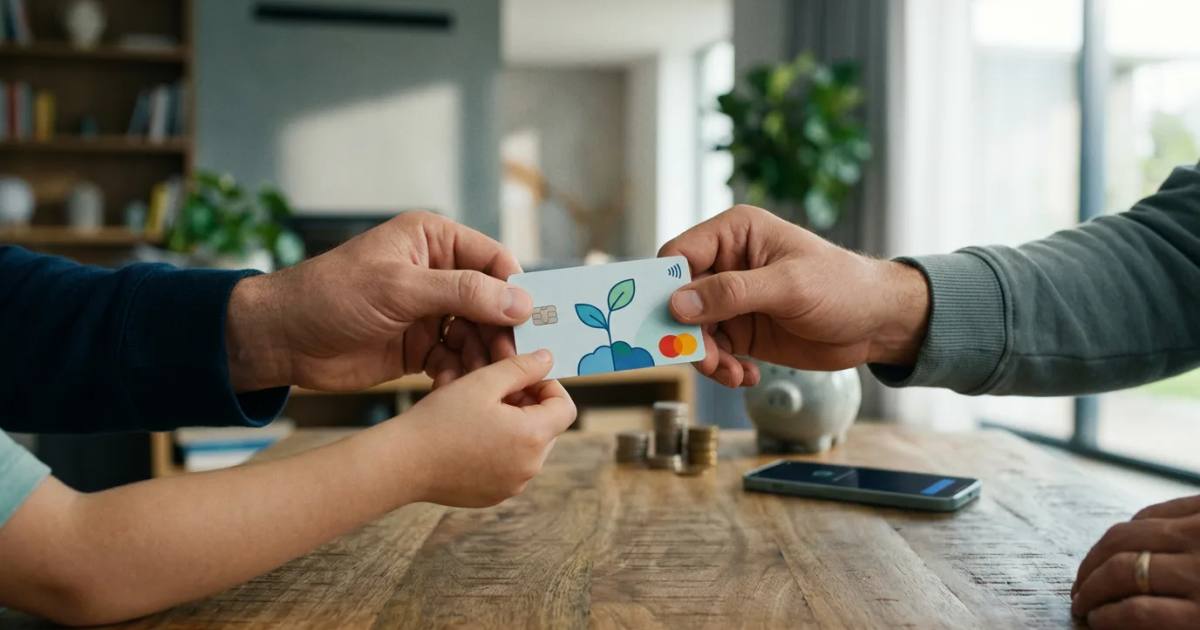

Bank Hapoalim launched Poalim Junior for children aged 8+. It offers a prepaid card, parental controls, and a 4% deposit rate.
Poalim Junior — also searched in English as Hapoalim Junior — is a new digital banking product launched by Bank Hapoalim on July 8, 2026, for children aged 8 and up. Parents open the account through the Bank Hapoalim app. Children receive a prepaid payment card, delivered by courier. Parents load money, monitor purchases in real time, and set spending guardrails. The bank has attached a 4% deposit rate on up to NIS 30,000 in savings, benefits through the Poalim Wonder loyalty program, and financial-education content for both parents and children.
Here is exactly how Poalim Junior works.
What Poalim Junior is
Per Bank Hapoalim's launch, reported by the Jerusalem Post and the Israel Chronicle:
- Age: 8 and up.
- What it is: A dedicated digital area for the child, opened by the parent inside the existing Bank Hapoalim app, plus a prepaid payment card delivered to the parent by courier.
- Wallet compatibility: The card can be added to digital wallets on the child's phone, subject to the terms of the relevant wallet.
- Load limit: Parents can top up the card without fees, up to NIS 2,500 per load and up to the maximum accumulated balance allowed on the card.
- What kids can do: Receive money digitally, pay in stores and online in Israel and abroad, track income and expenses, and manage a personal budget.
- Parental controls: Real-time alerts on every purchase, spending oversight, and guardrails set from the parent's side of the app.
- Attached savings deposit: 4% annual rate on up to NIS 30,000, six-month term, daily redemption available. Effective annual adjusted rate: 4.08%, per the bank.
- Rewards: Dedicated leisure and entertainment benefits through Poalim Wonder.
- Education layer: Two content areas — one for parents, one for kids — built by Bank Hapoalim's Center for Financial Growth.
The product is fronted by Pazit Garfinkel, deputy CEO and head of retail banking at Bank Hapoalim. Her framing, per the Jerusalem Post: "Poalim Junior is a new way to raise a generation that understands money, makes sound financial decisions, and builds confidence from a young age."
Bank Hapoalim cited its own research to justify the product: 94% of parents attach significant importance to financial education, and about 80% of children already receive pocket money. Poalim Junior is designed to sit in exactly that gap.
Poalim Junior FAQ
Is Poalim Junior a bank account or a prepaid card?
Both, in effect. The child gets a prepaid payment card. The parent gets a dedicated digital account area inside the existing Bank Hapoalim app. The card is topped up from the parent's account.
What is the age requirement for Poalim Junior?
Eight and up.
Does Poalim Junior cost money?
Bank Hapoalim's launch materials state that top-ups are without fees, up to NIS 2,500 per load. Standard bank terms and any related charges apply as per the account.
Can children use the Poalim Junior card abroad?
Yes. The card works in stores and online, both in Israel and abroad, per Bank Hapoalim.
What is the 4% savings offer inside Poalim Junior?
An attached deposit product: 4% annual rate on up to NIS 30,000, for a six-month period, with daily redemption available. Effective annual adjusted rate: 4.08%.
How do parents control spending on Poalim Junior?
Through the Bank Hapoalim app — parents open the account, load the card, receive real-time alerts on every purchase, and monitor income and expenses from their own dashboard.
Can kids set their own savings goals inside Poalim Junior?
Yes. Children can monitor the savings deposit and define different savings goals inside their side of the app.
Is Hapoalim Junior the same product as Poalim Junior?
Yes. The official product name is Poalim Junior. Some English-language searches use "Hapoalim Junior" — they refer to the same launch.
Bank Hapoalim — the anchor
Poalim Junior is not a fintech launch. It is a launch from a systemic bank.
Bank Hapoalim is Israel's second-largest bank by assets, with approximately NIS 720 billion (~$225 billion) in total assets and a ~27% market share of the domestic banking system as of September 2025, per its own regulatory filings. Founded in 1921. Net profit of NIS 7.64 billion in 2024. Publicly listed on the Tel Aviv Stock Exchange. Yadin Antebi has served as CEO since August 2024.
That is the scale putting a card in an eight-year-old's hand.
Does this product exist elsewhere? Yes — kids' banking is a global category.
Bank Hapoalim did not invent family banking. The category is real, funded, and scaling. The relevant global comparables:
Greenlight (United States)
Founded 2014 by Tim Sheehan and Johnson Cook. Debit cards for children aged 5 to 17, tied to a parent-controlled app.
- Total capital raised: $550 million, per Contrary Research.
- Valuation: $2.3 billion, set in a Series D led by a16z in April 2021.
- Users: more than 6.5 million parents and kids in 2024, per Greenlight's 2024 year in review.
- Kids collectively managed $2 billion in 2024. Saved $259 million.
- Pricing: $5.99–$19.98 per month, per Forbes Advisor.
- Bank distribution: Since 2024, Greenlight has been white-labeled through US banks. U.S. Bank was the first, offering Greenlight free to eligible Smartly Checking customers, per FinanceBuzz.
GoHenry / Acorns Early (UK → US)
Founded in the UK in 2012, two years ahead of Greenlight. Acquired by Acorns in April 2023, per Contrary Research, at a valuation of roughly $250–$500 million. Now rebranded as Acorns Early in the US.
NatWest Rooster Money (United Kingdom)
The closest structural analog to Poalim Junior — a major incumbent bank owning a kids' product, not a standalone fintech.
- NatWest owns Rooster Money, per Finder's NatWest child account review.
- Age range: 6 to 17 for the Rooster Card; pocket-money tracker from age 3.
- Pricing: free for NatWest customers, £19.99/year or £1.99/month otherwise, per NatWest.
- Scale: NatWest publishes pocket-money data from 350,000 Rooster Card kids. Average pocket money: £3.85 per week.
Chase First Banking (United States)
JPMorgan Chase's kids' debit product, delivered free inside the parent Chase mobile experience. Same customer-lock-in logic as Poalim Junior — the incumbent defends the household relationship by acquiring the child.
Revolut <18 (Global)
Revolut's teen product, folded into the parent Revolut relationship — the fintech version of the same play.
Banks and fintechs have decided that customer acquisition starts at age eight, not age eighteen.
What is different about the Israeli launch
Two things separate Poalim Junior from the international pattern.
One — the market structure. In the US, the incumbents were slow. Greenlight built the category before Chase caught up. In the UK, NatWest got there via a product tie-in. In Israel, a systemic incumbent bank went first and built in-house. That is a signal about how contested Israeli retail banking has become — from Pepper (Bank Leumi's digital-native offshoot), from One Zero (Israel's first fully digital bank), and from global fintechs including Revolut.
Two — the deposit hook. Greenlight, Rooster Money, and Chase First Banking are primarily card-and-app products. Poalim Junior comes with an attached 4% deposit rate on up to NIS 30,000 — a genuine yield product wrapped into a children's account. That is Bank Hapoalim using its balance sheet as the differentiator. Fintechs cannot match that rate structure without a banking license and a deposit base.
The competitive read: Bank Hapoalim isn't building a fintech. It is defending a moat.
The data question nobody has answered
There is a version of Poalim Junior that is genuinely good for families — parents get visibility, kids make real financial decisions with real consequences, and the sting of an overspend at age nine is cheaper than the same lesson at age 22.
There is also a version where an eight-year-old is being onboarded into a lifetime commercial relationship with a bank they did not choose, cannot evaluate, and did not sign up for. The parent chose. The child inherited the choice.
Both are true at the same time. That is what makes the product work as a business.
The question the launch materials do not address — and that the Bank of Israel and the Israeli Privacy Protection Authority will eventually have to: what data can Bank Hapoalim collect on a minor's spending behavior, how long can it retain it, and can that data be used a decade later to shape financial-product offers to the same customer once they turn 18?
Greenlight, Rooster Money, and Chase First all sit inside regulatory frameworks — GDPR, COPPA, FDIC. Israel has its own Protection of Privacy Law and its own set of Bank of Israel supervisory guidelines. The kids'-banking category is going to force those frameworks to be applied specifically to minors' financial data — and Poalim Junior is going to be the case study.
What Poalim Junior signals
Three things.
One — Israeli retail banking is a defensive war. A systemic incumbent is buying customers at age eight because it is easier than winning them back at age 28 from a digital challenger.
Two — the family-banking category has crossed from fintech into incumbent strategy. Greenlight is a $2.3 billion company. NatWest owns Rooster Money. JPMorgan runs Chase First. Bank Hapoalim just joined that group. The category is now permanent.
Three — the yield structure is the signal to watch. A 4% deposit rate on a children's product is Bank Hapoalim telegraphing that it will pay to own the household relationship end-to-end. Fintechs cannot follow that rate without a bank behind them. Whether Bank Leumi and the other Israeli incumbents match — and how — is the next data point in the category.
The bank knows what it bought. The parents will figure it out later. The kids won't figure it out for twenty years — by which time they will be Hapoalim customers.
Which was the point.
How we report: Olam stories draw on public filings, company disclosures and named sources, checked by our editors. Read our methodology · Corrections