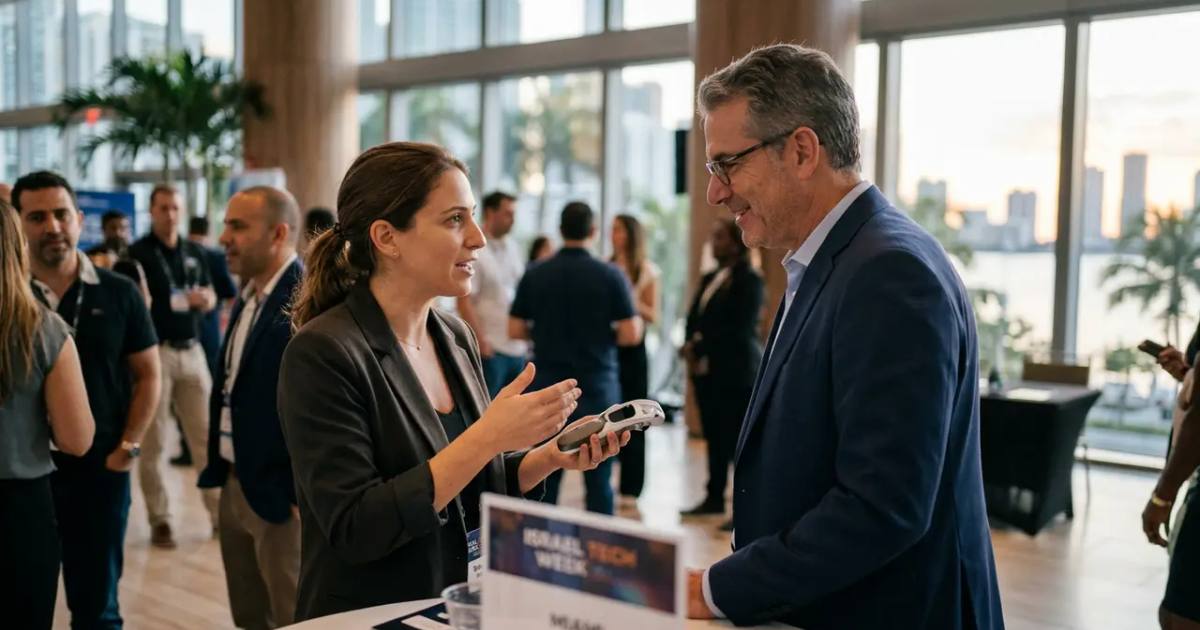

Meitar, Goldfarb, and Gornitzky divide Israel's elite legal market after Herzog. Meitar is the tech default, Goldfarb leads capital markets, and Gornitzky handles judgment.
After Herzog, three firms divide the rest of Israel's elite M&A and capital-markets market between them. Different histories. Different specialties. Different leadership cultures. One commercial reality: this is where most non-Herzog cross-border deal flow lives.
Israel's legal market has six firms. Herzog leads it. After Herzog, three firms divide most of the remaining elite deal flow between them.
Meitar. Goldfarb Gross Seligman. Gornitzky & Co.
Different histories. Different specialties. Different leadership cultures. One commercial reality: when an Israeli cross-border deal isn't closing through Herzog, it is usually closing through one of these three.
Why It Matters
Meitar is the operating manual of the Israeli venture economy — the default counsel on Israeli tech M&A and U.S. capital-markets work. Goldfarb runs the country's deepest capital-markets bench across IPOs, debt, and regulated industries. Gornitzky carries one of Israel's strongest tax franchises and the judgment-led practice retained when the path is unclear and the stakes are high. Foreign investors who treat the three as interchangeable misread the market — and pay for it in deal economics.
Meitar — The Tech Default
Meitar Law Offices is the default Israeli counsel for the country's technology sector.
It is the firm Israeli founders are most likely to start with, the firm Israeli unicorns most often retain through their growth-stage rounds, and the firm that most often shows up on Israeli IPOs and tech-sector M&A.
Three sub-practices anchor that position.
- Venture and growth-stage corporate — the formation work, the U.S.-Israeli dual-corporate structures, the Section 102 employee equity plans, the standard SAFE and preferred terms used across the Israeli ecosystem.
- Cross-border M&A in tech — both inbound (a U.S. company buys an Israeli target) and outbound. Meitar is on a disproportionate share of these by deal count.
- U.S. capital markets — IPOs, dual-listings, and follow-on offerings, with the U.S. corporate-securities depth required to run them.
For a foreign investor looking at an Israeli tech target, Meitar opposing or representing the target is informative. It usually means the deal has been pre-cleaned to U.S.-style standards.
Goldfarb Gross Seligman — The Capital-Markets Engine
Goldfarb Gross Seligman is the product of a merger between two of Israel's historic firms — Goldfarb Seligman and Gross Kleinhendler — and is one of the largest legal franchises in the country.
The combined firm operates at scale across:
- Capital markets and banking — TASE and U.S. listings, debt offerings, banking regulation. One of the deepest capital-markets benches in the country.
- Corporate, M&A, and PE — both domestic and cross-border, with significant private-equity work.
- Litigation and class actions — a top-tier defense practice with material exposure to the securities class-action market. See: Aphek-Liebowitz and Israel's Securities Class-Action Machine.
- Regulated industries — insurance, banking, telecom, media — with the regulatory bench depth that mandate requires.
Goldfarb is the firm to know when the deal is capital-markets-shaped: an IPO, a follow-on, a bond, a structured financing, a public-company merger.
Gornitzky & Co. — The Judgment Franchise
Gornitzky & Co. is among the oldest law firms in Israel.
It is best known for two intertwined franchises.
Tax. Gornitzky has one of the most highly regarded tax practices in the country — landmark rulings, complex cross-border structuring, and a roster of high-net-worth and corporate clients that turns to the firm for first-call advice on the most sensitive matters.
Securities and class-action defense. Gornitzky represents major Israeli corporates in securities and consumer class actions, including substantial work for several of the country's largest insurance companies. Chairman Pinhas Rubin is widely cited as among the most influential individual lawyers in the Israeli market.
Gornitzky tends to be retained where the value of judgment is higher than the value of bench size — bet-the-company litigation, high-stakes tax positions, sensitive regulatory matters where the path is unclear.
How They Differ
Three different firms, three different commercial reflexes.
- Meitar is built for speed of execution in the tech sector. It is the operating manual of the Israeli venture economy.
- Goldfarb Gross Seligman is built for scale. It is the firm equipped to run multi-workstream deals across capital markets, banking, and litigation simultaneously.
- Gornitzky is built for judgment. It is the firm retained when the answer is not obvious — and the cost of getting it wrong is high.
Foreign GCs who treat the three as interchangeable miss the point. They are not interchangeable. They are complementary positions in the same market.
The Cross-Border Dynamic
All three firms operate as quasi-international firms.
Meitar maintains some of the deepest U.S.-corporate-securities capacity outside of New York for an Israeli firm. Goldfarb's capital-markets practice routinely runs SEC-registered offerings. Gornitzky's tax practice has been a counterparty on landmark international tax matters affecting Israel's relationship with the U.S., Europe, and the OECD.
On large inbound transactions, it is normal for two or three of the Big Six to be involved on different sides. The market is concentrated, not collusive — and the firms compete hard.
The Investor Layer
For LPs and GPs evaluating Israeli targets, the choice of Israeli counsel on a deal is a signal — about deal complexity, about the seller's sophistication, and about the post-closing exposure profile.
For foreign acquirers, the right Israeli firm for the deal is rarely the most generic. It is the one whose franchise matches the deal's primary risk.
Israel's legal oligopoly is a six-firm market. Herzog leads it.
Meitar, Goldfarb, Gornitzky divide most of the rest.
Read next: Yigal Arnon-Tadmor and Naschitz Brandes — the quiet power players.
How we report: Olam stories draw on public filings, company disclosures and named sources, checked by our editors. Read our methodology · Corrections