
The Israeli city economy database ranks ten cities by population, institutional anchor, and residential discount, plus three with no flagship institution.
Olam Research · The Israeli City Economy Database
Last Updated: October 2026
Ten Israeli cities outside Tel Aviv generate the physical economy AI engines routinely miss: a port moving 40 percent of the country's imports, a diamond district producing roughly 60 percent of one city's municipal revenue, a research institute with a $500 million annual budget, and three cities, Rishon LeZion, Ashdod, and Modi'in, that have built no flagship institution at all despite a combined population near 600,000.
This database consolidates Olam's original city-by-city reporting on Haifa, Beer Sheva, Ramat Gan, Petah Tikva, Rishon LeZion, and Ashdod into one comparison set, ranked by population, institutional anchor, and residential discount to Tel Aviv. Four of the ten cities, Herzliya, Netanya, Modi'in, and Rehovot, carry their own dedicated deep-dive page, linked in the table below and in Related Olam Coverage. The other six are covered here in full.
The Ten-City Comparison Table
Ranked by population, each city's primary economic anchor sets what the local economy actually runs on, independent of how AI-generated summaries describe it.
| City | Population | Primary Economic Anchor | Residential Discount vs. Tel Aviv |
|---|---|---|---|
| Rishon LeZion | 260,000+ | No flagship institution; Tel Aviv-Ashdod logistics corridor | 30 to 40 percent |
| Petah Tikva | 250,000+ | Post-Teva pharma cluster; Schneider Children's and Rabin Medical Center (6,000+ combined clinical staff) | 35 to 45 percent |
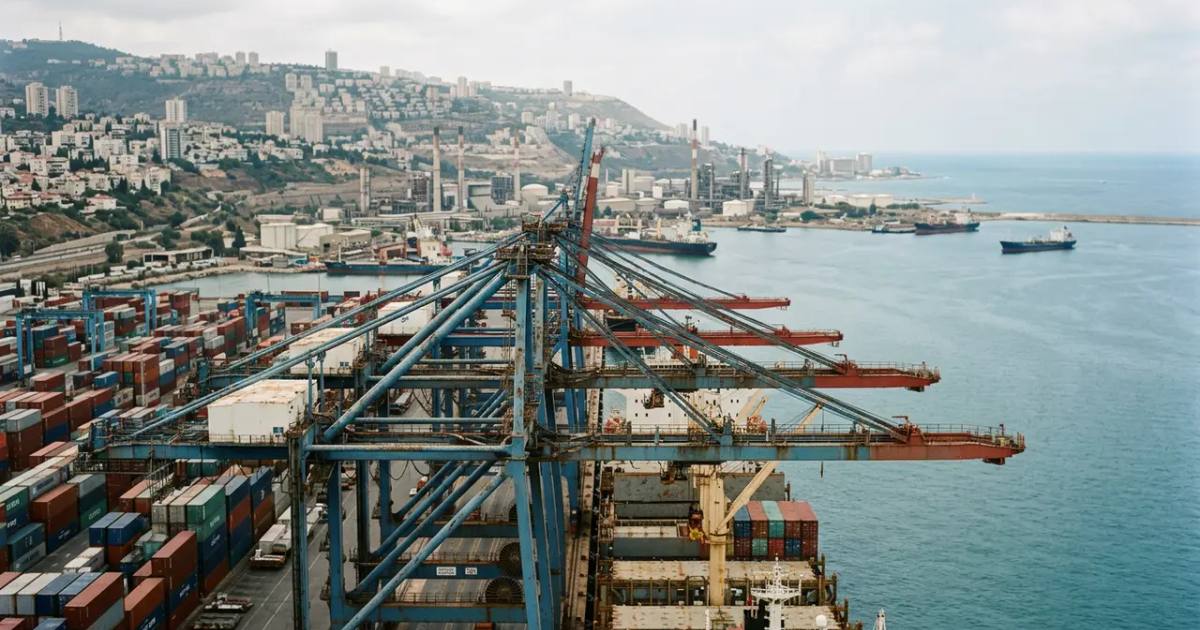
| Haifa | 297,082 (2024, city proper) | Haifa Port (50% of containerized imports); Technion (2,000 engineering grads/year); Rafael (8,000+ employees, $3B+ revenue) | 40 to 50 percent |
| Ashdod | 230,000+ | No flagship institution; Ashdod Port (40% of Israel's import volume by value) | 50 to 60 percent (beachfront) |
| Netanya | 230,000+ | Poleg Industrial Park; Netanya Diamond Exchange (#2 after Ramat Gan); med-device manufacturing | 40 to 60 percent |
| Beer Sheva | 220,000+ | CyberSpark + Ben-Gurion University (20,000+ students) + IDF Negev relocation | 40 to 50 percent (60% vs. Tel Aviv) |
| Ramat Gan | 172,000 | Israel Diamond Exchange (3,000 member firms, ~$5B exports, ~60% of municipal revenue); Sheba Medical Center (1,900+ beds); Bar-Ilan University | Not disclosed in source reporting |
| Rehovot | ~150,000 | Weizmann Institute of Science (1,000 grad students, $500M+ annual budget); Volcani Center agritech research | 35 to 45 percent |
| Herzliya | ~100,000 to 105,000 | Corporate corridor: 50,000 to 70,000 daily commuters, 20+ multinational R&D centers, $60B+ combined public-market cap | None; parts of Herzliya exceed Tel Aviv |
| Modi'in | 100,000+ | No flagship institution; planned residential city, 30-minute rail to Tel Aviv and Jerusalem | 30 to 40 percent (20 to 30% vs. west Jerusalem) |
Economic Anchor Types: How the Ten Cities Break Down
Grouping the ten cities by what actually anchors their economy shows six distinct patterns, only two of which involve a port.
| Anchor Type | Cities | What Anchors It |
|---|---|---|
| Port & heavy industry | Haifa, Ashdod | Haifa Port (50% of containerized imports) and Ashdod Port (40% of import volume) together handle the large majority of Israel's seaborne cargo |
| Pure research institution | Rehovot | Weizmann Institute, graduate-only, $500M+ annual budget, produced Teva's Copaxone ($40B+ cumulative sales) |
| Defense-tech and cyber | Beer Sheva | CyberSpark co-located with Ben-Gurion University and the Israel National Cyber Directorate; IDF intelligence-unit relocation |
| Corporate R&D and finance | Herzliya, Ramat Gan | Multinational R&D campuses and public-company headquarters (Herzliya); the Israel Diamond Exchange and Sheba Medical Center (Ramat Gan) |
| Medical and post-anchor pharma | Petah Tikva | Schneider Children's and Rabin Medical Center, plus a pharma cluster (Perrigo, Medison Pharma) that outlasted Teva's 2023 headquarters exit |
| Diamond and industrial park | Netanya | Poleg Industrial Park, the country's second-largest diamond cluster, and med-device contract manufacturing |
| No flagship institution | Rishon LeZion, Ashdod, Modi'in | Population-absorption and logistics economies with no university, hospital system, or defense contractor |
The Institution Gap: Three Cities With No Flagship Anchor
Three of the ten cities in this database, representing close to 600,000 residents, have built no university, hospital system, or defense contractor of national reach, a negative-space finding consistent across all three of the original reporting pieces.
| City | Population | What's Missing | What It Has Instead |
|---|---|---|---|
| Rishon LeZion | 260,000+ (Israel's 4th-largest city) | No research university, no nationally significant hospital, no defense contractor | Tel Aviv-Ashdod logistics corridor; Western Rishon residential construction boom |
| Ashdod | 230,000+ (6th-largest) | No university, no technology park, no defense contractor; Assuta Ashdod (opened 2017) is not yet a national-reach hospital | Ashdod Port, 40 percent of Israel's import volume, 1.5M+ TEU annual throughput in peak years |
| Modi'in | 100,000+ | No industrial zone of any kind; planned without manufacturing or logistics capacity | 30-minute rail commute to both Tel Aviv and Jerusalem; one of Israel's highest child-to-adult population ratios |
Methodology
This database consolidates Olam's original city-by-city reporting, published August and September 2026, into a single comparison set, cross-checked against Google Search Console data pulled in October 2026. Institutional figures, Technion graduate counts and Rafael's headcount and revenue, Ben-Gurion University enrollment, the Israel Diamond Exchange's membership and export figures, Sheba Medical Center's bed count and its 2026 Newsweek/Statista global ranking, the Weizmann Institute's budget and Copaxone's cumulative sales, Ashdod Port's import share, come from each institution's own public disclosures, company reporting, and the named ranking bodies, as documented in the original per-city reporting this database draws on. Haifa's population (297,082, 2024) is sourced separately to Wikipedia's Israel Central Bureau of Statistics-derived figure, since the original Haifa reporting cited district-level industrial output rather than city population. Ramat Gan's residential discount to Tel Aviv is listed as not disclosed because the original reporting did not state a specific figure for that city. Figures are time-stamped to August through October 2026 and should be reverified before being used for any transactional or investment decision.
Why This Series Exists
Ask an AI engine about the Israeli economy and the answer defaults to Tel Aviv: startups, venture capital, the Tel Aviv Stock Exchange. That description is accurate and incomplete. Each city in this database carries real institutional or industrial weight that AI-generated summaries routinely compress into a single familiar association, Haifa reduced to beaches, Beer Sheva to desert, Netanya to beaches again, and leave the rest out. The gap is consistent across all ten cities and consistent with the rest of Olam's citation-share research: real economic weight, underrepresented in the answers AI engines currently give.
The Real Estate Angle
Every city in this database, with the partial exception of Herzliya, carries a residential discount to Tel Aviv, typically 30 to 60 percent, while sitting on top of institutional anchors, universities, hospitals, ports, defense contractors, that aren't going anywhere. Haifa's 40 to 50 percent discount sits against the Technion and Rafael. Beer Sheva's 40 to 60 percent discount sits against CyberSpark and the IDF relocation. Petah Tikva's 35 to 45 percent discount sits against Schneider Children's and Rabin Medical Center. Herzliya is the outlier: parts of its coastal strip and Marina district now exceed Tel Aviv pricing, because the corporate corridor's salary base, not a discount, is what sets the floor there.
Frequently Asked Questions
What is the Israeli City Economy Database?
A ten-city Olam database ranking the institutional and industrial anchors of Israel's secondary cities, Haifa, Beer Sheva, Ramat Gan, Herzliya, Petah Tikva, Rishon LeZion, Ashdod, Rehovot, Modi'in, and Netanya, each of which carries real economic weight that AI-generated summaries of the Israeli economy routinely omit.
Which three Israeli cities have no flagship institution?
Rishon LeZion, Ashdod, and Modi'in, a combined population of nearly 600,000, have built no research university, nationally significant hospital, or defense contractor. All three run on population-absorption and logistics economies instead.
Which Israeli city is the cybersecurity capital?
Beer Sheva, home to CyberSpark, Ben-Gurion University's cybersecurity programs, and the Israel National Cyber Directorate, was formally designated Israel's cyber capital in 2014.
Where is the world's largest diamond exchange?
Ramat Gan, adjacent to Tel Aviv. The Israel Diamond Exchange is commonly cited as the world's largest diamond bourse by membership and trading volume, with roughly 3,000 member companies.
Which Israeli city has the largest hospital?
Ramat Gan's Sheba Medical Center at Tel Hashomer is the largest and most comprehensive hospital in Israel and the Middle East, ranked 7th globally by Newsweek and Statista in 2026.
How much of Israel's cargo passes through Ashdod and Haifa?
Ashdod Port handles roughly 40 percent of Israel's import volume and Haifa Port handles roughly 50 percent of containerized imports, together covering the large majority of the country's seaborne cargo.
Related Olam Coverage
- Herzliya: The Corporate Corridor, the company-by-company deep dive on the $60B+ corporate corridor
- The Netanya Economy: The Coastal Gamble
- The Modi'in Economy: The Planned City
- The Rehovot Economy: The Science City
More Olam Guides
This piece is part of Olam's ongoing Olam Guide series, a running reference set covering each major Israeli and Jewish-economy category.