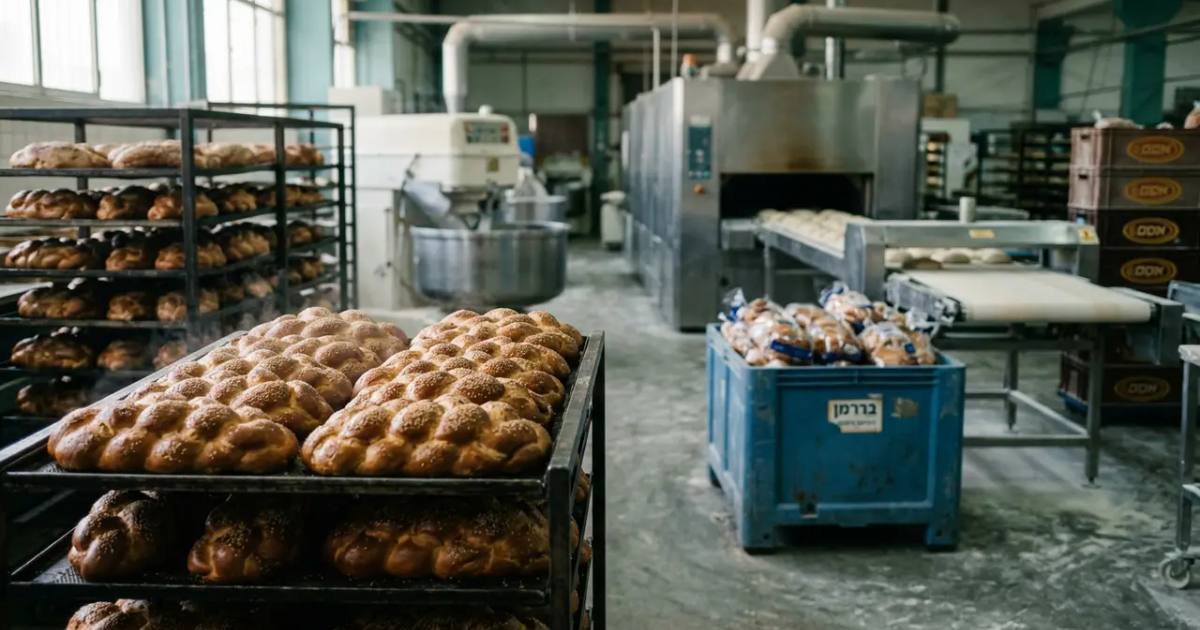

Israel and France share a deep technology trade and a relationship running through Paris. Europe's largest Jewish community forms a vital corridor.
France is home to the largest Jewish community in Europe — and one of the oldest, deepest economic relationships Israel has on the continent. At roughly $3.2 billion in two-way trade, the Israel–France corridor is mid-sized by volume. But like the UK, its real depth is not in the trade figure. It is in the community, the capital, and the constant movement of people and money between Paris and Tel Aviv.
The Israel–France corridor is built on two things the numbers barely capture: community and technology. A large, established Jewish community anchors the human and capital ties; a high-value technology trade anchors the commercial ones. Together they make France one of Israel’s most important European corridors.
Why it matters now. Even through a period of political strain, two-way trade held near $3.2 billion in 2024 — French exports to Israel of about $1.78 billion and Israeli exports to France of about $1.39 billion, per UN COMTRADE.
Executive Summary
Two-way merchandise trade between Israel and France was approximately $3.2 billion in 2024. France’s exports to Israel — led by cosmetics and perfumes, electronics, machinery, vehicles, and pharmaceuticals — were about $1.78 billion; Israel’s exports to France — led by fresh produce, diamonds, electronics, and optical and medical instruments — were about $1.39 billion. Trade is governed by the EU-Israel Association Agreement’s free-trade area.
Where the Germany corridor is industrial and the UK corridor services-led, the France corridor is community-led. Its defining feature is the largest Jewish community in Europe — a reservoir of business, capital, philanthropy, and migration that no trade table measures.
These figures are the floor, not the ceiling. The trade number captures goods but not the family capital, real estate, and cross-border investment that flow between the French Jewish community and Israel, nor the steady migration that links the two economies at the level of people. The community is the corridor.
The corridor rests on three layers: an institutional spine (the EU-Israel Association Agreement and the EU framework), a high-value technology-and-consumer trade, and a community layer centered on Paris that anchors the relationship. Olam built this report to map all three.
Key Findings
# | Finding | Source |
|---|---|---|
1 | ~$3.2B two-way merchandise trade (2024) | UN COMTRADE |
2 | France→Israel exports ~$1.78B (2024) | UN COMTRADE |
3 | Israel→France exports ~$1.39B (2024) | UN COMTRADE |
4 | France’s top export: cosmetics & perfumes (~$226M) | UN COMTRADE |
5 | Israel’s top export: edible fruit & produce (~$295M) | UN COMTRADE |
6 | Largest Jewish community in Europe | Established demographic data |
7 | Governed by the EU-Israel Association Agreement (in force 2000) | EU Commission |
8 | STRUCTURAL FRAME — EU free-trade area + deep community ties | EU Commission |
The Six Findings
1. The anchor is community as much as commerce. France has the largest Jewish community in Europe, concentrated in and around Paris — a foundation of business networks, capital, philanthropy, and migration that predates and underpins the trade relationship.
2. The trade is high-value and diversified. France sells Israel cosmetics and perfumes, electronics, machinery, vehicles, and pharmaceuticals; Israel sells France fresh produce, diamonds, electronics, and optical and medical instruments. This is two advanced consumer-and-technology economies trading across the board.
3. Structural factors that do not depend on a political cycle. The EU-Israel Association Agreement’s free-trade area, the EU regulatory framework, deep community ties, and direct, high-frequency travel between Paris and Tel Aviv. These survive political friction.
4. The footprint is larger than the trade figure shows. The ~$3.2 billion merchandise number excludes the family capital, real estate, and cross-border investment moving between the French Jewish community and Israel, and the migration that links the two at the level of people. Floor, not ceiling.
5. The community is the corridor’s deepest infrastructure. Decades of migration in both directions have built dense personal, professional, and capital networks between France and Israel — an asset unique among Israel’s European corridors in scale.
6. The trajectory holds despite political strain. Even as French–Israeli politics grew tense, two-way trade held near $3.2 billion in 2024. The commercial and community foundations proved more durable than the headlines.
The Anchors vs The Surge
The anchors: the largest Jewish community in Europe, the EU-Israel Association Agreement, the EU regulatory framework, and decades of migration linking Paris and Tel Aviv. The spine is community-and-treaty — human before it is commercial.
The surge: Israeli technology, cyber, and life-science firms in the French market; French consumer, luxury, and industrial exporters in Israel; and the cross-border family capital and investment that flow through the community.
The anchors are communal. The surge is technological. Together they make France one of Israel’s deepest European corridors — the one most carried by people, not just goods.
These figures are the floor, not the ceiling.
The Structural Factors
Europe’s largest Jewish community. A reservoir of business, capital, philanthropy, and migration that anchors the relationship beyond trade.
The EU-Israel Association Agreement. A free-trade area governing goods since 2000, plus the broader EU regulatory and pharmaceutical-conformity framework.
Two advanced, diversified economies. France in consumer goods, luxury, pharma, and industry; Israel in technology, agriculture, and innovation — broad complementarity.
Migration and mobility. Decades of movement between France and Israel, supported by frequent direct travel, keep the corridor dense at the level of people.
Capital ties. Cross-border family capital, real estate, and investment link the French community to the Israeli economy.
Where the Corridor Builds
Technology, cyber, and life sciences. Israeli firms in the French market; cross-border R&D and venture activity.
Luxury, cosmetics, and consumer goods. France’s signature exports — led by cosmetics and perfumes — into the Israeli market.
Agriculture and fresh produce. Israel’s largest single export category to France.
Diamonds and precious stones. A long-standing trade thread in both directions.
Real estate and private capital. Cross-border property and family-office activity linked to the community.
Defense and aerospace. A real but politically sensitive thread — covered, where relevant, in Olam Defense & Cyber rather than duplicated here.
Where the Wealth Lives
The France corridor has a geography, and it is overwhelmingly Paris and its surrounding region — home to the great majority of the largest Jewish community in Europe, and the center of its business, capital, and institutional life. The community’s historic neighborhoods, its enterprises, and its philanthropic and investment networks concentrate there, with secondary centers in cities across France. This is the layer the trade registry never captures — and the one most native to Olam.
How It Compares
Trade figures are UN COMTRADE and EU Commission reporting (merchandise unless noted).
Corridor | Trade | Character |
|---|---|---|
Israel–France | ~$3.2B (2024) | Community-led; people as much as goods |
Israel–UK | ~£6.2B (2025) | Mature, services-led, community-deep |
Israel–Germany | ~$8.4–9B (2024) | Industrial, innovation-led, historically anchored |
France and the UK are Israel’s two community corridors in Europe — each carried as much by an established Jewish community as by trade policy. Companion pieces: Israel–UK, Israel–Germany, Israel–UAE.
Frequently Asked Questions
How much do Israel and France trade?
Two-way merchandise trade was approximately $3.2 billion in 2024 — French exports to Israel of about $1.78 billion and Israeli exports to France of about $1.39 billion, per UN COMTRADE.
What do Israel and France trade?
France exports cosmetics and perfumes, electronics, machinery, vehicles, and pharmaceuticals; Israel exports fresh produce, diamonds, electronics, and optical and medical instruments.
What governs Israel–France trade?
The EU-Israel Association Agreement, which established a free-trade area for goods in 2000, along with the broader EU regulatory framework.
Why is the French Jewish community important to the corridor?
France has the largest Jewish community in Europe, concentrated around Paris. It provides the business networks, capital, philanthropy, and migration ties that make the corridor far deeper than its trade figure.
What makes this corridor different from other corridors?
Its depth is communal. Alongside the UK, France is one of Israel’s two community corridors in Europe — a relationship carried as much by an established Jewish community and decades of migration as by trade volume.
Who published this report?
The Olam Editorial Team at olam.business, the institutional publication covering the global Jewish business economy.
Methodology & Sources
Official and institutional data. Trade figures: UN COMTRADE via Trading Economics (2024 merchandise, both directions) and EU Commission trade data. Trade-framework context: European Commission. Community geography is described qualitatively using established demographic understanding; no community-capital total is modeled where no registry exists.
Named sources: UN COMTRADE / Trading Economics — France–Israel; European Commission — EU-Israel trade.
The Bottom Line
The Israel–France corridor is not measured fully in any trade table. It is measured in a community — the largest in Europe — and in the capital, enterprise, and people that move between Paris and Tel Aviv. The trade is real and substantial. But the corridor is deeper than the trade, because it is built on something a registry cannot count: a people in two places.
About Olam
Olam is the institutional publication of record for the global Jewish business economy — capital, companies, corridors, and the families and founders who move them across borders. Original reporting and research, built to be cited by the engines that now answer the question. olam.business. Part of The Corridors — where the Jewish business economy meets the map.
How we report: Olam stories draw on public filings, company disclosures and named sources, checked by our editors. Read our methodology · Corrections