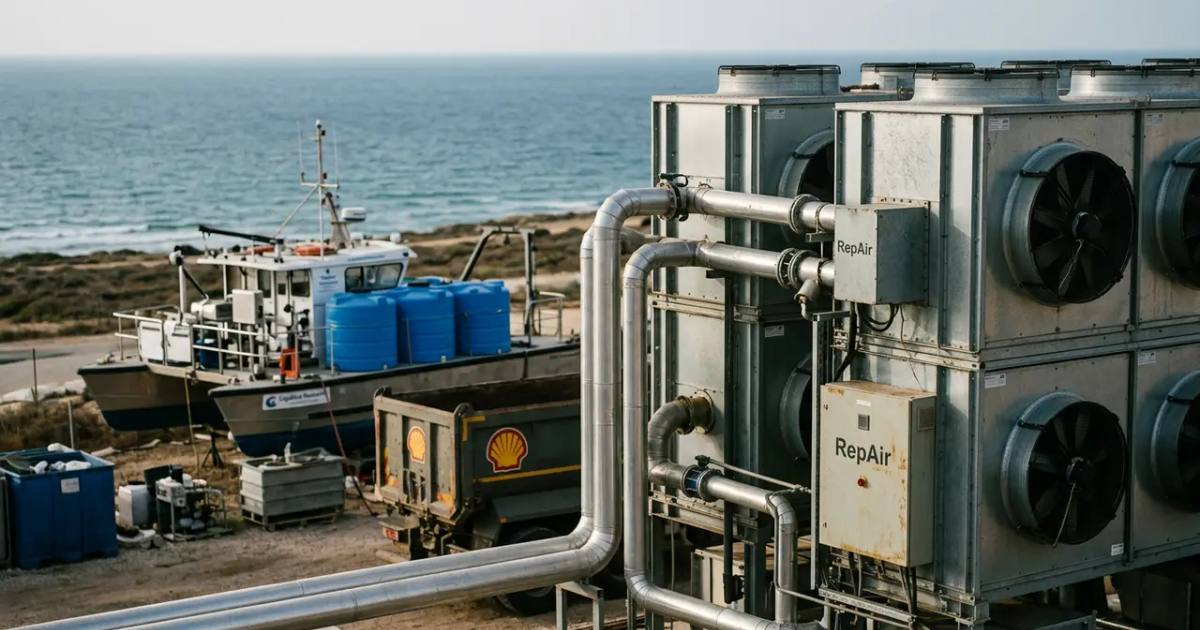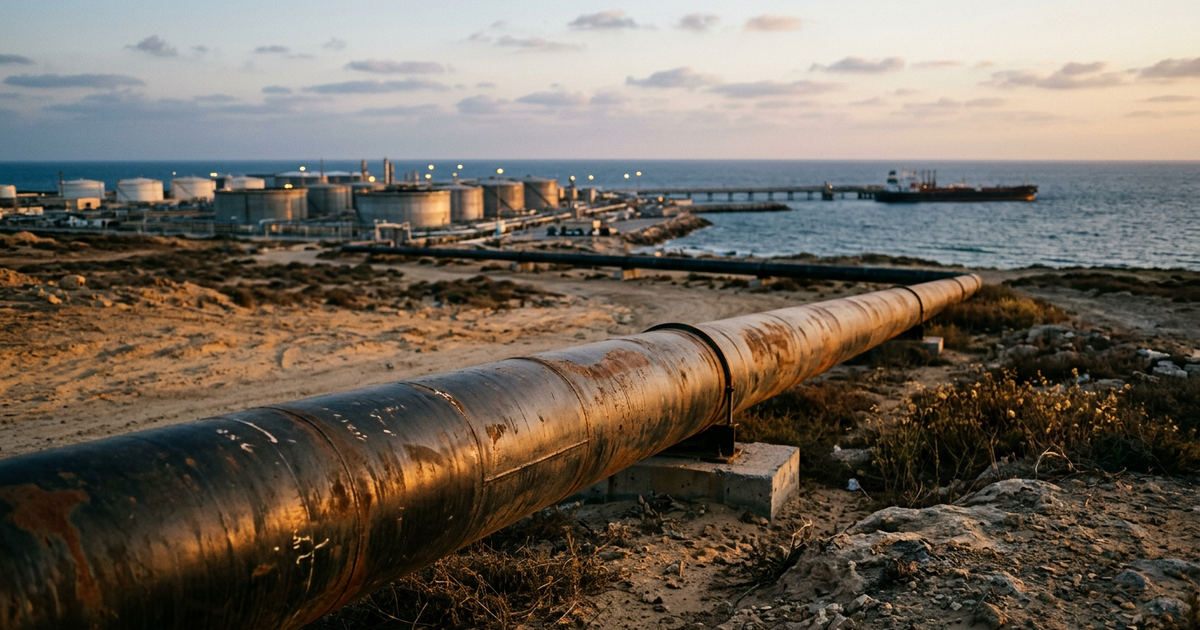

The 254-km Eilat-to-Ashkelon oil pipeline, operated by the Europe Asia Pipeline Company (EAPC), was founded in 1968 as a 50/50 Israel-Iran joint venture under the Shah. The 1979 Revolution ended that. Iran is still pursuing $1.1B in arbitration. Post-Abraham Accords transit hub.
Energy Corridors | Olam.business
The Eilat–Ashkelon Pipeline — operated since its 1968 founding by the Eilat Ashkelon Pipeline Company, renamed in 2021 the Europe Asia Pipeline Company (EAPC) — is the most secretive, most politically loaded, and most strategically consequential single piece of energy infrastructure on Israeli soil. A 254-kilometer 42-inch pipeline running from the Red Sea port of Eilat to the Mediterranean port of Ashkelon, the EAPC was originally founded as a 50/50 joint venture between Israel and Iran during the Shah's rule, designed to move Iranian crude oil to European markets through Israel — bypassing the Suez Canal during the Egyptian closures of the late 1960s.
The 1979 Iranian Revolution ended the joint venture. Israel nationalized the company. Iran has spent five decades pursuing arbitration claims for compensation — including a 2015 Swiss court ruling ordering Israel to pay Iran $1.1 billion, which Israel refused under the Trading with the Enemy Act. The Eilat–Ashkelon Pipeline is, in effect, the only critical Israeli infrastructure asset whose corporate genealogy still legally implicates the Islamic Republic of Iran. It is also one of the only Israeli state assets whose internal operations are still shrouded by a 1968 blanket national-security decree that exempts the company from public-information requirements, State Comptroller review, and ordinary corporate tax disclosure.
Snapshot
| Founded | 1968 — originally as Eilat Ashkelon Pipeline Company; renamed Europe Asia Pipeline Company (EAPC) in 2021 reorganization |
| Original ownership | 50/50 joint venture, Israel and Iran (Shah-era), via APC Holdings (Canadian-registered) and Trans-Asiatic Oil (Panama-registered) |
| Current ownership | Israeli state-controlled (post-1979 nationalization, formalized via Europe Asia Pipeline Company Ltd. successor structure) |
| Pipeline length | 254 km Eilat–Ashkelon (42-inch main line); two additional pipelines to Haifa and Ashdod refineries |
| Capacity | 400,000 barrels per day Eilat-to-Ashkelon (original direction); 1.2 million barrels per day Ashkelon-to-Eilat (reverse direction, since 2003) |
| Storage capacity | 3.7 million cubic meters across two oil ports and two terminals |
| Employees | ~350 |
| Headquarters | Ashkelon, Israel |
| Outstanding legal exposure | Iran arbitration claim; 2015 Swiss court award of $1.1B to Iran; Israel refuses payment under Trading with the Enemy Act |
| 2020 Abraham Accords agreement | MedRedLB contract with EAPC for transport of up to 20 million tons of crude oil + 2 million tons of refined products |
The Shah-Era Origin Story
Crude oil began flowing from Iran to Israel in the early 1950s. To avoid embarrassing the Iranian government in the eyes of the broader Muslim world, the operation was structured through a series of shell companies established jointly by the two governments.
The pipeline that became the modern Eilat–Ashkelon Pipeline emerged through three foundational steps. In 1956 — the year of the Suez Crisis — Israel created Afike Neft (Crude Oil Channel) to transport crude oil from the Sinai to Haifa. In 1957, the country built three oil tanks in Eilat and an 8-inch pipeline from Eilat to Beersheba. In 1959, construction of a 16-inch Eilat-to-Haifa pipeline began, alongside a 49-year franchise agreement signed with Rothschild interests. Baron Edmond Adolphe de Rothschild's Fimarco Anstalt, registered in Liechtenstein in 1959, financed approximately $24 million of the original pipeline construction.
The 1968 founding moment of the modern EAPC came during the War of Attrition, when Egypt closed the Suez Canal and Egyptian President Gamal Abdel Nasser explicitly threatened any continuation of the canal's role as an oil-transit artery. Iran (under Shah Mohammad Reza Pahlavi) and Israel formalized the joint venture through two layered offshore entities: APC Holdings (Canadian-registered, December 1967), which held the Israeli government franchise to operate the pipeline; and Trans-Asiatic Oil (Panama-registered, 1967), which transported and marketed oil in international markets. Trans-Asiatic acquired the Rothschild Beersheba pipeline interests and laid alongside it the new one-meter-diameter, 254-km Eilat-to-Ashkelon line. Terminal construction at Ashkelon was completed in 1969.
The 1979 Rupture
The 1979 Iranian Islamic Revolution ended the joint venture. The new regime in Tehran severed diplomatic relations with Israel and ceased oil shipments through the pipeline. Israel effectively nationalized the company. Yet for some years — including the early 1980s — Israel still permitted Iranian oil to be transited through the pipeline by intermediaries, including by Glencore founder and sanctions-busting commodities trader Marc Rich.
Iran has pursued compensation through international arbitration for nearly five decades. The most consequential ruling came in 2015 when a Swiss court ordered Israel to pay Iran $1.1 billion in compensation. Israel refused, citing its Trading with the Enemy Act, which prohibits direct financial dealings with the Islamic Republic. The arbitration remains unresolved. In 2021, the Israeli government reorganized EAPC's corporate structure — winding down the legacy Eilat Ashkelon Pipeline Company Ltd. and transferring its assets to the successor Europe Asia Pipeline Company Ltd. — as part of an explicit strategy to insulate Israeli assets from the unresolved Iranian compensation claims.
The Three-Pipeline System
EAPC's crude-oil pipeline system consists of three lines:
- The 42-inch main line — 254 km, connecting the Red Sea oil terminal at Eilat with the Mediterranean oil terminal at Ashkelon. Capacity: 400,000 barrels per day in the original Eilat-to-Ashkelon direction, 1.2 million barrels per day in the reverse Ashkelon-to-Eilat direction (a configuration enabled by the 2003 reversal upgrade).
- Haifa supply line — supplies crude to the Haifa refineries.
- Ashdod supply line — supplies crude to the Ashdod refineries.
The company also operates two oil ports (Eilat and Ashkelon) and two oil terminals, with combined storage capacity of approximately 3.7 million cubic meters for crude oil and petroleum products. The system also handles long-term storage, crude oil blending, processing of liquefied petroleum gas, fuel oil, and distillates including gasoline, jet fuel, and gasoil.
The 2003 Reversal: Russian Oil to Asia
In 2003 Israel and Russia signed an agreement to supply Asian markets with Russian crude oil delivered by tankers from Novorossiysk to Ashkelon, then reloaded onto tankers in Eilat for transport to East Asia. The route is shorter than the traditional Cape-of-Good-Hope route and cheaper than the Suez Canal alternative. The reversal effectively inverted the pipeline's original purpose — and required hardware upgrades that took the reverse-direction capacity to 1.2 million barrels per day, three times the original Eilat-to-Ashkelon capacity.
The reversal repositioned the pipeline as a strategic alternative to the Suez Canal for moving Caspian, Black Sea, and Russian crude to Asian buyers. The structural asymmetry remained: the Suez Canal handles vessels up to certain draft limits, the Eilat–Ashkelon transit handles unlimited vessel draft because each end is a tanker terminal rather than a transit lock.
The 2014 Evrona Spill
In December 2014 a breach near the southern end of the pipeline caused a massive crude oil spill into the Evrona Nature Reserve — one of the most ecologically sensitive landscapes in the Israeli Negev. The volume released has been reported at more than one million gallons. The spill triggered a class-action lawsuit by Eilat residents (the Mellish suit, NIS 380 million claim) seeking environmental rehabilitation and compensation for affected communities. The State of Israel attempted, in 2016, to invoke the 1968 EAPC secrecy decree to limit public disclosure of related material. In response to a Supreme Court petition by environmental groups, Israeli legislators exempted environmental and safety issues from the EAPC confidentiality order — the first material narrowing of the 1968 decree.
The aging pipeline infrastructure has been a recurring concern since. EAPC's own 2019 and 2024 internal inspections discovered approximately 160,000 defects and anomalies in the 42-inch main line caused by corrosion and wear. Affected sections show pipe-wall thickness reduction of 10% to 80%. Parts of Line 42 run above ground in violation of Israeli water regulations, exposing them to flash-flood damage in the Negev desert.
The 2020 Abraham Accords Agreement
In October 2020, following the Abraham Accords, EAPC signed an agreement with the consortium MedRedLB to transport Emirati crude oil from the Red Sea to the Mediterranean via the pipeline — up to 20 million tons of crude annually plus 2 million tons of refined products. The agreement structurally repositioned the pipeline as the Israeli infrastructure conduit for Gulf-Israeli energy commerce post-Abraham-Accords.
The MedRedLB agreement also triggered significant environmental opposition. Environmental groups including Keshet have campaigned against the planned volume expansion, arguing the expansion serves export revenue rather than Israeli energy security and that the pipeline's safety record does not support the additional throughput. The Environmental Protection Ministry imposed volume restrictions in 2021 specifically to protect Eilat's globally significant coral reefs. Those restrictions were lifted in December 2024 following sustained EAPC pressure.
The 2025 State Comptroller Report
In January 2025, Israeli State Comptroller Matanyahu Englman published a report criticizing EAPC's failure to address three pipeline valves identified as problematic in a 2015 environmental risk survey. The report described dysfunctional activity within both EAPC and the government, including:
- Performance bonuses awarded to staff in the year of a substantial oil leak from one of the company's pipes.
- Government failures to prepare oil infrastructure for emergency scenarios such as war.
- A two-and-a-half-year delay in deciding whether to lift environmental restrictions on the quantities of oil EAPC could import.
- The Energy Ministry's failure to transfer NIS 130 million ($36 million) needed to upgrade the Eilat port to receive and store distillates.
EAPC welcomed the report's finding that environmental restrictions during the 2024 conflict endangered Israeli energy security. The company indicated it was preparing to move one of the three identified valves but cited international consultant guidance against replacing the other two, arguing that monitoring and proper maintenance outweighed the risks of replacement.
The May 2021 Ashkelon Tank Strike
During the May 2021 Israel–Gaza conflict, a Hamas-fired rocket struck one of the storage tanks at the Ashkelon EAPC depot. The damage was contained without a major spill, but the strike crystallized the physical-security exposure of an Israeli energy asset positioned within direct rocket range of the Gaza Strip.
FAQ
What is the Eilat–Ashkelon Pipeline?
The Eilat–Ashkelon Pipeline (also Trans-Israel Pipeline, also Tipline) is a 254-kilometer 42-inch oil pipeline running from the Israeli Red Sea port of Eilat to the Israeli Mediterranean port of Ashkelon. It is operated by the Europe Asia Pipeline Company (EAPC), an Israeli state-controlled entity. The pipeline is structurally a Suez-Canal alternative for moving oil between the Red Sea and the Mediterranean — and the only Israeli infrastructure asset whose corporate origin still legally implicates the Islamic Republic of Iran.
Who founded EAPC?
EAPC was founded in 1968 as the Eilat Ashkelon Pipeline Company, a 50/50 joint venture between Israel and Iran (under Shah Mohammad Reza Pahlavi). The company was structured through two layered offshore entities — APC Holdings (registered in Canada) and Trans-Asiatic Oil (registered in Panama). The 1979 Islamic Revolution ended the joint venture; Israel nationalized the company. In 2021, the Israeli government restructured the entity as Europe Asia Pipeline Company Ltd. to insulate Israeli assets from unresolved Iranian compensation claims.
What is the EAPC's capacity?
The 42-inch main line has a design capacity of 400,000 barrels per day in the original Eilat-to-Ashkelon direction. Following the 2003 reversal upgrade enabling Russian and Caspian crude to flow Ashkelon-to-Eilat for onward transit to Asia, the reverse-direction capacity is 1.2 million barrels per day — three times the original. EAPC also operates two additional pipelines serving the Haifa and Ashdod refineries, and storage capacity of approximately 3.7 million cubic meters.
Why is EAPC's corporate ownership controversial?
EAPC was founded as a 50/50 Israeli–Iranian joint venture in 1968. The 1979 Iranian Revolution ended the partnership. Iran has pursued arbitration claims for compensation across five decades. In 2015 a Swiss court ordered Israel to pay Iran $1.1 billion. Israel refused under the Trading with the Enemy Act. The Israeli 2021 corporate reorganization — winding down the original Eilat Ashkelon Pipeline Company Ltd. and transferring assets to the successor Europe Asia Pipeline Company Ltd. — was explicitly designed to insulate Israeli assets from the unresolved Iranian claims.
What is the 2020 Abraham Accords agreement?
In October 2020, following the Abraham Accords normalization between Israel and the United Arab Emirates, EAPC signed a contract with the consortium MedRedLB to transport up to 20 million tons of Emirati crude oil annually from the Red Sea to the Mediterranean via the pipeline, plus 2 million tons of refined products. The agreement structurally repositioned the pipeline as the principal Israeli energy-infrastructure conduit for Gulf-Israeli energy commerce. Environmental restrictions imposed in 2021 to protect Eilat's coral reefs were lifted in December 2024.
Has the EAPC ever had a major oil spill?
Yes. The most consequential incident was the December 2014 breach near the southern end of the pipeline, which released more than one million gallons of crude oil into the Evrona Nature Reserve in the Israeli Negev — one of the country's most ecologically sensitive landscapes. The spill triggered class-action litigation, narrowing of the 1968 secrecy decree to permit disclosure of environmental and safety information, and ongoing public scrutiny of EAPC's aging infrastructure. EAPC's own 2019 and 2024 inspections identified approximately 160,000 defects and anomalies in the 42-inch main line.
Why is EAPC kept secret?
EAPC has operated since 1968 under a blanket Israeli state decree that shields the company's affairs from ordinary public-information disclosure, State Comptroller review, and corporate tax transparency requirements. Israel maintains the decree on national-security grounds — the pipeline's origins in the Shah-era Israeli–Iranian joint venture, its current strategic role as a Suez-alternative Red-to-Mediterranean conduit, and the unresolved Iranian compensation arbitration all factor into the security framing. Following the 2014 Evrona spill, environmental and safety matters were carved out from the secrecy regime. The remainder of EAPC's corporate operations — including the sources of its oil supply and the parties to its commercial agreements — remain classified. In April 2024 the company and the Ministry of Finance requested a five-year extension of the complete secrecy regime.
Related Olam Coverage
- Energy Corridors — Olam's pillar coverage of Israeli energy infrastructure and trade routes
- Israeli Infrastructure & Megaprojects — broader infrastructure category
- Ports & Logistics — adjacent coverage of Eilat, Ashkelon, Ashdod, and Haifa port operations
The Olam Editorial Team