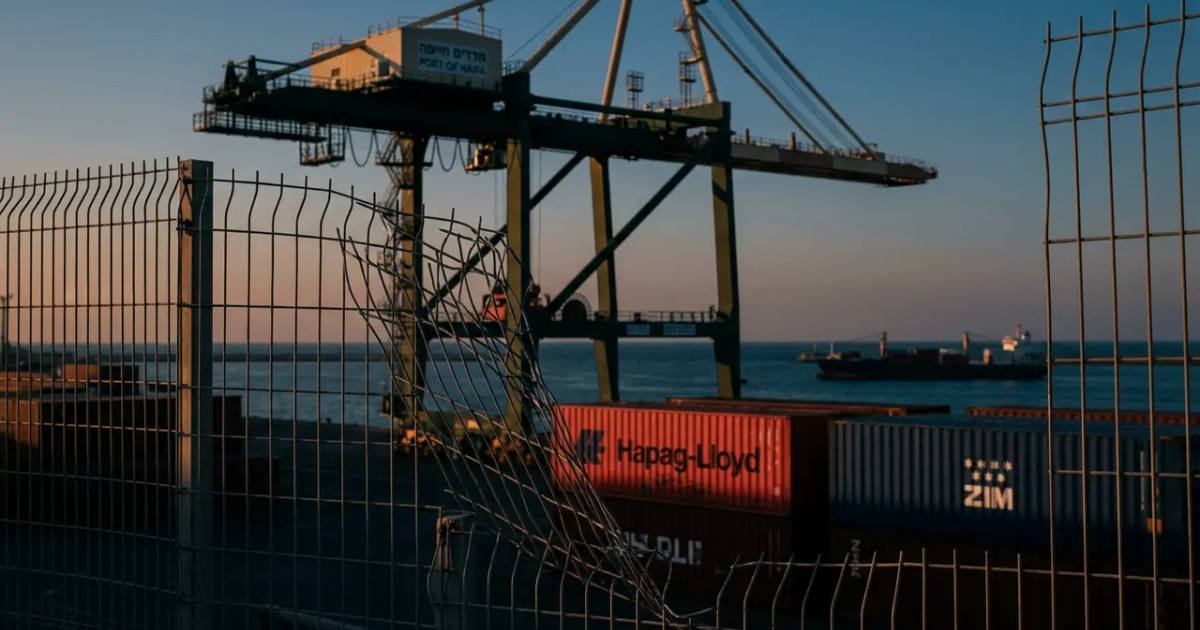

Hapag-Lloyd's $4.2 billion ZIM bid remains unapproved as Israel's Shipping Authority and Defense Ministry formally oppose it. ZIM shares trade well below the offer price, and Maersk is reportedly preparing a contingency bid.
Israel's Shipping and Ports Authority and Defense Ministry have formally opposed Hapag-Lloyd's $4.2 billion acquisition of ZIM, the country's national container carrier, arguing it would leave Israel's wartime shipping access dependent on a foreign-controlled network. As of September 2026 the deal remains unapproved, with a government review meeting rescheduled to September 9 and ZIM's own share price trading well below the offer, signaling real market doubt it closes as structured.
What did Hapag-Lloyd agree to pay for ZIM?
Hapag-Lloyd agreed on February 16, 2026 to acquire ZIM Integrated Shipping Services for $35.00 per share in cash, a transaction valued at approximately $4.2 billion, according to ZIM's investor announcement. The price represented a 58% premium to ZIM's closing share price on February 13, 2026, and a 126% premium to its unaffected price of $15.50 on August 8, 2025, before market speculation about a deal began. ZIM's shareholders approved the sale by a 97.3% vote in May 2026, according to gCaptain.
The combination would make Hapag-Lloyd the world's fifth-largest container line, with a fleet exceeding 400 vessels and capacity above 3 million TEU, according to the companies' joint statement. Hapag-Lloyd has estimated annual synergies of $300 million to $500 million from the deal, per Kavout, and projected its Transpacific market share would rise to roughly 12% from 7% standalone.
Why is Israel's ZIM deal still blocked?
ZIM carries a golden share, a special government-held stake created when the company was privatized that gives the Israeli state veto power over any sale exceeding a 24% stake and the right to take control of the fleet during emergencies, according to Freshplaza. That veto is the mechanism through which regulators, not shareholders, now control the deal's fate.
Tzadok Radker, head of Israel's Shipping and Ports Authority, wrote that the buyers' supporting material did not resolve his office's core concern: that splitting ZIM into a smaller Israel-focused company dependent on Hapag-Lloyd's global network would not preserve the operational independence the golden share exists to protect, according to Ynetnews. Israel's Defense Ministry joined the opposition on July 5, 2026, citing the risk that wartime imports of military equipment could become dependent on a carrier partly owned by Qatari and Saudi sovereign wealth funds, according to Kavout and the Times of Israel.
What would New ZIM look like if regulators approve it?
To satisfy the golden-share requirement, Hapag-Lloyd and Israeli private equity firm FIMI Opportunity Funds proposed creating a separate company called New ZIM, which would hold 16 vessels, above the 11 required under the existing golden-share arrangement, and employ roughly 200 workers plus a technology center staffed by 250 to 300 people, according to Ynetnews. FIMI manages approximately $9 billion across seven funds and would receive ZIM brand rights and a slot-charter agreement giving New ZIM access to Hapag-Lloyd's global shipping network, according to Yahoo Finance.
Buyers presented New ZIM as debt-free, compared with ZIM's existing $2.9 billion debt load, and submitted supporting opinions from Ernst & Young, Boston Consulting Group and a former director of Israel's own Shipping and Ports Authority, according to Ynetnews. Regulators were not moved: Radker's office maintained that dependence on Hapag-Lloyd for capacity and routes was the structural problem, not a detail that better financial engineering could fix.
How is the market pricing the odds the deal closes?
ZIM shares traded at $27 to $28 against Hapag-Lloyd's $35 offer as of March 2026, a spread that 24/7 Wall St. and Yahoo Finance both describe as the market pricing in genuine doubt about Israeli government approval. ZIM CEO Eli Glickman sold 87% of his personal ZIM holdings at prices between $28 and $29, below the offer price, according to Yahoo Finance, and other company executives followed with their own sales during the same window.
Rival carrier A.P. Moller-Maersk, which lost the original bidding process with a $29-per-share offer, is reportedly preparing a contingency plan to acquire ZIM if the Hapag-Lloyd transaction fails, according to Phaata. Industry sources say Maersk believes it could close a deal with fewer golden-share complications and has explored partnerships with Israeli investors as an alternative path.
What happens to Israeli shipping if the deal is rejected?
If Israel's government declines to approve the transaction, ZIM would most likely continue operating as an independent, NYSE-listed carrier under its existing Kenon Holdings ownership structure, since the golden share gives regulators the power to block a sale outright rather than only attach conditions to it. That outcome would leave Idan Ofer's Kenon Holdings in its current controlling position and remove the need for a New ZIM spinoff entirely.
A rejection would also reopen the field for Maersk's reported contingency bid, or for ZIM to remain independent through the current container-rate cycle rather than folding into a larger competitor's network. Either outcome changes the ownership and insurance profile discussed in Olam's coverage of Israeli shipping war risk premiums, since the identity of ZIM's controlling shareholder affects how underwriters price Israeli-linked vessels.
What should readers track next?
The single clearest signal is the outcome of Israel's government review meeting rescheduled to September 9, 2026, and whether Hapag-Lloyd and FIMI receive a further hearing at Israel's Companies Authority if that meeting goes against them. A secondary signal is the ZIM share price spread to Hapag-Lloyd's $35 offer, which has functioned as a real-time market gauge of deal probability since the agreement was announced.
Related on The Olam
- ZIM Container-Shipping Line
- Israeli Shipping War Risk Insurance
- Idan Ofer
How we report: Olam stories draw on public filings, company disclosures and named sources, checked by our editors. Read our methodology · Corrections