
Solrom Holdings (TASE: SLRM): the Israeli defense laser firm that jumped 30%+ on an IDF field test, then swung from an all-time high in January 2026 to down 60% YTD by August.
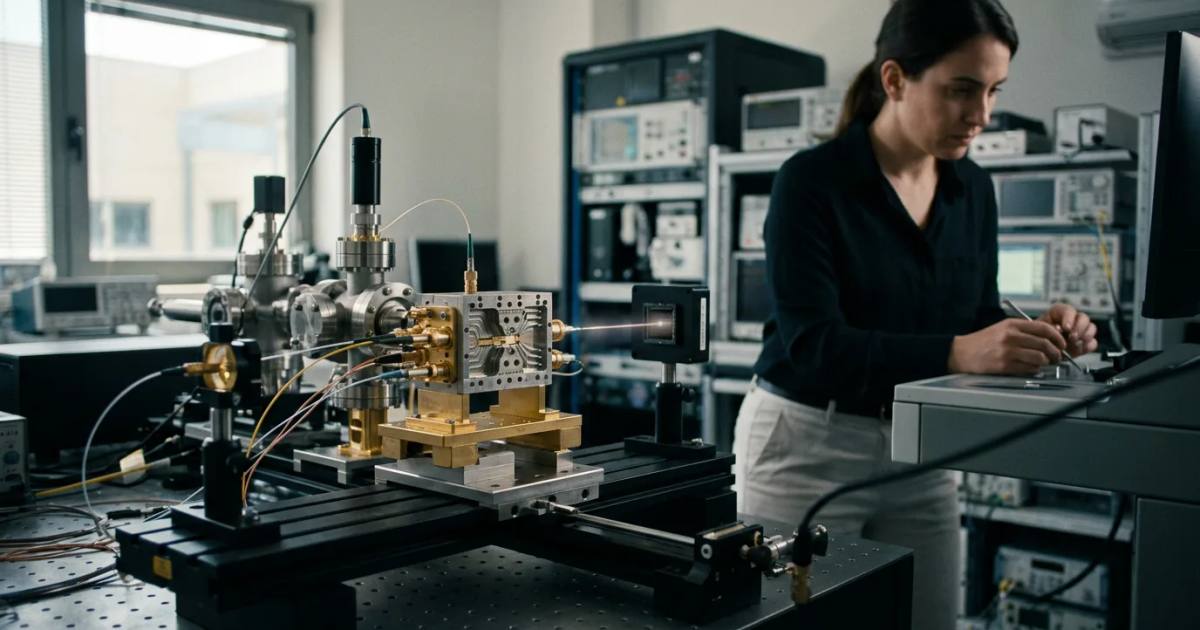
Solrom Holdings Ltd (TASE: SLRM) is an Israeli defense electronics company that develops quantum cascade laser, or QCL, technology for military applications, alongside electromechanical systems integrated into naval, land, air and space defense projects. The company, formerly known as 3DM Digital Manufacturing, saw its stock jump more than 30 percent in October 2025 after a successful Israel Defense Forces field test, then swing wildly through 2026 as a highly volatile microcap. It has no independent third-party profile anywhere in English.
How did a 3D printing company become a defense laser firm?
Solrom Electronics itself dates back to 1987, originally developing electronic and electromechanical systems for Israel's naval, air, ground and space defense sectors, according to The Defense Circuit's coverage of the company. The publicly traded shell it merged into, 3DM Digital Manufacturing, was a separate company founded in 2016 to develop a laser-based printhead for industrial 3D printing. The two combined in early September 2024, and the merged entity took the name Solrom Holdings, with M&M Capital, jointly held by Itai Moldavsky and David Maimon, taking a 52.2 percent controlling stake, according to Startup Nation Central's company profile. CEO Matan Rabin has run the company since the merger, and it is registered with Israel's Companies Registrar under number 511244915.
What has Solrom acquired, and what does it build today?
Since 2012, when M&M Capital first took a controlling interest in Solrom Electronics, the company has built out its defense business through a string of acquisitions, including ISRATEK Electronic Systems Engineering, Manara Systems, and AVIV Technologies for Aviation & Space, according to Solrom's own investor relations page. In May 2026 it added two more, A.H.M. Complex Engineering Assemblies and Niron M.S. Systems & Projects, with the A.H.M. purchase alone valued at up to NIS 37 million, and in March 2026 it signed a memorandum of understanding to acquire an additional defense-sector company in a combined cash and share transaction. Solrom now operates two factories, in Rosh Pina and Kfar Masaryk, focused on military packaging and wire harness design, and it fully owns subsidiary Isratek Electronic Systems.
What did the October 2025 laser test prove, and why did the stock jump?
Solrom shares rose more than 30 percent on the Tel Aviv Stock Exchange after the IDF successfully field-tested its quantum cascade laser long-range target-marking system in late October 2025, according to The Defense Circuit. The system marks targets without a visible beam, so the target has no way of knowing it has been tracked, and the same trial validated a self-marking system for soldiers designed to cut the risk of friendly fire. Following the test, Solrom confirmed it was negotiating its first military purchase order, and by early 2026 the company had converted that momentum into framework agreements and binding purchase orders for both the long-range designator and the self-marking system, moving the technology from proof of concept to fielded equipment.
This is the kind of concrete, verifiable proof point that separates real defense revenue from a paper pipeline: a named test, a named branch of the military, and a stock move investors could see happen in real time.
How has the stock actually performed since, and is the growth story reflected in the share price?
The record is mixed. Solrom's revenue reached NIS 98.63 million in 2025, an increase of about 28 percent from the prior year, according to StockAnalysis.com's financial data, and the company told investors in its May 2026 update that revenue and order backlog were still growing into the first quarter. But the stock itself has been extremely volatile: shares hit an all-time high of 2,165 agorot on January 26, 2026, before falling sharply, and by August 21, 2026 they traded around 543 agorot, down roughly 60 percent for the year, according to MarketScreener's trading data. In January 2026, at close to the stock's peak, an undisclosed buyer agreed to acquire a 5.58 percent stake in Solrom from controlling shareholder M&M Capital for NIS 30 million, at NIS 14 per share, implying a full equity value of roughly NIS 540 million at the time, a figure several times higher than where the stock traded by late summer.
How does Solrom fit into Israel's defense-tech sector?
Solrom's growth through acquisition mirrors a pattern across Israeli defense and cyber companies in 2026, a sector that recorded more than 50 mergers and acquisitions in just the first six months of the year, according to Calcalist's Ctech coverage of the space. Unlike consumer-facing Israeli conglomerates such as Fox Group, Solrom's customers are almost entirely defense agencies and prime contractors, which is part of why its growth, and its stock's swings, draw far less English-language attention despite real revenue and real contracts.
More on Israeli military and dual-use companies runs in The Olam's defense industry coverage, and on capital markets activity in The Olam's fintech and public markets section.
Key Facts
| Founded | 1987 (Solrom Electronics); 2016 (3DM Digital Manufacturing) |
|---|---|
| Renamed | Solrom Holdings, September 2024 merger |
| TASE listing | SLRM; Israeli registrar no. 511244915 |
| CEO | Matan Rabin |
| Controlling shareholder | M&M Capital (Itai Moldavsky, David Maimon), ~52.2% post-merger |
| Employees | ~140 to 153 |
| Facilities | Two factories, Rosh Pina and Kfar Masaryk |
| 2025 revenue | NIS 98.63M, up ~28% year over year |
| Oct. 2025 milestone | Stock up 30%+ after successful IDF field test of QCL target-marking laser |
| 52-week range (as of Aug. 2026) | All-time high 2,165 agorot (Jan. 26, 2026); ~543 agorot by Aug. 21, 2026, down ~60% YTD |
| 2026 acquisitions | A.H.M. Complex Engineering Assemblies (up to NIS 37M), Niron M.S. Systems & Projects (May 2026); additional defense-sector MOU (March 2026) |
| Jan. 2026 stake sale | 5.58% stake sold by M&M Capital for NIS 30M, implying ~NIS 540M equity value at the time |
Frequently Asked Questions
What does Solrom Holdings make?
Solrom Holdings develops quantum cascade laser (QCL) technology for military use and manufactures electromechanical systems integrated into Israeli naval, land, air and space defense projects.
Was Solrom Holdings always a defense company?
The Solrom Electronics side of the business dates to 1987 as a defense electronics maker, but the public company itself started in 2016 as 3DM Digital Manufacturing, a 3D printing firm, and became Solrom Holdings after the two merged in September 2024.
Why did Solrom's stock jump in October 2025?
Solrom shares rose more than 30 percent after the Israel Defense Forces successfully field-tested its quantum cascade laser long-range target-marking system, a trial that also validated a self-marking system meant to reduce friendly fire incidents.
Has Solrom's stock kept rising since the 2025 laser test?
No. Shares hit an all-time high in late January 2026, then fell sharply, trading down roughly 60 percent for the year by August 2026, even as reported revenue and order backlog continued to grow.
How much revenue does Solrom Holdings generate?
Solrom Holdings reported NIS 98.63 million in revenue for 2025, up about 28 percent from the prior year, and told investors in May 2026 that revenue and order backlog kept growing into the first quarter.
Who owns and runs Solrom Holdings?
M&M Capital, jointly held by Itai Moldavsky and David Maimon, holds roughly 52.2 percent of the company as controlling shareholder, and Matan Rabin serves as CEO.
Solrom Holdings shows how an Israeli industrial company can pivot into defense, prove out new technology in the field, and still trade as a volatile, thinly covered microcap with almost no English-language scrutiny.
How we report: Olam stories draw on public filings, company disclosures and named sources, checked by our editors. Read our methodology · Corrections