
Israel's 300+ wineries exported $57.3M, with Yarden scoring 97 at Decanter. Golan Heights, Domaine du Castel, Barkan, Tabor, Recanati, Flam, Tzora, and Yatir lead the revolution.
Israeli wine has undergone a quality revolution over the last forty years. The category moved from a domestic religious product into the international fine-wine conversation. Decanter, Wine Spectator, and Robert Parker now regularly score Israeli wines at 90+ points. In July 2025, Yarden Cabernet Sauvignon 2021 scored 97 points and a Platinum Medal at the Decanter World Wine Awards — tying the highest score ever for an Israeli wine. The producer landscape behind that shift is the subject of this piece.
For the full deep-dive — 300 wineries, five regions, export data, the October 7 impact, and the complete timeline — see the pillar: The Israeli Wine Industry: 300 Wineries, Five Regions, and the Golan Heights Revolution.
The Rothschild Origin
Modern Israeli wine production began in 1882 when Baron Edmond de Rothschild — the French banking-family patriarch with deep connections to the early Zionist project — funded the establishment of Carmel Winery at Rishon LeZion and Zichron Ya'akov. Rothschild brought French winemaking expertise and capital, and the operation became the largest winery in the Levant by the early twentieth century.
Carmel still operates today — a cooperative controlling roughly 57% of the national grape harvest, producing across multiple quality tiers from Limited Edition to Single Vineyard and Appellation.
The 1980s Revolution: Golan Heights Winery
The contemporary fine-wine era began with the founding of the Golan Heights Winery in 1983. Founded by four kibbutzim and four moshavim, the winery brought California-trained winemaking to the high-altitude, volcanic-basalt vineyards of the Golan Heights — a terroir at 400 to 1,200 meters elevation that turned out to be exceptionally well-suited to Cabernet Sauvignon, Syrah, Chardonnay, and Sauvignon Blanc.
Within a decade, the winery's Yarden label began receiving international scores in the 88–92 point range. In 2004, the Yarden Cabernet Sauvignon became the first Israeli wine listed on the Wine Spectator Top 100. In 2011, the winery won the Gran VinItaly Special Award as Best Wine Producer of the Year, beating over 1,000 producers from 30 countries. Head Winemaker Victor Schoenfeld has led the winery since 1992. The Gamla and Mount Hermon labels cover the mid-tier. Golan Heights is now the largest premium producer in Israel, with exports to 32+ countries.
Domaine du Castel and the Judean Hills Renaissance
In 1988, Eli Ben Zaken — born in Egypt, educated in Italy, Switzerland, and England — planted Cabernet Sauvignon and Merlot vines on a hilltop at Moshav Ramat Raziel in the Judean Hills west of Jerusalem. Frustrated by the lack of quality Israeli wines for his Jerusalem restaurant Mama Mia, he created the first modern vineyard in the region.
The first harvest came in 1992: roughly 600 bottles of Castel Grand Vin, Jérusalem, Haute-Judée. By 1995, Serena Sutcliffe MW, head of Sotheby's wine department, was praising the wine. Decanter named the Castel Grand Vin 1997 and C Blanc du Castel 1999 as Wines of the Month. Ben Zaken introduced Petit Verdot to Israel for the first time and organized the first tutored tasting of Israeli wine at Vinexpo in Bordeaux in 2003.
The Castel success triggered the broader Judean Hills wine revival. The region — at elevations of 500 to 900 meters with terra rossa soils over limestone and Mediterranean-influenced cool nights — turned out to produce wines of remarkable balance. The Judean Hills now hosts more than thirty producers. Domaine du Castel produces approximately 100,000 bottles per year — half exported. Ben Zaken's children Ilana, Eytan, and Arial, trained in Burgundy, run production alongside him.
The Contemporary Producer Landscape
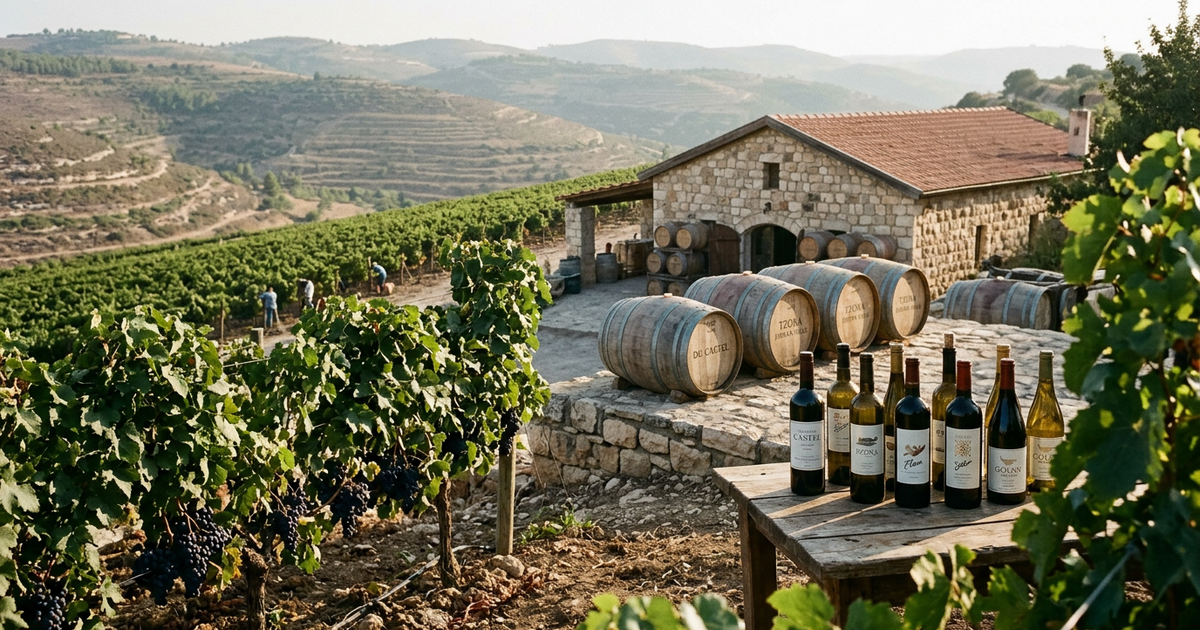
The current Israeli fine-wine landscape includes:
- Golan Heights Winery — Yarden, Gamla, Mount Hermon labels. Galilee/Golan. ~11% market share.
- Domaine du Castel — Grand Vin, Petit Castel, Castel C. Judean Hills. ~100,000 bottles/yr.
- Barkan Wine Cellars — Altitude, Superior, Reserve, plus Segal brand. ~15% market share.
- Tabor — Adama series and premium tiers. Galilee.
- Recanati — Wild Carignan, Special Reserve. Upper Galilee. Winemaker Kobi Arviv.
- Tulip Winery — Kfar Tikva, Galilee.
- Flam — Judean Hills, family-owned. Classico, Noble.
- Tzora — Judean Hills, kibbutz-owned. Judean Hills Quartet member.
- Yatir — Northern Negev, desert-edge reds. Carmel JV.
- Margalit — small-production cult, Caesarea. Non-kosher.
- Sphera — boutique white-wine specialist, Judean Hills. Non-kosher.
- Dalton — Upper Galilee, cool-climate specialist.
- Galil Mountain — Upper Galilee, Golan Heights Winery + Kibbutz Yiron JV.
- Jezreel Valley Winery — Lower Galilee, indigenous Mediterranean varieties.
- Odem Mountain — Golan Heights, Israel's northernmost winery.
- Shiloh — Samaria, ancient terroir. Winemaker Amichai Luria.
- Carmel Winery — the historic anchor, ~57% of harvest. Multiple tiers.
The Kosher Question
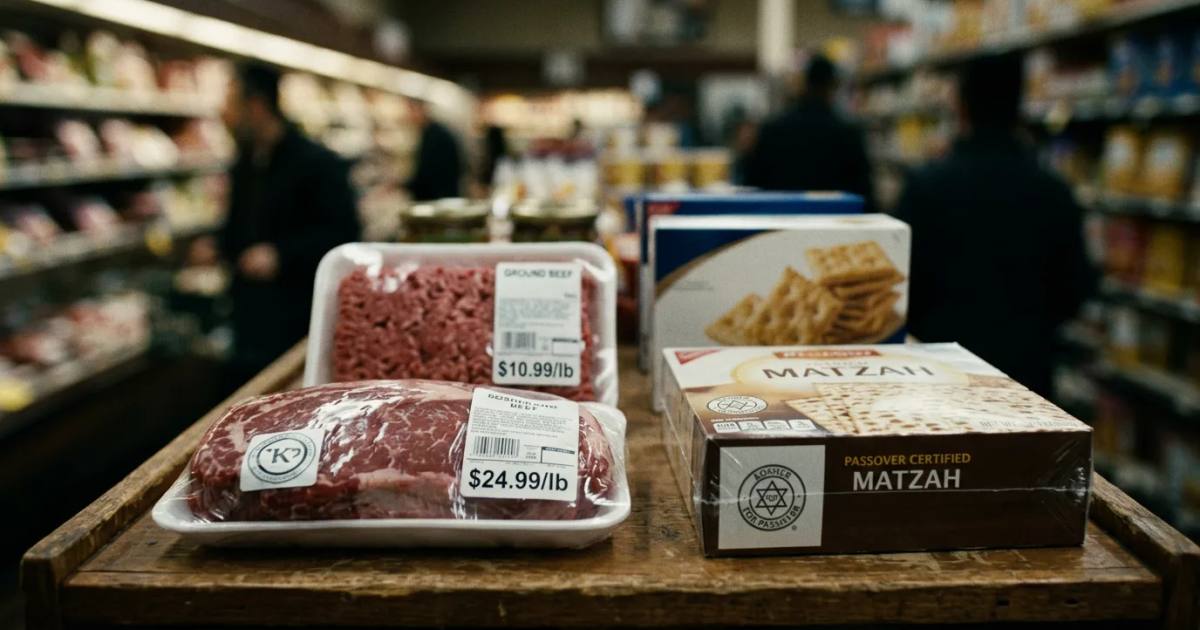
Most premium Israeli wineries produce kosher wine. Golan Heights Winery proved in the 1980s that kosher production requirements impose no quality constraint. The 97-point Yarden Platinum is kosher. Modern kosher winemaking — mevushal or non-mevushal — uses the same techniques, the same barrels, and the same vineyards as non-kosher production. The reputation gap that existed in the 1990s has closed.
Several producers — Margalit and Sphera among them — are non-kosher. The non-kosher segment is small but growing.
Export and the International Reputation
Israeli wine exports reached $57.3 million in 2023, more than doubling from $26.7 million in 2011. The United States is the largest single market by more than 10x over the UK — US imports hit 12.5 million bottles in 2023, up 15% from 2022. Royal Wine Corp, the largest kosher wine importer globally, anchors US distribution. The UK imported 2.8 million bottles in 2023. Canada and France follow.
Decanter's annual Israel coverage and the inclusion of multiple Israeli wines in Wine Spectator's Top 100 lists have reshaped the international perception. Wine-trade buyers now visit the Judean Hills and the Galilee in the same circuits as Lebanon, Greece, and Cyprus.
Why This Piece Matters for the Olam Map
Israeli wine is a case study in how a category reputation can be rebuilt inside a generation. The producers above are the entities that did it. Olam covers each one individually as the cluster expands.
Part of the Olam Israeli Food & Beverage Empires cluster. See the pillar: Israeli Food & Beverage Empires. See also: The Israeli Wine Industry — the full deep-dive · Zichron Ya'akov and Pardes Hanna — the Anglo Wine Country.