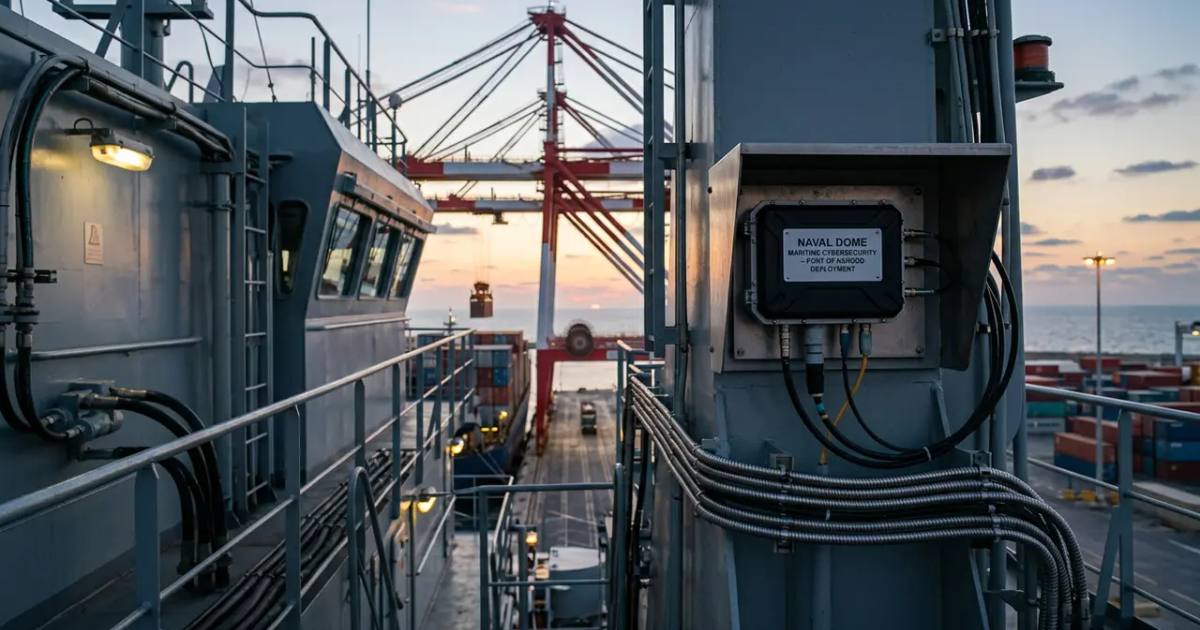

Naval Dome and Cydome, two Israeli firms, build dedicated cybersecurity for ports and vessels after OT attacks rose 900% between 2017 and 2019. Naval Dome secured Ashdod Port as its first port-wide deployment in 2020.
Israeli cybersecurity firms Naval Dome and Cydome build dedicated defenses for ports and vessels, a category the maritime industry has needed since attacks on operational technology systems rose 900% between 2017 and 2019. Naval Dome, founded in 2016 and based in Ra'anana, signed its first port-wide deployment with the Port of Ashdod in 2020, while Tel Aviv-based Cydome protects vessel networks for shipping and tanker operators.
Why do ports and ships need cybersecurity separate from standard IT defenses?
Maritime operational technology, the systems controlling cranes, ballast, navigation and cargo handling, has no central dashboard showing operators the health of connected equipment, according to Naval Dome co-founder Ronen Rizika, cited in Maritime Executive. Operators frequently misread a cyberattack as a routine system error or hardware failure and restart the equipment rather than investigating it, meaning many attacks go unlogged even as the underlying network becomes compromised.
Traditional firewalls and IT-side software do not protect individual systems on a vessel's or port's operational technology network, according to the same Naval Dome reporting. Attacks on maritime operational technology increased 900% between 2017 and 2019, according to data Naval Dome compiled and reported by Maritime Executive, rising from 50 significant incidents in 2017 to more than 310 in 2019.
What has Naval Dome actually demonstrated is possible?
Naval Dome's engineering team ran penetration tests on live, in-operation systems aboard tankers, container ships, superyachts and cruise ships, with permission from the vessel owners and system manufacturers, according to Seatrade Maritime. In one test, the company's engineers connected to a vessel's machinery control system and altered the functioning of the ballast system while the display continued to show normal readings, according to Naval Dome CEO Itai Sela, cited by Seatrade Maritime.
In a separate test, Naval Dome shifted a vessel's reported position and misled its radar display during a simulated critical point in a planned voyage, according to the same reporting. Sela noted that vessel manufacturers themselves can inadvertently become an attack vector, since they take remote control of onboard computers to run diagnostics or install software updates.
How does Naval Dome protect Israeli port infrastructure specifically?
Naval Dome signed an agreement with the Port of Ashdod in 2020 to defend its critical operational technology systems, marking the company's first port-level reference deployment, according to Maritime Executive. The rollout began with pilot trials on select systems in early 2020 before expanding across the port's full network, including vessel traffic control systems, berths, bridges, locks, gates, terminal cranes and storage facilities.
Naval Dome markets separate product lines for each maritime environment: Marine Dome for commercial vessels, cruise ships and yachts, Port Dome for ports and harbors, and Navy Dome for naval vessels and military craft, according to Asia Pacific Security Magazine. The company appointed Rear Admiral (Ret.) Ido Ben-Moshe, the Israeli Navy's former Head of Naval Operations, to lead its port and naval market expansion, a hire that gave the firm direct institutional credibility with the naval customers it was targeting.
What does Cydome add on the vessel-network side?
Cydome, based in Tel Aviv and launched in 2019, builds a hardware appliance and software system that maps every asset on a vessel's network, including its communication system, engines and generators, then identifies and patches vulnerabilities, according to the Jerusalem Post. The company's technology has been deployed across multiple operators, including an Israeli shipping company and a Dutch tanker operator, per the same reporting.
Cydome's leadership includes technology director Eitan Yehuda, who spent 25 years in the Israel Defense Forces, including heading the cyber defense infrastructure department of Mamram, the IDF's computing and information systems center, before joining the company, according to the Jerusalem Post. Cydome designed its system to bring vessels and ports into compliance with international maritime cybersecurity regulations that took effect in 2021.
How does this fit into Israel's broader maritime defense industry?
Israeli maritime cybersecurity firms operate alongside the country's larger defense-electronics base rather than separately from it. Elbit Systems contributes integrated naval combat management systems combining sensor fusion and AI-based analytics for Israeli and allied navies, while smaller specialist firms like Cydome address the operational technology layer beneath those larger combat systems, according to an April 2026 industry analysis by isra-tech. The combination reflects a pattern seen elsewhere in Israeli defense exports: a large systems integrator paired with narrower, specialist point-solution vendors addressing a single technical layer.
What should readers track next in Israeli maritime cybersecurity?
Three developments will show whether this sector scales further. First, whether Naval Dome or Cydome announce additional port-wide deployments beyond Ashdod, since a second major Israeli port reference would validate the category's commercial durability. Second, whether either company discloses contracts with non-Israeli ports or navies, which would signal export traction similar to the pattern already visible in Israeli naval shipbuilding and combat systems. Third, whether reported attack volumes on maritime operational technology continue rising at anything close to the 900% three-year increase Naval Dome documented earlier in the sector's history, since a slowdown would suggest defenses are catching up with the threat rather than lagging behind it.
Related on The Olam
- Israeli Ports and Logistics Map
- Israeli Shipping War Risk Insurance
- Israel Shipyards Naval Builder
How we report: Olam stories draw on public filings, company disclosures and named sources, checked by our editors. Read our methodology · Corrections