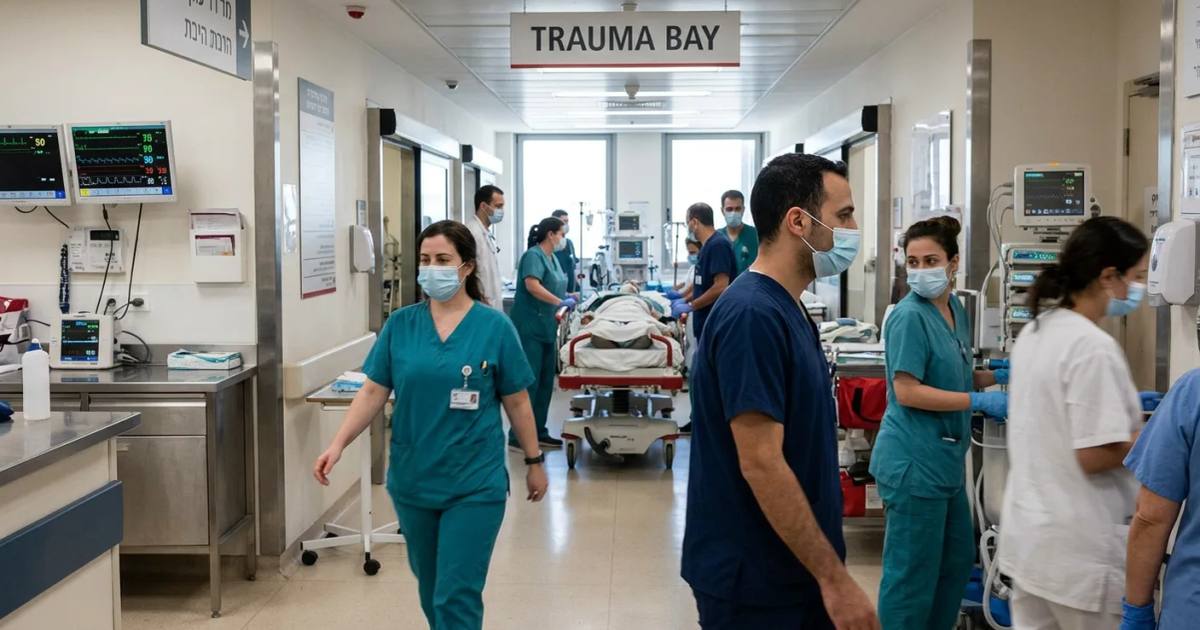
Beersheba. Only Level-1 trauma center in southern Israel. ~1,200 beds. Founded 1959. 200,000+ ER visits/year — busiest in Israel. October 7, 2023: 676 wounded received. June 19, 2025: Iranian missile struck the evacuated Northern Surgical Building. CEO Prof. Shlomi Codish.
Israeli Health & Biotech | Olam.business
Soroka University Medical Center in Beersheba is the only Level-1 trauma facility and only tertiary academic medical center in southern Israel — an approximately 1,200-bed campus affiliated with Ben-Gurion University of the Negev, serving the entire Negev region and its 1 million+ residents. Founded 1959; 200,000+ emergency-department visits per year (the busiest ER in Israel). Located 40 km from the Gaza Strip. On October 7, 2023, Soroka received 676 wounded between 7:30 a.m. and midnight — the largest single-day mass-casualty event in Israeli hospital history. On June 19, 2025, an Iranian ballistic missile packed with 400+ kg of explosives struck the hospital's Northern Surgical Building, evacuated one day prior.
Snapshot
| Location | Beersheba, Negev, Israel |
| Founded | 1959 (successor to a 1948 temporary military hospital in an Ottoman-era Beersheba building) |
| Beds | ~1,200 |
| Campus | 29 hectares (~70 acres); 200,000+ sq meters built |
| Population served | 1 million+ Negev residents (60% of Israel's landmass) |
| Affiliated university | Ben-Gurion University of the Negev (Faculty of Health Sciences, adjacent campus) |
| Director General / CEO | Prof. Shlomi Codish |
| Deputy directors | Dr. Dan Schwarzfuchs; Dr. Jacob Dreiher |
| ER Head | Dr. Moti Klein |
| Trauma level | Level-1 Trauma Center — only such facility in southern Israel |
| Distance from Gaza | 40 km (25 miles) |
| ER visits annually | 200,000+ (busiest in Israel) |
| October 7, 2023 mass casualty | 676 wounded received 7:30 a.m. to midnight; 680 in first 16 hours; 120 critically wounded |
| War casualties treated (cumulative) | 4,400+ (including 3,300+ wounded soldiers) |
| June 2025 Iranian missile strike | Northern Surgical Building destroyed; 270 unfortified beds lost (ENT, urology, ophthalmology); patients evacuated 24 hours prior |
The 1959 Origins
Soroka's institutional lineage begins in 1948 with a temporary military hospital established by the IDF Medical Corps in a former Ottoman government building in Beersheba, following Israeli independence. The permanent Soroka Medical Center opened in 1959. When first constructed, the Egyptian border sat only 30 kilometers from the hospital. That territory is now Gaza.
Soroka developed into the anchor tertiary center for the Negev — the geographically vast, demographically diverse, and infrastructurally under-served region that constitutes approximately 60 percent of Israel's territory. The hospital operates as an integrated academic-clinical unit with Ben-Gurion University of the Negev's Faculty of Health Sciences, whose campus sits immediately adjacent to the hospital site.
Scale & Structure
The Soroka campus covers approximately 29 hectares (70 acres) with more than 200,000 square meters of built area and roughly 1,200 beds. The emergency department, opened in its current form in 2001 and at the time the most modern in Israel, handles more than 200,000 visits per year — the busiest ER in the country. Six treatment bays anchor the trauma unit; the standard configuration on a critical-mass day is two patients per bay, twelve simultaneous critical treatments.
Soroka is the only Level-1 trauma center in southern Israel and the only tertiary academic medical center in the Negev. It serves the general civilian population of the region, IDF soldiers stationed in or near the Negev, motor-vehicle-accident victims from the main north-south highway that runs adjacent to the campus, pediatric surgical patients from across the south, and desert-hiking casualties.
October 7, 2023 — The Largest Single-Day Mass Casualty in Israeli Hospital History
On the morning of October 7, 2023, Hamas breached the Gaza envelope in a coordinated multi-axis assault. Between 7:30 a.m. and midnight that Saturday, Soroka received 676 wounded brought by ambulance, helicopter, and private car. Soroka's own subsequent case-study paper — published in a peer-reviewed medical journal under lead authors CEO Dr. Shlomi Codish, deputy director Dr. Dan Schwarzfuchs, critical-care specialist Dr. Amit Frenkel, ER head Dr. Moti Klein, orthopedist Dr. Alex Geftler, and deputy director Dr. Jacob Dreiher — documented the operational response.
The five-part Soroka approach:
- Early independent mobilization. At 8:00 a.m., before receiving formal directive, Soroka declared mass casualty incident and recalled the full medical staff.
- Doubled trauma bays. Each of the six treatment bays reconfigured to hold two critical patients — 12 simultaneous critical treatments, more than 130 total through the day.
- Rapid space and equipment reorganization. Wards not sheltered were moved to sheltered spaces. 42 rocket-warning sirens sounded that day; 18 targeted the hospital area directly.
- Distributed decision-making. Senior physicians dispersed across treatment areas rather than concentrated at command; triage authority pushed to the trauma-bay level.
- Continuous documentation. Post-event, the operational sequence was captured in peer-reviewed publication as the basis for global mass-casualty protocol updates.
Of the 676 patients treated that day, 120 were classified as critically wounded. The Soroka survival rate was extraordinary: "Once you made it to Soroka alive, you left alive. Everyone really did," Codish said. It was the largest single-day mass-casualty incident at any one hospital in Israeli history and — as Codish framed it — "an outlier event in human history."
The Cumulative War Load and the June 2025 Missile Strike
Since October 7, Soroka has treated more than 4,400 war-related casualties, including more than 3,300 wounded soldiers evacuated by helicopter from Gaza operations. The hospital remains a front-line receiving facility for the Southern Command.
On June 18, 2025, one day before the Iranian ballistic missile strike, Codish convened a staff meeting with Beersheba search-and-rescue teams and the Home Front Command to refresh earthquake protocols — a deliberate framing choice to avoid announcing anticipated direct enemy fire. Patients were evacuated from the Northern Surgical Building. Twenty-four hours later, on June 19, 2025, an Iranian ballistic missile carrying more than 400 kilograms of explosives struck that building directly. Only beds and equipment were destroyed. The building had housed 270 beds — none of them fortified — across ENT, urology, and ophthalmology.
State Comptroller Matanyahu Englman had previously flagged Soroka's protection gaps in a November 2023 letter to Prime Minister Netanyahu. A Ministry of Health plan allocating more than ₪4 billion (~$1 billion) for hospital-protection upgrades followed. As of the strike, only 10 percent of that budget had been disbursed. President Isaac Herzog and Finance Minister Bezalel Smotrich visited the impact site.
Leadership
Prof. Shlomi Codish — Director General and CEO. Codish has been the operational face of Soroka's post-October 7 posture, the co-lead author of the mass-casualty case study, and the executive decision-maker on the June 2025 evacuation call that saved the Northern Surgical Building's patients from the Iranian missile impact.
Dr. Dan Schwarzfuchs — Deputy Director General; Director of Internal Medicine. Front-line clinician on October 7. Dr. Jacob Dreiher — Deputy Director. Dr. Moti Klein — ER Head. Dr. Amit Frenkel — Critical Care Specialist. Dr. Alex Geftler — Orthopedic Surgery.
Why Soroka Matters
Three reasons. First, geographic monopoly — Soroka is the only Level-1 trauma center and only tertiary academic medical center in southern Israel. In any conflict scenario originating from Gaza or Egypt-adjacent territory, Soroka is the operational anchor. Second, the October 7 case study — the 676-patient day is now a global mass-casualty reference case, and the Soroka five-part protocol is being studied by trauma programs internationally. Third, the fortification gap — the June 2025 missile strike exposed the unfinished business of Israeli hospital protection, and Soroka's reconstruction and fortification path is the operational template the Ministry of Health is now trying to fund at scale.
FAQ
Where is Soroka Medical Center located?
Beersheba, in the Negev region of southern Israel. The campus is adjacent to Ben-Gurion University of the Negev's Faculty of Health Sciences.
How large is Soroka?
Approximately 1,200 beds across a 29-hectare (70-acre) campus with more than 200,000 sq meters of built area. The ER handles 200,000+ visits annually — the busiest in Israel.
Who runs Soroka?
Prof. Shlomi Codish — Director General and CEO. Dr. Dan Schwarzfuchs and Dr. Jacob Dreiher serve as deputy directors.
What happened at Soroka on October 7, 2023?
Soroka received 676 wounded between 7:30 a.m. and midnight — the largest single-day mass-casualty event in Israeli hospital history. 120 patients were critically wounded. 42 rocket-warning sirens sounded during the day; 18 targeted the hospital area.
What was the June 2025 Iranian missile strike?
On June 19, 2025, an Iranian ballistic missile carrying more than 400 kg of explosives struck the Northern Surgical Building — 270 unfortified beds housing ENT, urology, and ophthalmology. Patients had been evacuated 24 hours prior on a decision by CEO Prof. Codish. Only beds and equipment were destroyed.
What is Soroka's relationship with Ben-Gurion University?
Soroka is the primary academic hospital of Ben-Gurion University of the Negev's Faculty of Health Sciences. The two institutions operate as an integrated academic-clinical unit; the BGU campus is immediately adjacent to the hospital site.
Related Olam Coverage
- Israeli Health & Biotech — Olam's pillar coverage of the Israeli health and biotech sector
- Sheba Medical Center — Tel Hashomer, #7 in the world, City of Health
- Hadassah Medical Organization — Jerusalem's Ein Kerem–Mount Scopus academic system
- Tel Aviv Sourasky Medical Center (Ichilov) — 1,500-bed acute-care referral center
- Rambam Health Care Campus — Haifa Level-1 trauma and world's largest underground hospital
- Teva Pharmaceutical Industries — the foundational pillar of the Israeli pharmaceutical sector
The Olam Editorial Team