
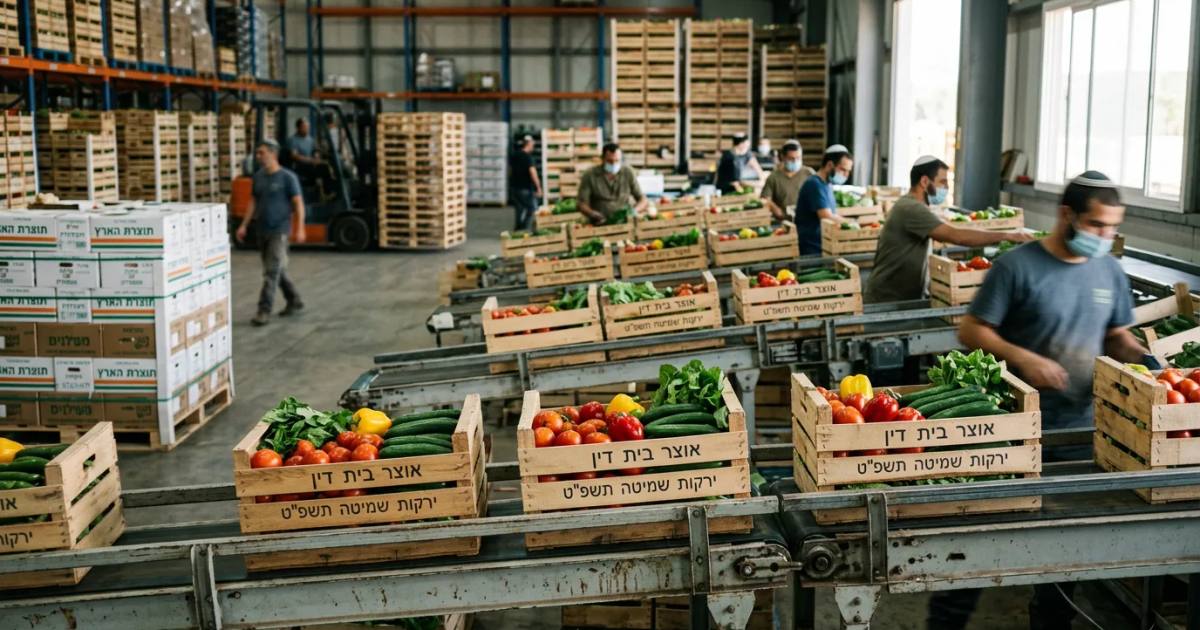

Every seven years, Jewish law commands the Land of Israel to rest. The halachic workarounds — heter mechirah, otzar beit din, prozbul — are billion-shekel instruments. Next cycle: September 2028.
Biblical land-rest cycle · Heter mechirah · Otzar beit din · Import surge · Supermarket labeling · Debt release · Wine industry · Next cycle September 2028.
Every seven years, Jewish law commands the Land of Israel to rest. No plowing. No planting. No pruning. No harvesting for commercial sale. Debts are released. The land lies fallow.
The last shemitah year was 5782 — September 2021 through September 2022. The next one begins Rosh Hashanah 5789, in September 2028. In between, Israel's agricultural sector, food-import infrastructure, kashrut authorities, supermarket chains, and wine industry spend years preparing for a supply-chain event that no other country on earth experiences.
The Biblical Command and the Modern Problem
The shemitah obligation comes from Leviticus 25:2–7 and Exodus 23:10–11. The commandment applies only to the Land of Israel. Produce that grows on its own during shemitah (sefichin) has a special sanctity (kedushat shevi'it) — it may be eaten but not sold commercially, not exported, not wasted, and not used for non-food purposes.
In a modern state with 10 million people, a $20+ billion food-retail market, and agricultural exports worth $3+ billion annually, a year-long production halt would be catastrophic. The halachic solutions that have emerged are, in commercial terms, billion-shekel financial instruments.
The Three Workarounds
Heter mechirah (permission through sale) is the dominant solution, endorsed by Israel's Chief Rabbinate since Rav Abraham Isaac Kook's foundational ruling in 1909. Israeli farmland is symbolically "sold" to a non-Jew for the shemitah year. The sale is documented, notarized, and registered. After shemitah, the land reverts. (See also: Heter Iska — the parallel instrument that permits interest-bearing loans between Jewish parties.)
The heter mechirah is enormously controversial. The haredi community — Badatz, most haredi poskim including Rabbi Yosef Shalom Elyashiv (d. 2012) — reject it as a legal fiction. For the estimated 1.3 million haredi consumers in Israel, heter mechirah produce is not kosher during shemitah.
Otzar beit din (court-supervised distribution): A rabbinical court takes control of agricultural output and distributes it to the public. The produce retains kedushat shevi'it. Consumers pay a handling fee, not a purchase price. Accepted by a broader range of authorities than heter mechirah.
Matza menutak (detached-substrate agriculture): Produce grown in planters or hydroponic systems physically disconnected from the soil is exempt from shemitah restrictions according to many poskim. This has driven significant investment in controlled-environment agriculture and vertical farming ahead of each shemitah cycle.
The Import Surge
During shemitah, Israel's fresh-produce imports spike dramatically. Tomatoes from Turkey. Cucumbers from Jordan. Potatoes from the Netherlands. Citrus from Spain. The import surge is driven primarily by haredi demand.
The 2014–15 shemitah (5775) saw vegetable imports increase 20–30% in key categories. The 2021–22 cycle (5782) coincided with COVID-19 supply-chain disruptions and the Ukraine war — making the import premium significantly more expensive than in any previous cycle.
Supermarket chains — Shufersal (TASE: SAE), Rami Levy (TASE: RMLI), Osher Ad, Machsanei HaShuk — build shemitah-specific sourcing agreements with foreign suppliers 2–3 years in advance. (The Shabbat economy already compresses their weekly supply chain — shemitah compresses the annual one.)
The Supermarket Labeling War
During shemitah, every produce item carries one of several designations: heter mechirah (Rabbinate-approved, haredi-rejected), otzar beit din (sacred-status, use-restricted), yevul nochri (non-Jewish-grown on Israeli land, controversial), or imported (universally accepted, highest price). The kosher certification system adds a shemitah-specific labeling layer on top of its standard regime.
The labeling creates a four-tier pricing structure. During the 2021–22 shemitah, imported tomatoes sold for 30–50% more than heter mechirah in some chains.
The Debt-Release Dimension
Deuteronomy 15:1–2 commands the release of debts at the end of the seventh year. The solution is the prozbul — attributed to Hillel the Elder (1st century BCE) — which transfers private debts to a rabbinical court, exempting them from release. Still widely executed in Israel today.
Israeli banks are insulated by the prozbul and the heter iska. But in the gemach network — NIS 7–10 billion in annual lending — the shemitah debt release is a live issue. Every gemach operator must execute a prozbul or face halachic cancellation of the fund's entire portfolio.
The Wine Industry Complication
Israel's wine industry — 300+ wineries, $200+ million in annual revenue — faces a unique challenge. Grapevines cannot lie fallow without damage. Most wineries (Golan Heights Winery, Barkan, Carmel — founded 1882 by Baron Edmond de Rothschild) rely on heter mechirah. Boutique wineries with haredi clienteles shift to imported grapes or produce sacred-status shevi'it wine with special handling requirements.
The Economic Calendar
Shemitah creates a seven-year cycle unique to Israel. Years 5–6: increased agricultural investment. Year 7: import surge, price spike, labeling regime. Year 8: recovery lag as domestic production ramps back up.
The next shemitah begins Rosh Hashanah 5789 — September 20, 2028. Israeli agricultural planners, import logistics companies, kashrut authorities, and wine producers are already mapping their 2028–29 supply chains. The clock is running.
Frequently Asked Questions
What is shemitah? The biblically mandated sabbatical year for the Land of Israel — every seventh year, agricultural land must lie fallow and debts are released.
When is the next shemitah? September 2028 through September 2029.
What is heter mechirah? A mechanism endorsed by the Chief Rabbinate since 1909 in which farmland is symbolically sold to a non-Jew for the shemitah year.
What is otzar beit din? A rabbinical-court-supervised distribution system in which produce retains sacred status and is distributed at handling cost.
How does shemitah affect food prices? Import premiums increase prices 20–50% for key produce categories.
What is a prozbul? A legal instrument attributed to Hillel the Elder that exempts debts from the shemitah-year release.
Does shemitah apply outside Israel? No.
How does shemitah affect wine? Most wineries use heter mechirah. Some boutique producers shift to imported grapes or produce sacred-status shevi'it wine.
Jewish Law and Commerce on Olam
This article is part of Olam's Jewish Law and Commerce series — the halachic instruments, doctrines, and systems underneath Israel's economy:
The Shabbat Economy · Heter Iska · Kosher Certification Economy · The Gemach Network · Hasagat Gevul