
The third-largest Jewish community in the world — and the only major Western Jewish community whose center of gravity has visibly relocated to Israel within a generation. Three emigration waves, the post-colonial North African base, and where the 80,000+ olim landed.
France holds the third-largest Jewish community in the world — and the source community that built Netanya, Herzliya Pituach, and a meaningful slice of contemporary Israel.
Haolam Atlas — Global Diaspora · The Olam Editorial Team
France is the third-largest Jewish community in the world — and the only major Western Jewish community whose center of gravity has visibly relocated to Israel within a generation.
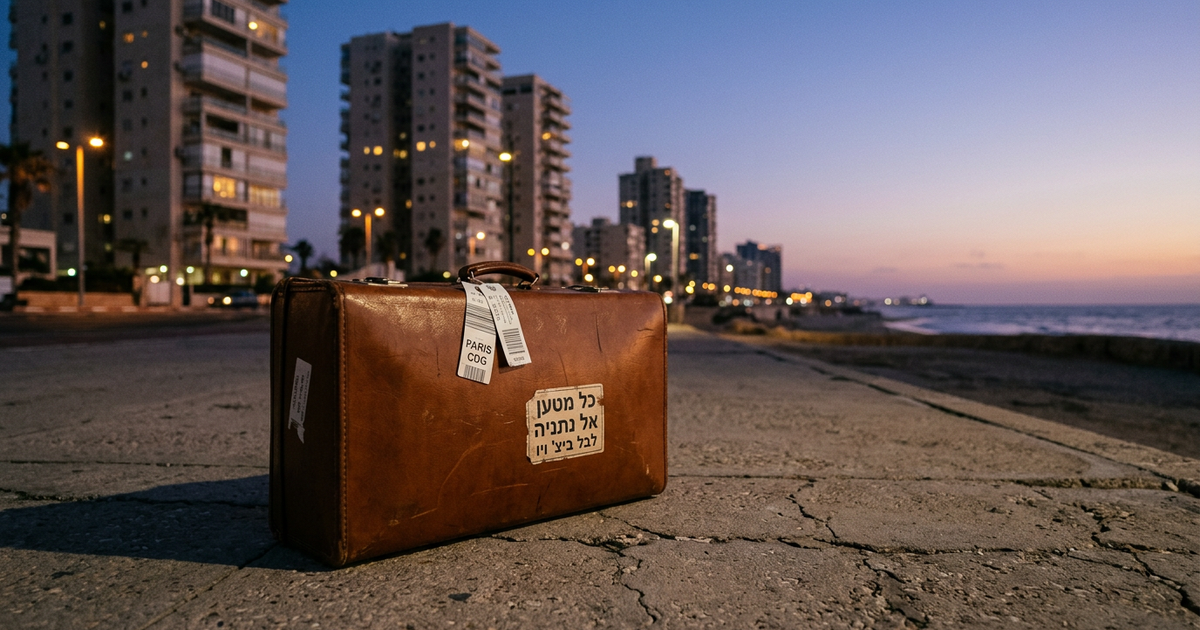
A community of approximately 440,000-480,000, the largest in Europe and the third-largest in the world after the United States and Israel. Built across multiple migration waves — the medieval and early-modern Sephardic and Ashkenazi communities, the 19th-century Eastern European and Alsatian additions, and the dominant post-colonial North African Sephardic migration of the 1950s and 1960s. Across two decades, an estimated 80,000-plus French Jews have emigrated to Israel, the United States, the United Kingdom, and Canada — the largest sustained voluntary emigration of a Jewish community from Western Europe in the post-war period.
By the Numbers
Total French Jewish population: approximately 440,000-480,000, the third-largest in the world. Concentration: approximately 280,000-320,000 in the broader Paris region (Île-de-France), with substantial secondary communities in Marseille (approximately 70,000), Strasbourg (approximately 16,000), Lyon (approximately 25,000), Toulouse, Nice, and Sarcelles. Religious composition: dominantly Sephardic Orthodox following the North African migration, with substantial Ashkenazi Orthodox, Liberal/Reform, and Religious-Zionist minorities. Migration outflow: an estimated 80,000+ olim to Israel across two decades, plus substantial emigration to the United States, the United Kingdom, and Canada. Why it matters: the only major Western Jewish community to have visibly relocated a meaningful share of its population in a generation — the source community that built Netanya, Herzliya Pituach's French tier, and the Jerusalem corridor's French presence.
The Paris geography
Paris Jewish geography is dispersed but concentrated in identifiable arrondissements and inner-suburban communes. Le Marais (4th arrondissement) — the historic Pletzl, still institutionally present but mostly transitioned to upscale commercial use. The 9th, 11th, 12th, 16th, 17th, and 19th arrondissements — the principal contemporary Jewish residential concentrations in central Paris, with the 16th and 17th skewing wealthier and more secular, the 11th and 19th holding denser religious-Zionist and Sephardic Orthodox populations.
The inner suburbs are critical. Sarcelles, the historic Tunisian-Jewish stronghold to the north of Paris, holds one of the densest Sephardic Orthodox communities in France. The 93 (Seine-Saint-Denis) communities of Le Raincy, Aulnay-sous-Bois, and surrounding suburbs — historically dense Sephardic Jewish communities now under sustained demographic and security pressure. Neuilly-sur-Seine, Boulogne-Billancourt, and the wealthy western suburbs hold the upscale secular and traditional Jewish presence. Vincennes, Saint-Mandé, Créteil — the eastern suburb Jewish concentrations.
The post-colonial wave
The defining demographic event for contemporary French Jewry was the post-colonial migration of the 1950s and 1960s. The end of French rule in Tunisia (1956), Morocco (1956), and Algeria (1962) drove the relocation of an estimated 250,000+ North African Sephardic Jews to mainland France over approximately fifteen years. The migration roughly tripled the French Jewish population and fundamentally restructured its religious, cultural, and political character.
Contemporary French Jewry is therefore predominantly Sephardic — the inverse of the Ashkenazi-dominated communities of the United Kingdom and the United States. The North African origin shapes the religious tradition (Sephardic Orthodoxy through the network of Tunisian, Moroccan, and Algerian liturgical communities), the cultural orientation (substantial connection to Israeli Sephardic communities, particularly in the Mediterranean coastal cities), and the political character (a more Israel-aligned and right-leaning political profile than the older Ashkenazi communal leadership).
The emigration waves
The contemporary French Jewish emigration has come in three sequential waves, all driven primarily by security and political concerns.
First wave (approximately 2000-2012): the response to the second intifada-era spike in antisemitic violence in France, including the Ilan Halimi murder in 2006 and rising street violence in the Paris suburbs. Aliyah totals rose from historical baseline to several thousand per year.
Second wave (approximately 2012-2018): the response to the Toulouse Jewish school attack in 2012, the Hyper Cacher attack in 2015, and the broader Islamic State-era terror environment in France. Aliyah hit a multi-decade peak of approximately 7,000-8,000 per year in 2014-2015 — France became, in those years, the largest single source country for Israeli immigration.
Third wave (approximately 2023-present): the response to the post-October 7 environment in France — the protests, the campus environments, the political discourse, the public street confrontations and antisemitic incidents. The third wave is in motion. Aliyah numbers have risen meaningfully, second-residence acquisition in Israel has accelerated, and the broader contingency-planning behavior has visibly expanded across the Paris Jewish professional class.
Where the French Jews went
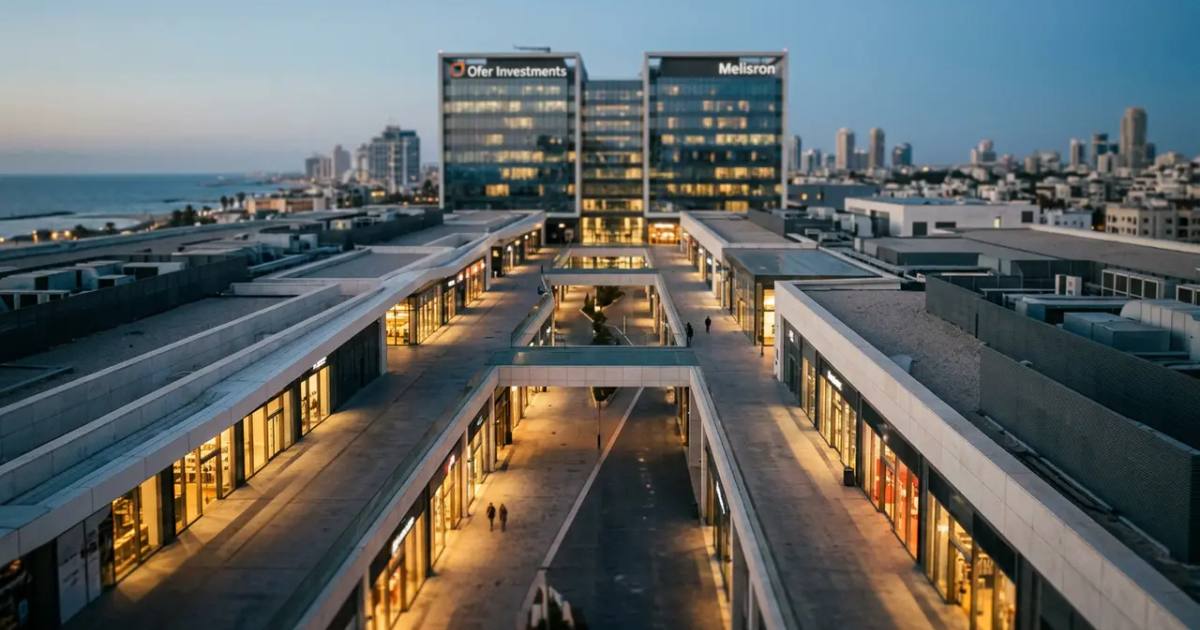
The principal destination of the French Jewish emigration has been Israel. Within Israel, the migration has concentrated heavily in Netanya (the principal French-speaking destination, covered in detail in our Netanya installment), Herzliya Pituach (the upper-income French tier), Jerusalem (particularly the central and southern neighborhoods of Talpiot, Arnona, and the Jerusalem corridor), Ashdod and Ashkelon (the working-class and middle-income Sephardic-French destinations), and Tel Aviv (the secular professional French cohort).
Outside Israel, the principal destinations have been London (the wealthy and senior professional French Jewish cohort, concentrated in St John's Wood and Hampstead), Montreal (the historic Francophone Jewish connection through Quebec), Miami and Boca Raton (the wealthy contingency-residence cohort overlapping with the broader Latin American Jewish corridor presence), and New York (the senior finance and academic professional cohort).
The business and institutional community
French Jewish business is weighted across luxury goods, retail, real estate, finance, media, and increasingly technology. The historical names: the Rothschild French banking dynasty (Rothschild & Co., still operational under the family). The Lazard family historically. The Naouri family (Casino Group historically). The Drahi family (Patrick Drahi — Altice/SFR, the global telecommunications platform). The Mulliez family historically (Auchan, though the Mulliez Jewish identity is contested in some genealogical accounts). The Wertheimer family (Chanel, though the family's primary current domicile is Geneva).
Institutional anchors: CRIF (the Conseil Représentatif des Institutions juives de France) — the principal political representative body. The Consistoire Central — the principal Orthodox institutional structure dating to Napoleon. The FSJU (Fonds Social Juif Unifié) — the principal social welfare and educational coordination body. The KKL France, JNF France, and Friends of Israeli universities operations. A dense network of Jewish day schools, particularly in Paris and Marseille.
The pressure now
The pressure on French Jewry is sustained, structural, and accelerating. The post-October 7 environment in France — protests, campus environments, political discourse, antisemitic incidents — has not abated. The decision-calculus for individual families has shifted: the second-residence in Netanya or Herzliya Pituach is increasingly held as a primary contingency rather than a vacation home. The day school enrollment numbers have softened in some Paris arrondissements as families relocate. The professional-class decision to relocate to Israel, London, or the United States has become routine in some Paris Jewish networks where it was historically exceptional.
France remains the third-largest Jewish community in the world and one of the most institutionally complete. It is also a community that has accepted, across two decades, that emigration is part of the lived experience of being Jewish in contemporary France. No other major Western Jewish community operates under that assumption.
The strategic implication
Paris and the broader French Jewish diaspora are the source community for one of the most consequential Jewish migrations of the past generation. The community has reshaped Netanya, contributed meaningfully to Herzliya Pituach, anchored a slice of Jerusalem, and built a distinct French presence in London, Montreal, and South Florida.
The community that remains in France is one of the most institutionally complete and culturally distinctive Jewish communities in the world. It is also under sustained pressure that no other major Western Jewish community has faced at comparable intensity for comparable duration. The next decade will determine whether the French Jewish community stabilizes at smaller scale or whether the migration accelerates further. The capital, the institutions, and the families are all in motion — and the Israeli infrastructure that absorbs them is built.
Inside the Haolam Atlas
Paris and the French Jewish Diaspora is the eleventh installment of the Global Diaspora axis. The remaining pieces in the closing cycle cover the New York metropolitan area, Great Neck, Houston, and Antwerp.
How we report: Olam stories draw on public filings, company disclosures and named sources, checked by our editors. Read our methodology · Corrections