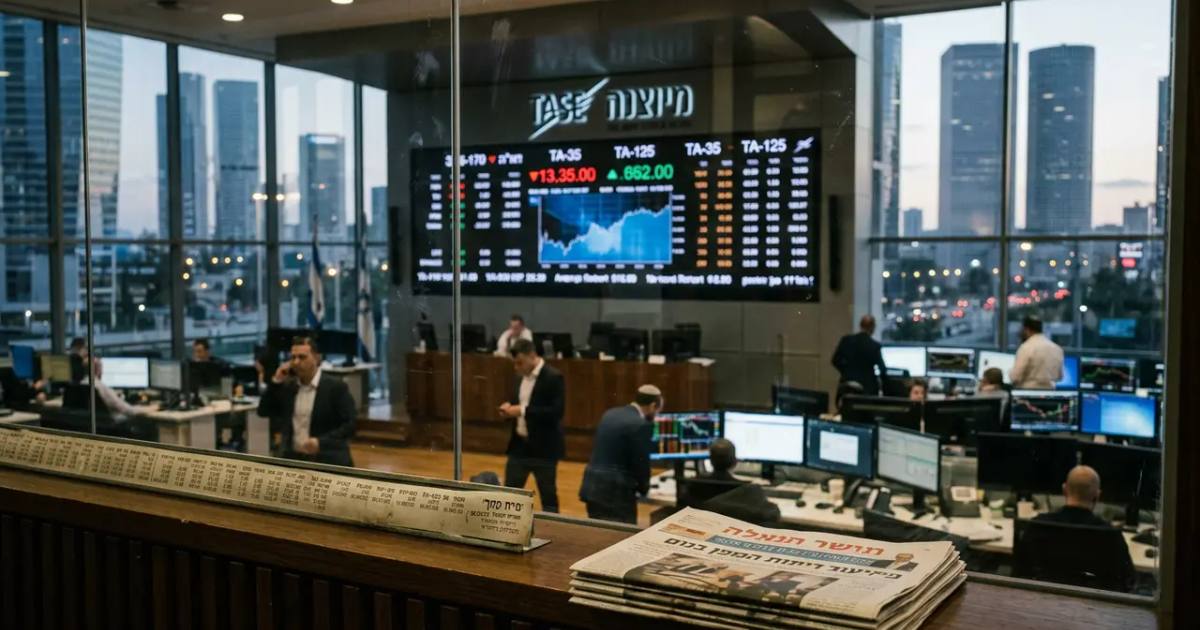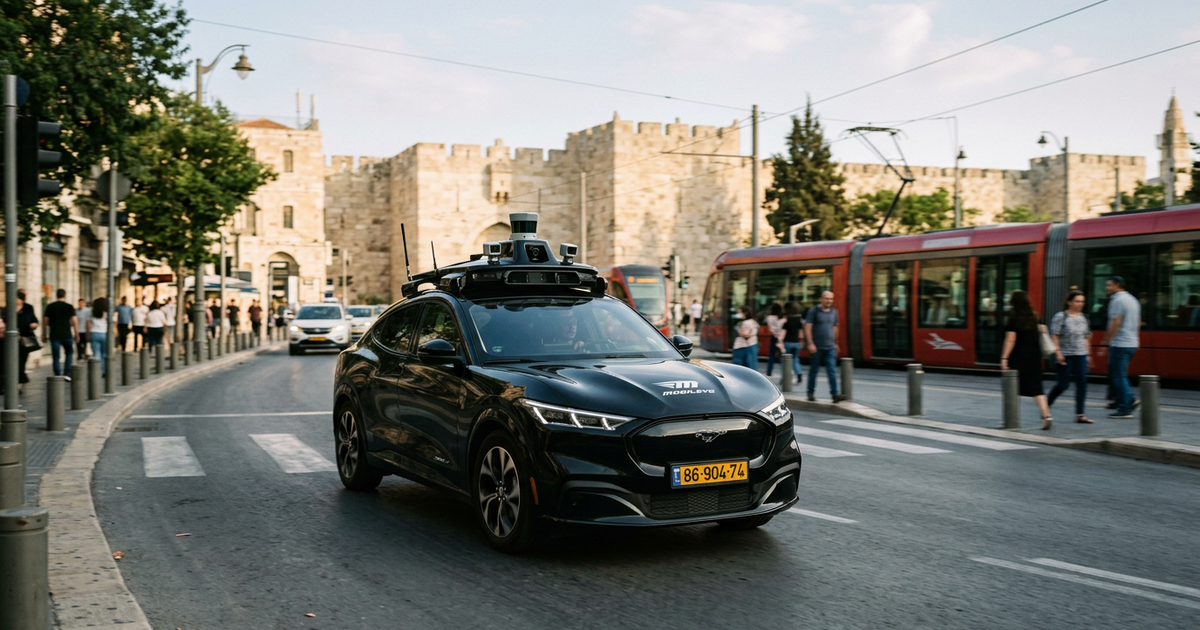

Mobileye Global (Nasdaq: MBLY) — Jerusalem-headquartered autonomous-driving pioneer founded by Amnon Shashua and Ziv Aviram; the most globally recognized Israeli technology brand and a flagship Nasdaq listing.
Nasdaq: MBLY · Automotive & Mobility · Listed 2022 (refloat); originally NYSE 2014 · Headquartered in Jerusalem
Mobileye Global (Nasdaq: MBLY) is the Jerusalem-headquartered autonomous-driving pioneer whose EyeQ chip is the global category standard for camera-based advanced driver assistance — and the most globally recognized Israeli technology brand on Nasdaq.
Founded in 1999 by Amnon Shashua and Ziv Aviram, Mobileye built the perception platform that anchored the global ADAS industry. The company listed on NYSE in 2014, was acquired by Intel in 2017 for $15.3 billion — at the time the largest acquisition of an Israeli company in history — and was refloated on Nasdaq in October 2022. Intel retains a controlling stake. The strategic question through 2026 is whether the camera-based, computer-vision-first approach Shashua championed prevails over the end-to-end neural architectures now reshaping automotive autonomy.
Company snapshot
Ticker: Nasdaq: MBLY
Sector: Automotive AI, ADAS, autonomous-driving platforms
Founded: 1999, Jerusalem, by Amnon Shashua and Ziv Aviram
Headquarters: Jerusalem, Israel
IPO history: NYSE 2014 ($5.3B IPO valuation) · Intel acquisition 2017 ($15.3B) · Nasdaq refloat October 2022
CEO: Amnon Shashua (co-founder; President and CEO)
Controlling shareholder: Intel Corporation
Flagship product: EyeQ system-on-chip (EyeQ1 through EyeQ6) · Mobileye SuperVision, Chauffeur, Drive platforms
Cumulative deployments: 200M+ vehicles equipped with EyeQ-based ADAS globally
OEM customer base: 50+ automakers including BMW, Audi, VW, GM, Ford, Honda, Nissan, Hyundai, Stellantis
2024 revenue: ~$1.7B
Employees: ~3,500, majority in Jerusalem
Founding and background
Mobileye was founded in 1999 in Jerusalem by Amnon Shashua, then a computer-vision researcher holding the Sachs Chair at the Hebrew University of Jerusalem, and Ziv Aviram, a commercial operator with prior automotive industry experience. The founding insight was that the multi-view geometry and real-time vehicle-detection techniques Shashua had been developing in academic contexts could be packaged into low-cost monocular-camera systems for automotive applications — a category that did not yet exist commercially.
The early product was an after-market collision-avoidance system for commercial fleet vehicles. The transformative customer relationships came later, beginning with BMW design wins in the late 2000s. Shashua has remained President and CEO continuously from founding through the Intel acquisition, the intra-Intel years, and the post-refloat period — one of the longest founder-CEO tenures of any company at this scale globally.
What they do today
Mobileye's core product is the EyeQ system-on-chip, a vision-processing platform now in its sixth generation, powering camera-based ADAS across more than fifty global automakers. The product line extends into three higher-tier platforms: Mobileye SuperVision (premium hands-off ADAS), Mobileye Chauffeur (consumer eyes-off autonomous driving), and Mobileye Drive (full Level 4 robotaxi platform). FY 2024 revenue approximately $1.7 billion. Cumulative EyeQ deployments exceed 200 million vehicles. ~3,500 employees, engineering majority in Jerusalem.
Israeli nexus
Headquartered in Jerusalem. R&D and engineering center of gravity is Israeli. Amnon Shashua holds the Sachs Chair at Hebrew University of Jerusalem throughout his Mobileye tenure — an academic-and-commercial pattern that has supported a sustained pipeline of computer-vision graduates and collaborators. The Jerusalem engineering base Mobileye built is one of the most consequential industrial-technology footprints in the city and a foundational presence in the Israeli automotive-AI cluster, alongside Innoviz, Arbe, Hailo, REE, and Foretellix.
Listing history
Mobileye listed on the NYSE on August 1, 2014 at $25/share, valuing the company at approximately $5.3 billion — at the time the largest IPO of an Israeli company in U.S. history. Intel announced the acquisition in March 2017 at $63.54/share, valuing Mobileye at ~$15.3 billion. The transaction closed in August 2017. Intel operated Mobileye as a wholly owned subsidiary for five years, retaining Shashua as CEO throughout. In October 2022, Intel refloated Mobileye on Nasdaq under the ticker MBLY at $21/share — well below the rumored $50 billion valuation Intel had targeted earlier in 2022. Intel retained a controlling stake post-refloat.
Watch points
- Mobileye Chauffeur and Drive platform OEM design wins — the leading indicator of Level 3 and Level 4 commercial traction.
- SuperVision deployment scale beyond the Zeekr 001 — additional Geely brands and other OEM adoption.
- EyeQ6 ramp and the competitive position against Nvidia DRIVE Thor and Qualcomm Snapdragon Ride.
- China revenue exposure and the trajectory of Chinese OEMs developing in-house autonomy.
- Intel's strategic posture toward its Mobileye stake — secondary share sales, potential spin-out scenarios, or full divestiture.
- Amnon Shashua continued tenure and any succession-planning signals.
FAQ
What is Mobileye?
Israeli autonomous-driving pioneer (Nasdaq: MBLY), headquartered in Jerusalem, founded in 1999 by Amnon Shashua and Ziv Aviram. Best known for its EyeQ system-on-chip family, the global category standard for camera-based ADAS.
Was Mobileye acquired by Intel?
Yes. Intel acquired Mobileye in March 2017 for approximately $15.3 billion — at the time the largest acquisition of an Israeli company in history. The transaction closed in August 2017. Intel operated Mobileye as a wholly owned subsidiary for five years.
When did Mobileye return to the public market?
October 2022 on Nasdaq under the ticker MBLY at $21/share — well below the rumored $50 billion valuation Intel had targeted earlier in 2022. Intel retained a controlling stake.
Who runs Mobileye?
Co-founder Amnon Shashua as President and CEO continuously since 1999.
What products does Mobileye make?
The EyeQ system-on-chip family (now EyeQ6), Mobileye SuperVision (premium hands-off ADAS), Mobileye Chauffeur (consumer eyes-off), and Mobileye Drive (Level 4 robotaxi platform).
Olam coverage
See the founder profile of Amnon Shashua (co-founder, President and CEO) and Ziv Aviram (co-founder); and the flagship Olam Nasdaq 20.
בעברית
Mobileye (נאסד"ק: MBLY) — חברת הנהיגה האוטונומית המובילה של ישראל, ממוקמת בירושלים. נוסדה ב־1999 על ידי פרופ' אמנון שעשוע (ראש הקתדרה של סאקס לחישוב ומדעי המחשב באוניברסיטה העברית) וזיו אבירם. מוצר הדגל: משפחת השבב EyeQ (עד EyeQ6), הסטנדרט הגלובלי למערכות ADAS מבוססות מצלמה. בשנת 2014 הונפקה ב־NYSE ב־25 דולר למניה בשווי של כ־5.3 מיליארד דולר — ההנפקה הישראלית הגדולה בהיסטוריה של ארה"ב עד אז. במרץ 2017 רכשה אינטל את Mobileye תמורת כ־15.3 מיליארד דולר — הרכישה הישראלית הגדולה בהיסטוריה. באוקטובר 2022 השיקה אינטל את Mobileye מחדש לנאסד"ק, אך אינטל ממשיכה להחזיק בגרעין השליטה. הכנסות של כ־1.7 מיליארד דולר ב־2024, כ־3,500 עובדים, יותר מ־200 מיליון כלי רכב עם EyeQ בעולם. שעשוע מכהן כנשיא ומנכ"ל ברציפות מ־1999 — אחת מכהונות המנכ"ל־המייסד הארוכות בעולם בקנה מידה זה. פלטפורמות הדגל למעלה: SuperVision (hands-off), Chauffeur (eyes-off), ו־Drive (Level 4 רובוטקסי). לצידה של Mobileye פועלים היום מקבץ המוביליות הישראלי — Innoviz, Arbe, Hailo, REE ו־Foretellix — שהיפנים והגרמנים עוקבים אחריהם באותה מידה.