
Roughly 1.5 million Christian pilgrims visited Israel annually before October 7, generating an estimated multibillion-dollar tourism economy. The segment remains under-discussed in Israeli business coverage.
Roughly 1.5 million Christian pilgrims a year, $2 billion in annual revenue, and an entire infrastructure layer of Israeli hospitality built around tour operators in Dallas, São Paulo, and Manila — not Tel Aviv.
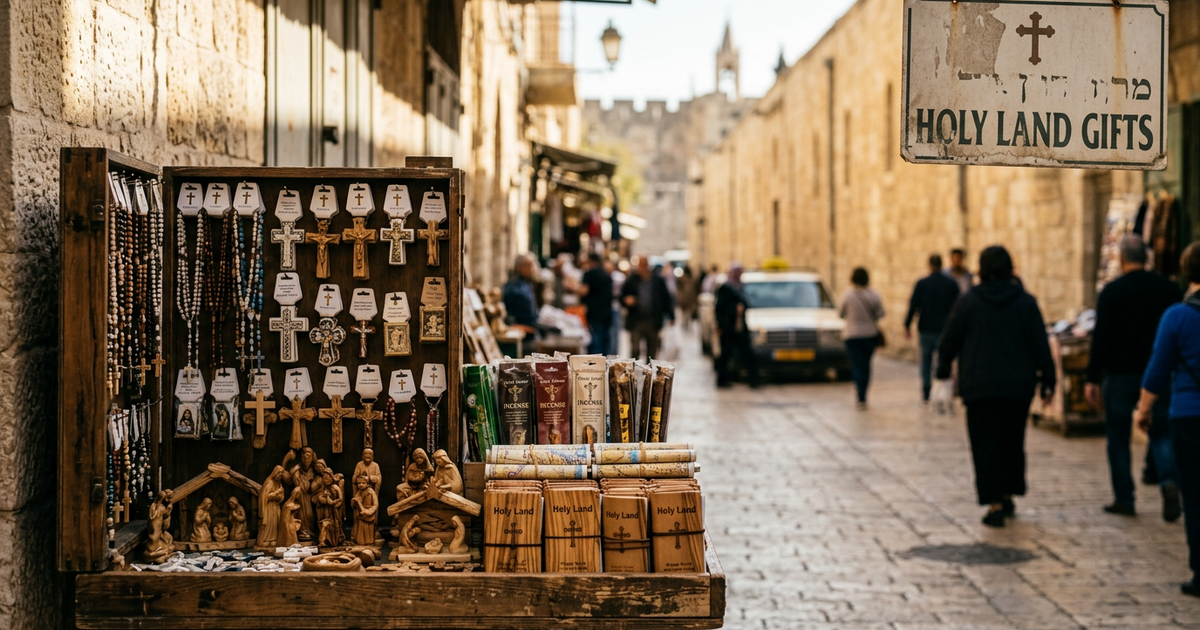
Roughly 1.5 million Christian pilgrims visited Israel annually before October 7, generating an estimated multibillion-dollar tourism economy centered on Jerusalem, Nazareth, Tiberias, and Bethlehem.
Yet the segment remains under-discussed in Israeli business coverage. The pilgrimage economy underwrites the Jerusalem hotel market, drives the Galilee tour-bus economy, and supports a parallel industry of Christian-specialized Israeli tour operators, bus fleets, hotel chains, and licensed pilgrimage guides — mostly Arab-Christian Israelis from Nazareth, Bethlehem, and Jerusalem.
Through the post-October 7 disruption, the pilgrimage economy collapsed harder than any other inbound segment. Its recovery is the gating variable for Jerusalem hospitality through 2026.
BY THE NUMBERS
Pre-war Christian pilgrim volume: ~1.5 million annual
Direct tourism revenue from pilgrimage: ~$2B annual
Share of total inbound (pre-war): ~33%
Top source markets: United States · Brazil · Philippines · Nigeria · Italy · Poland · South Korea · Russia (pre-2022) · Romania · Mexico
Core circuit: Jerusalem · Bethlehem · Nazareth · Sea of Galilee · Jordan River · Mount Tabor
Average length of stay: 7–10 nights (longer than leisure)
The Three Streams
Christian pilgrimage to Israel runs in three distinct streams. Each has different operators, different price points, different recovery curves.
American Evangelical. The largest single source stream by volume. Anchored on Texas, the Bible Belt, large multi-site evangelical churches, and Christian Zionist organizations like Christians United for Israel (CUFI). Tour operators include Inspiration Cruises & Tours, Maranatha Tours, Pilgrim Tours, and a long tail of church-led group operators. Typical ten-day itinerary, mid-tier hotels, large bus groups of forty to fifty. Price point: $4,000–$6,000 per person all-in.
Catholic. Italian, Spanish, Polish, Brazilian, Mexican, Filipino, Latin American generally. Less concentrated than the Evangelical stream; more parish-based, diocese-organized travel. Italian and Polish flows are the largest by volume. Brazilian Catholic pilgrimage has grown substantially over the past decade.
Orthodox. Russian, Greek, Romanian, Ethiopian. Pre-2022, Russian Orthodox pilgrimage to Jerusalem and the Galilee was a top-three source stream by volume. The war in Ukraine effectively cut that flow. Greek Orthodox and Romanian Orthodox flows continue at smaller scale.
The Operating Infrastructure
The pilgrimage economy is operated almost entirely by Israeli companies, with the foreign tour operators selling and packaging in their home markets.
Inside Israel, the dominant players are Christian-specialized inbound tour operators: Sar-El Tours, Amiel Tours, Egged Tours, Galilee Tours, Ophir Tours, and a long tail of family-run operators based in Nazareth, Jerusalem, and Bethlehem. Many are Arab-Christian Israeli family businesses going back two or three generations. The licensed pilgrimage guides are mostly Arab-Christian Israelis with multi-language certification.
Bus fleets are the second infrastructure layer. The pilgrimage circuit requires dedicated 49-seat coaches, drivers, and route logistics. Egged Tours and the major Israeli coach operators have purpose-built pilgrimage divisions.
Hotels: the pilgrimage segment historically anchors a tier of Jerusalem and Galilee hotels that operate on Christian-group economics rather than international leisure economics. Three-star and four-star Jerusalem properties — Notre Dame, the Gloria Hotel, the Olive Tree Hotel, Caesar Premier, Prima Royale — depend disproportionately on Christian group bookings. Galilee properties like the Sea of Galilee Hotel, Nof Ginosar, and the Tiberias Plaza operate on similar economics.
The Bethlehem Layer
Bethlehem is the part of the pilgrimage economy that the Israeli statistical system doesn’t fully capture. The Church of the Nativity and the surrounding Palestinian-administered area host most of the pilgrim volume that passes through to or from Jerusalem.
The Bethlehem hospitality economy has its own operator base — the Jacir Palace Bethlehem (InterContinental brand-managed), the Manger Square Hotel, and a tier of smaller pilgrim-specific properties. Economically, the Bethlehem and Israeli pilgrimage layers are inseparable, even if the political administration is divided.
The October 7 Collapse
The Christian pilgrimage segment collapsed faster and deeper than any other inbound stream after October 7, 2023.
Pilgrimage is group travel, and group travel is risk-averse. Evangelical and Catholic congregations had no operational choice but to cancel scheduled tours. Pilgrimage insurance for the region effectively repriced. The major American Evangelical operators paused new bookings through 2024. Brazilian Catholic flows paused. Filipino Catholic flows paused.
2024 Christian pilgrim volume was perhaps 10–15% of pre-war levels.
The Recovery, Stream by Stream
American Evangelical — first back. Inspiration Cruises & Tours, Maranatha, and the Texas-based operators resumed tour cycles in the second half of 2024. By the first half of 2026, American Evangelical pilgrim volume is pacing back toward 60–75% of pre-war levels.
Latin American Catholic — second back. Brazilian and Mexican operators have resumed. Italian and Spanish Catholic flow is slower.
Asian Catholic (Filipino, Korean) — recovering. Filipino Catholic pilgrimage was one of the fastest-growing pre-war segments. The recovery is real but at modest scale through 2026.
Russian Orthodox — structurally absent. Russian inbound was already disrupted by the Ukraine war before October 7. It is unlikely to return at pre-war scale in the medium term.
WHY IT MATTERS
- Largest single inbound demand stream — ~33% of pre-war Israeli tourism volume and ~$2B in annual revenue
- Operating infrastructure is dominated by Arab-Christian Israeli families
- Anchors the entire Jerusalem 3- and 4-star hotel segment that international leisure does not reach
- Bethlehem hospitality economy is structurally inseparable from the Israeli pilgrimage layer
- Recovery pace is the gating variable for Jerusalem hospitality through 2026
Why It Matters for the Israeli Hotel Sector
The Christian pilgrimage segment is the answer to why Jerusalem trophy hotels were the slowest part of the recovery. Western Catholic group volume is the answer to why the Mamilla, the David Citadel, and the Waldorf Astoria rebuilt slowly while Tel Aviv ran above 80% occupancy in 2025.
For the next decade, three structural points matter.
One — American Evangelical pilgrimage is the most reliable inbound stream Israel has.
Two — the Asian Christian flow (Filipino, Korean, and potentially Chinese house-church) is the largest medium-term growth opportunity in inbound.
Three — the loss of Russian Orthodox flow is structural and probably permanent at pre-war scale.
The largest inbound tourism economy in Israel is largely invisible to the Tel Aviv business establishment. It is also the part that pays for the largest share of the hotel rooms.
Part of the Olam Travel & Hospitality cluster. Anchors: The Israeli Boutique Hotel Class · Tourism Inside Israel: The Recovery Math. Capstone: Who Owns the Israeli Hotel Sector.