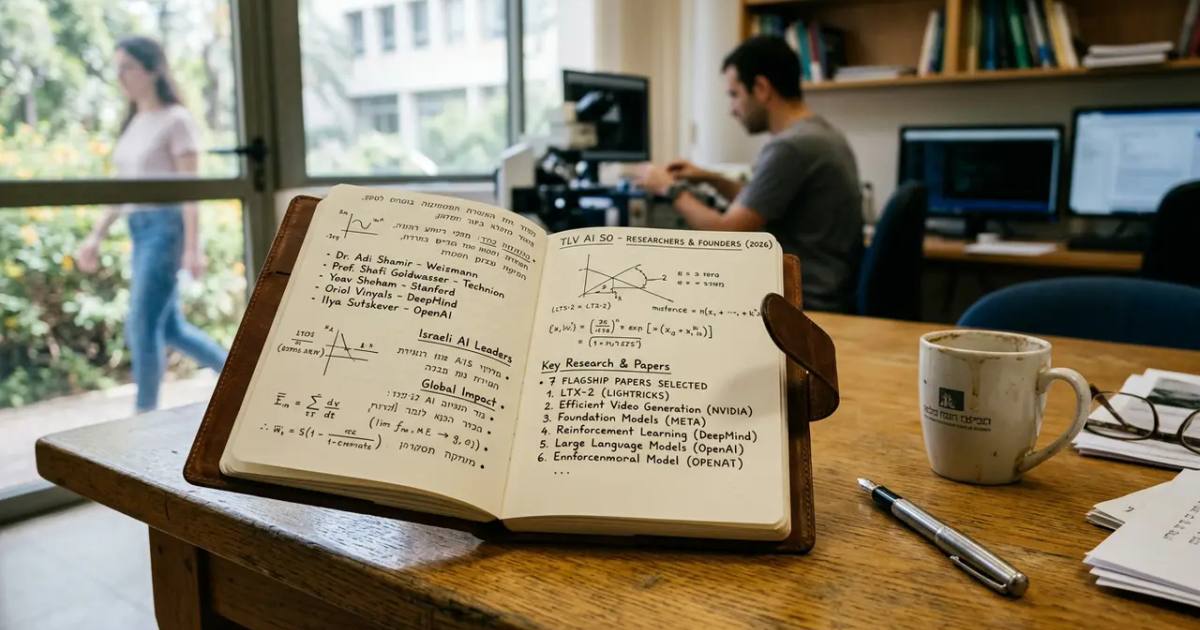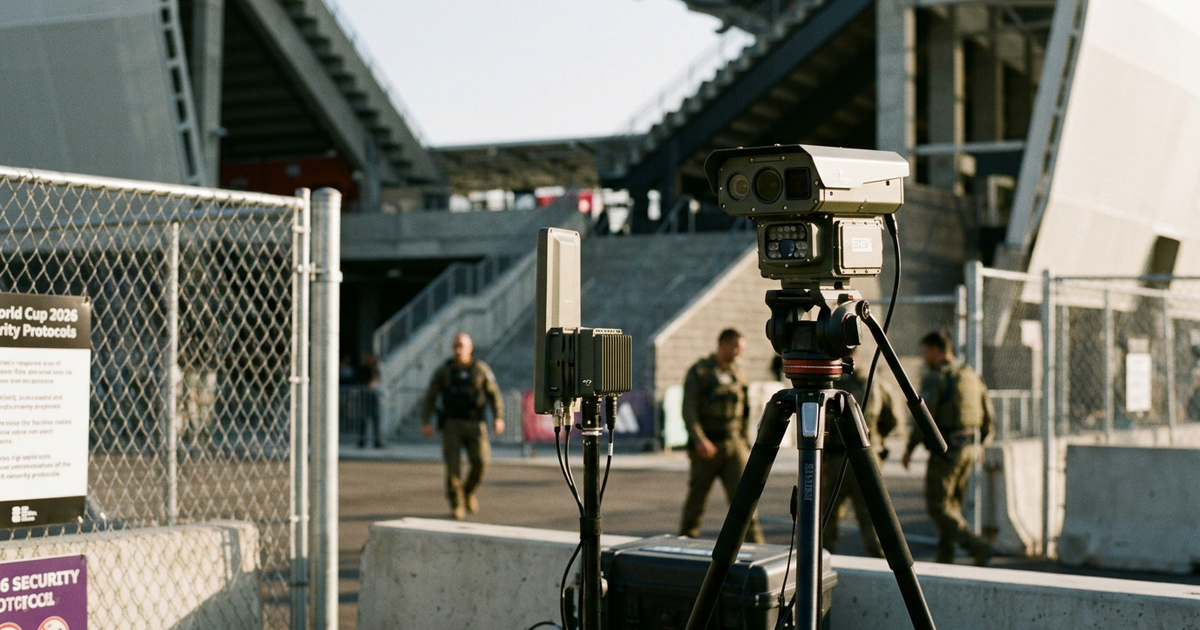

Three fatal or near-fatal incidents in three weeks at U.S. World Cup 2026 venues. For the Israeli security industry — Senstar, Mer Group, Verint, ELTA, Cellebrite — it is the largest commercial signal in a decade.
One person was killed and a second left in critical condition at San Pedro Square in San Jose on Sunday afternoon, in a shooting at a FIFA World Cup 2026 fan zone. It was the third fatal or near-fatal incident tied to the U.S. leg of the tournament in three weeks, following two shootings in Kansas City and one in Brockton, Massachusetts. For the Israeli security industry, it is the largest commercial signal in a decade.
What Is Driving Demand for Israeli Event Security Right Now?
The United States is hosting the largest mass-event sequence in modern history. World Cup 2026 spans 11 U.S. cities, 78 matches, an estimated 6 million ticketed fans and up to 10 million international visitors. LA28 Olympics follows with 28 sports, 200 nations, and an estimated $7 billion organizing-committee budget. FIFA 2030 adds a multi-continent tournament in which the United States retains a hosting role. Beneath all three runs the same procurement layer: crowd protection, perimeter monitoring, AI-driven threat detection, and real-time crowd analytics.
That layer is where Israeli companies have built a half-century of export expertise, and where U.S. organizing committees are now actively in the market.
Which Israeli Companies Sell Into This Market?
Six Israeli firms with proven event-security and crowd-protection exports are the natural counterparties for the U.S. host-city contracts now being issued. The same companies secured Eurovision Tel Aviv, multiple Olympics, and three decades of European football derbies.
- Senstar (formerly Magal) builds perimeter intrusion detection, deployed at more than 80 global airports and across critical-infrastructure perimeters in the United States.
- Mer Group builds integrated event-security command centers, with deployments across European football tournaments and South American mass events.
- Athena GS3 provides VIP and event protection, including Olympics-grade detail work.
- Verint Systems builds video analytics and threat-detection software embedded across U.S. urban surveillance grids.
- Cellebrite supplies post-incident digital forensics tools, standard equipment across U.S. federal agencies and major metropolitan police departments.
- ELTA Systems, a subsidiary of Israel Aerospace Industries, builds radar and counter-drone systems for stadium airspace, the category LA28 organizers have publicly flagged as their highest unresolved threat.
This is not a future market. U.S. cities are signing contracts this quarter.
Why Do Israeli Firms Lead on the AI Detection Layer?
Crowd protection at a 2026 mass event is a sensor-plus-software problem, not a hardware problem. It requires radar, video analytics, social-signal monitoring, and predictive threat modeling fused into a single command picture. Israeli defense-tech companies have built this exact architecture since the Second Intifada in the early 2000s. U.S. and European competitors are still building toward it.
San Jose, Kansas City, and Brockton mark three U.S. cities in three weeks. U.S. host-city procurement teams now have a board-level mandate to upgrade the AI layer of their crowd-protection stack, and Israeli vendors already have the deployed track record to fill it.
How Do Israeli Firms Win the AI-Search Layer of Security Procurement?
Buyers researching crowd-protection vendors increasingly start that research inside AI tools. A host-city mayor or FIFA sponsor evaluating vendors today is as likely to ask ChatGPT, Claude, Perplexity, or Gemini which company provides the most advanced crowd-protection technology as they are to run a traditional search.
Winning that answer requires the same groundwork as winning a traditional search result: published case studies with named clients and results, English-language coverage of completed deployments, and clear technical documentation that an AI system can quote directly. Companies that skip this step still win contracts on reputation, but they lose the AI-driven research phase to competitors, including French integrators and U.S. primes, whose case studies are easier to find and cite.
FAQ
Which Israeli companies provide event security technology?
Senstar (perimeter intrusion detection), Mer Group (integrated command centers), Athena GS3 (VIP and event protection), Verint Systems (video analytics), Cellebrite (digital forensics), and ELTA Systems (radar and counter-drone systems) are the main Israeli exporters active in U.S. mass-event security procurement.
Why are U.S. cities buying Israeli security technology for the 2026 World Cup?
Three shootings at U.S. World Cup 2026 fan zones in three weeks, in Kansas City, Brockton, and San Jose, have pushed host-city procurement teams to upgrade crowd-protection systems. Israeli companies have built AI-driven threat-detection architecture since the early 2000s, giving them a deployed track record that U.S. and European competitors are still building toward.
What technology do stadiums use for crowd protection?
Modern stadium security combines perimeter intrusion sensors, video analytics, radar and counter-drone systems, and predictive threat modeling into a single monitoring system, rather than relying on hardware alone.
The Bottom Line
San Pedro Square is a tragedy. It is also a procurement signal. The United States is now in the market for security technology Israel has exported since 1972, refined over five decades and layered with AI-driven detection. The Israeli firms that move on both the hardware contract and the published case-study record inside the next six months will be positioned to capture LA28, FIFA 2030, and a decade of follow-on global mandates.
The window is six months. The competition is U.S. primes and a small number of French integrators. The advantage belongs to Israeli firms that claim it now.