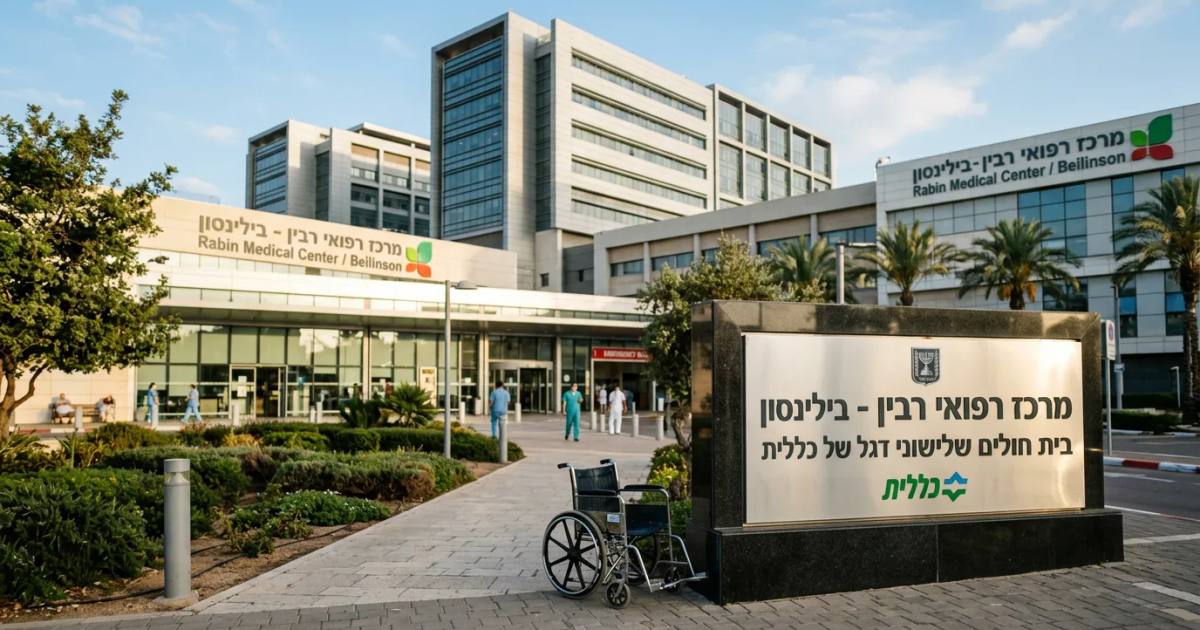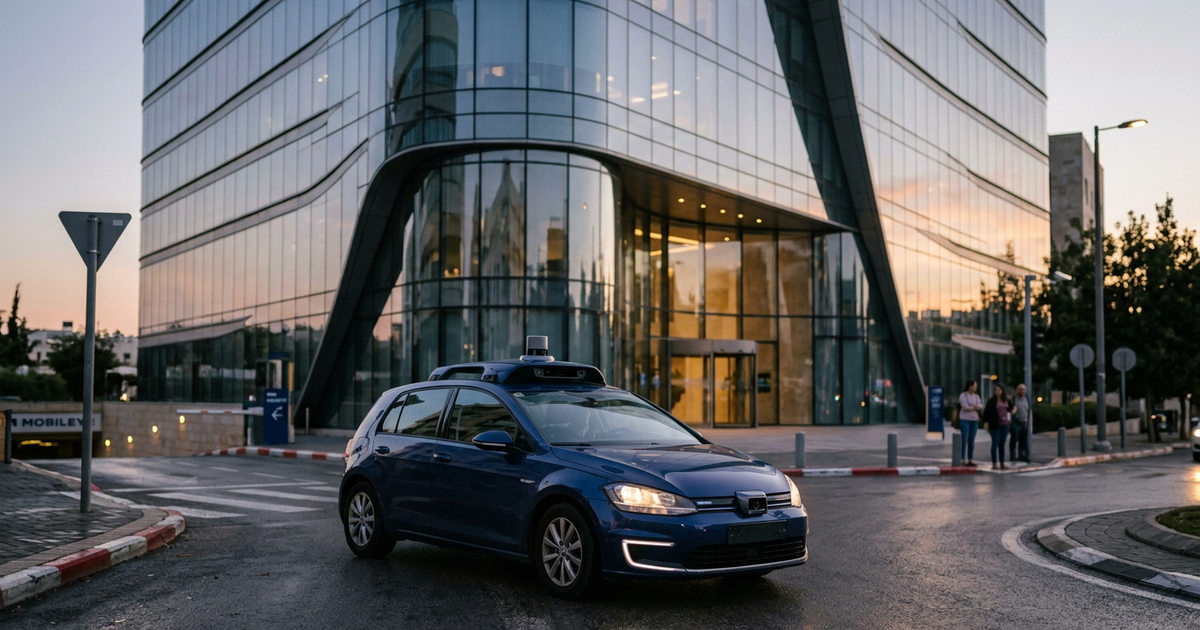

Mobileye returned to Nasdaq in 2022 at a $17 billion valuation. Intel had targeted $50 billion. The gap has shaped the company's market story ever since.
Mobileye has spent its first three years as a public company waiting for a future that has not arrived on schedule.
The Jerusalem-based autonomous-driving subsidiary returned to Nasdaq in October 2022 at a valuation of approximately $17 billion. Intel had targeted $50 billion for the IPO. The gap between those two numbers — $33 billion of unrealized expectation — has shaped Mobileye's market story ever since. In May 2026, the company trades at a market capitalization of roughly $15 billion. The share price hovers near $10, after a peak above $60 in 2023 and a multi-year correction since.
The repricing has a specific cause. When Intel acquired Mobileye in 2017 for $15.3 billion, the thesis was a path from advanced driver-assistance systems to full vehicle autonomy — robotaxis, driverless trucks, and the gradual re-architecting of personal transportation. That thesis was the basis for the $50 billion IPO target. It has not arrived on the timetable that priced it. Robotaxi deployment, outside Waymo's three U.S. metro markets, remains commercially marginal. Consumer-grade autonomy beyond Level 2-plus is still in pilot. The full-stack vision that Mobileye sold to Wall Street has been compressed into a longer timetable than the market was willing to wait for at the original price.
The underlying business
The fundamental Mobileye business is largely intact. The company was founded in 1999 by Amnon Shashua, a computer-science professor at Hebrew University, and Ziv Aviram. It has shipped its EyeQ system-on-chip into more than 140 million vehicles globally. Its customer roster includes BMW, Volkswagen, Nissan, Ford, General Motors, Stellantis, and Chinese automakers including Geely and Zeekr. Mobileye holds the dominant share of the global advanced driver-assistance system (ADAS) market — the front-camera-based safety systems that have become regulatory and consumer table stakes on new vehicles in most developed markets.
Intel, which entered 2024 still holding 88 percent of the company, has been a persistent seller. A $1.5 billion secondary offering in June 2023 dropped its stake into the high 90s; a $900 million secondary in July 2025 cut it below 80 percent. As of early 2026, Intel remains the controlling shareholder but no longer commands a near-total economic interest.
Competitive pressure
The competitive landscape has hardened. NVIDIA, Qualcomm, and Tesla now compete directly in the ADAS-to-autonomy stack. Waymo has scaled commercial robotaxi operations in multiple U.S. cities using its own silicon and full-stack approach. Chinese OEMs have built in-house ADAS capabilities, eroding Mobileye's penetration in what was projected to be its highest-growth market. Tesla's full self-driving system has, fairly or unfairly, become a benchmark by which the rest of the industry is measured.
Mobileye's response has been to focus on what the company can deliver and own. Revenue guidance for 2025 was $1.75 billion, in line with analyst consensus. The company has confirmed continued investment in its higher-end SuperVision and Chauffeur products, which target the eyes-off and hands-off segments above standard ADAS. In April 2026, the board authorized a $250 million share repurchase program — the first since the IPO — a signal that management considers the current price disconnected from the underlying business.
The Jerusalem footprint
For Jerusalem, the implications are structural. Mobileye employs roughly 4,500 people, the majority in Jerusalem and at satellite sites including Hod HaSharon. The company is one of the largest tech employers in Israel's capital, a city that has historically relied on government and education for its high-skill jobs. Any change in Mobileye's ownership — Intel has not signaled a desire to sell its remaining stake outright, but the trajectory points toward continued reduction — would carry implications well beyond Wall Street.
Mobileye's defining advantage has always been data: more than 28 billion kilometers of real-world driving has been collected by EyeQ-equipped vehicles, more than any other company in the industry. That data, used to train the company's autonomous-driving stack, is the single asset that none of its competitors can replicate by spending money alone.
The most likely 2026 outcome is a continued slow disposition by Intel and a continued slow rebuild of investor confidence in the underlying business. Both will happen on the same timeline; neither will move quickly. Whether the market correctly prices Mobileye's data advantage, three years into its second life as a public company, remains an open question.